

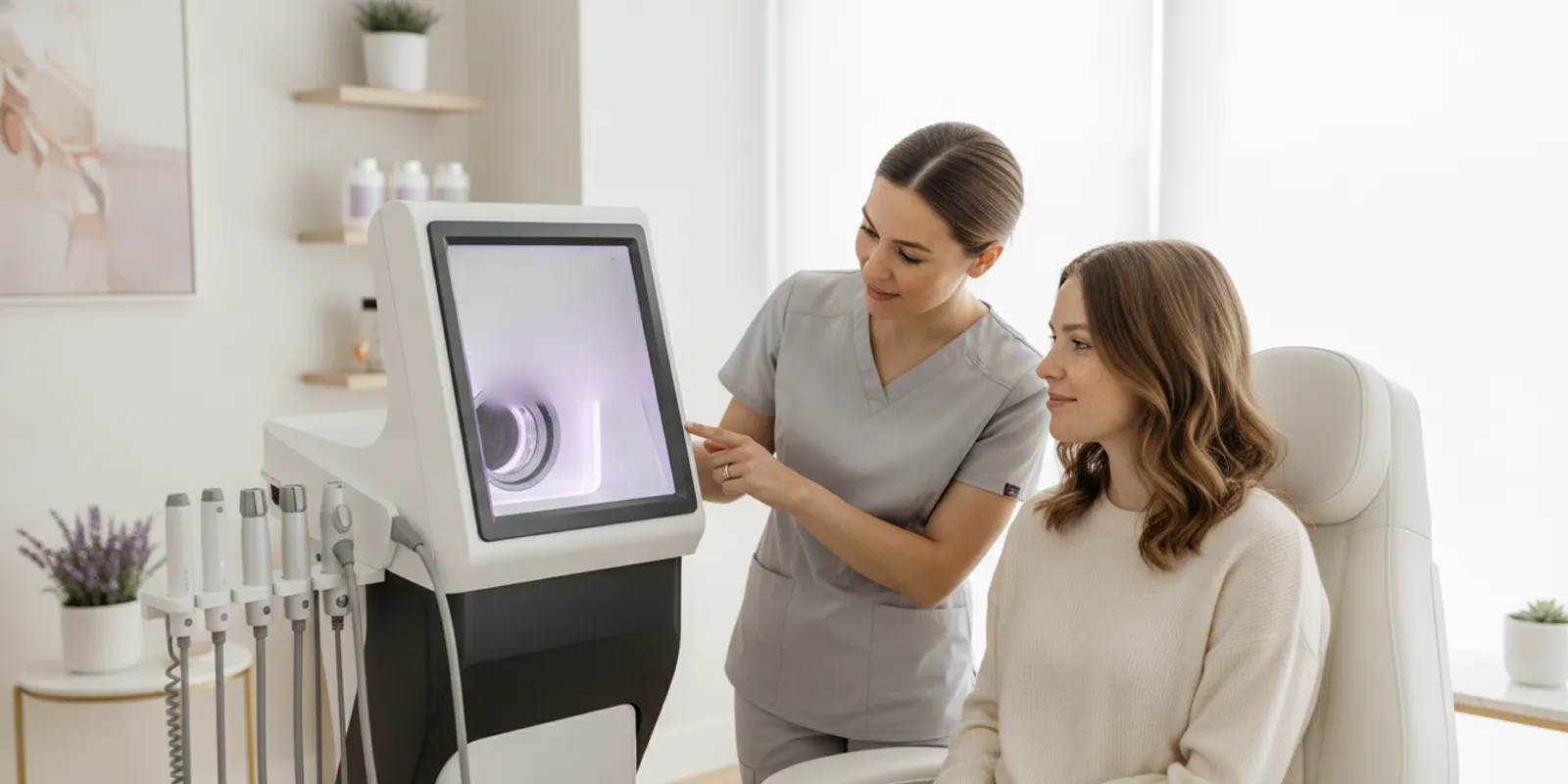
The future of aesthetic medicine will be shaped by more than new devices. Patient expectations, clinical judgment, practice workflows, training, and responsible communication all influence how aesthetic services evolve. For practice owners, planning for the future of aesthetic medicine means asking what is useful, supportable, and workable in their setting—not simply chasing the newest trend.
Call to discuss equipment planning
What Is Driving Change in Aesthetic Medicine?
Aesthetic medicine brings together clinical care, technology, and personal preferences. That combination makes change visible in treatment tools and in the way practices educate, assess, and support patients. A 2025 review of aesthetic medicine describes evolving demands across generations, a useful reminder that patient expectations are not fixed or identical for every age group. Read the review on evolving trends across generations.
That does not mean every practice needs to follow every new preference. It means practices benefit from listening carefully, explaining options clearly, and checking whether an innovation fits their patient population, team, and care model. Trends become useful only when translated into thoughtful decisions.
Several forces are likely to keep shaping the field:
- More individualized conversations: patients may arrive with different goals, questions, and levels of familiarity with aesthetic care.
- More connected technology: imaging, treatment platforms, and practice software can influence how information is collected and used.
- Greater attention to trust: clear explanations, realistic expectations, and ethical promotion matter alongside the service itself.
- Operational discipline: staffing, training, protocols, and follow-up determine whether a new tool can be integrated responsibly.
How Could Personalization Change the Patient Experience?
Personalization is not simply offering a longer menu of treatments. It starts with understanding what a patient is asking for, what the practice can appropriately provide, and how to explain available choices without promising a particular result. The conversation may include goals, relevant history, preferences, and questions about the process. The clinician then determines what is appropriate within their scope and practice protocols.
A practice can make that conversation more consistent by using a repeatable consultation structure. For example, staff can record the patient’s stated concern, clarify what they hope to learn, describe relevant options in plain language, and note what questions require a clinician’s judgment. This creates a more organized experience without turning the consultation into a sales script.
Personalization also requires restraint. A device feature or treatment category does not establish that a specific option is suitable for every patient. Practices should use professional judgment, follow applicable instructions and protocols, and explain uncertainty when it matters. For a related operational perspective, see this guide to med spa consulting.
What Role May Imaging and Digital Tools Play?
Imaging and digital tools can support a more structured discussion by helping a practice capture and review information. A skin imaging system, for example, may provide images under different lighting conditions or help organize observations for a consultation. Its value depends on how the team uses the information, explains it, and protects it.
Technology should support—not replace—clinical assessment. An image or software-generated observation should not be presented as a diagnosis unless the tool is intended and authorized for that use and the clinician is acting within applicable requirements. Practices should understand what a system measures, what it does not measure, how information is stored, and how results should be discussed with patients.
Before adding a digital tool, ask practical questions:
- What information does the tool collect, and how will the practice use it?
- Who can access the information, and what are the practice’s retention and privacy procedures?
- Can staff explain the tool’s purpose and limitations in plain language?
- Does the workflow leave enough time for the clinician to review and contextualize the information?
- What technical support and ongoing training will the team need?
Practices comparing options can review this overview of skin scanners for professional practices and the guide to choosing a skin imaging device. The right comparison focuses on a practice’s real workflow and intended use, not a feature list alone.
How Should Practices Evaluate New Technology?
New technology is easiest to evaluate when the practice defines the problem first. Is the team trying to improve consultation documentation, add a service category, make an existing workflow more consistent, or address another specific need? A clear question makes it easier to compare equipment and harder to be distracted by novelty.
Use a structured review before making a commitment. The table below is a planning aid, not a substitute for professional, regulatory, or legal review where needed.
| Evaluation area | Questions to ask | What to verify before deciding |
|---|---|---|
| Purpose and fit | Which practice need would this tool address? | Define the intended users, patients, and workflow. |
| Evidence and claims | What can the manufacturer’s materials and available evidence support? | Separate documented features from claims about outcomes or superiority. |
| Use and oversight | Who may use the system, and what oversight is needed? | Review applicable instructions, requirements, credentials, and protocols. |
| Implementation | What changes to space, staffing, or scheduling are required? | Map training, setup, cleaning, documentation, and support needs. |
| Patient communication | How will staff explain the option and its limits? | Prepare accurate, understandable consultation materials. |
| Ongoing review | How will the practice know whether the tool fits its operations? | Set a review date and track practical workflow measures without assuming clinical or financial outcomes. |
It is also useful to compare complete ownership and operating requirements rather than focusing on a single specification. Ask about training, service support, consumables, software or connectivity needs, and what is included in the product documentation. If a practice is considering microneedling technology as part of its plans, this professional microneedling services launch guide offers another set of operational questions to consider.
Why Will Training and Workflow Matter as Much as Equipment?
A new system affects more than the person operating it. The practice may need to coordinate consultations, patient preparation, room turnover, documentation, and follow-up. If the team has not discussed those details in advance, an otherwise suitable tool can create confusion or inconsistent communication.
Before implementation, assign responsibility for key steps. Decide who will review manufacturer instructions, who will complete training, how staff will handle questions outside their role, and where the practice will document use. Establish a process for escalating clinical questions to the appropriate practitioner. Revisit that process when staff, equipment, or protocols change.
Training should be practical and ongoing. A single introduction may not address new staff, uncommon situations, or updates to the system. Practices can schedule refreshers and use routine team discussions to identify unclear steps. They can also review whether the patient-facing explanation matches what the device and practice can actually support.
When planning a new service area, consider how equipment fits the practice’s broader offering. Emage Medical’s comparison of the Préime DermaFacial and HydraFacial can help readers identify questions to bring to a product evaluation. Product fit should still be assessed against a practice’s own needs, intended use, and team readiness.
How Can Practices Communicate Responsibly?
Public interest in aesthetic services makes communication choices increasingly important. Promotional language can affect what prospective patients expect before they ever speak with a clinician. Practices should describe services and technology accurately, use claims they can substantiate, and avoid implying that a particular result is assured.
Ethical communication is not limited to advertisements. It includes consultation scripts, social posts, before-and-after materials, website descriptions, and conversations about what a device can do. A 2025 paper examining ethical questions in aesthetic medicine reports that 55.8% of its respondents strongly favored stricter guidelines for promotion of aesthetic operations on social media. Review the paper on ethical promotion in aesthetic medicine. Practices can use this broader discussion as a prompt to review their own standards, while recognizing that a study finding does not replace local rules or professional guidance.
A responsible review process can ask whether each public statement is clear, current, and supported; whether images are presented with appropriate context; and whether the communication gives patients a realistic basis for questions. The practice should also identify who approves educational and promotional content and how corrections are made when information changes.
What Can Practice Owners Do Now?
Future-focused planning does not require predicting exactly which device or service will dominate. It means building a decision process that can adapt as patient interests and technology change. A practical starting point is to:
- Listen for recurring patient questions. Record themes during consultations and identify where patients need clearer explanations.
- Review current workflows. Look for gaps in assessment, documentation, training, or follow-up before adding a new tool.
- Set evaluation criteria. Define intended use, team requirements, support needs, and what evidence or documentation the practice expects.
- Check claims and oversight. Confirm that descriptions match product information and applicable professional requirements.
- Plan implementation. Assign training, operational responsibilities, and a date to review how the new process is working.
- Keep decisions patient-centered. Offer clear information and allow the clinician to determine whether an option is appropriate for each individual.
These steps help a practice weigh innovation without treating novelty as proof of value. They also create a record of why a decision was made and what the team will revisit as circumstances change.
How Can a Practice Prepare for Different Patient Journeys?
People may enter an aesthetic practice with very different starting points. One person may know the name of a treatment but not understand how it works; another may be comparing options after a referral or prior consultation. A practice can respond consistently by making its education accessible at more than one point in the journey.
Before a consultation, clear service descriptions can help prospective patients understand the purpose of an appointment and what questions to bring. During the visit, the clinician can clarify goals and discuss relevant options. Afterward, written instructions and a defined route for follow-up questions can help patients revisit information they may not have absorbed in the room. The precise process depends on the practice, service, and applicable requirements.
It is useful to check whether this information is understandable to people with different levels of familiarity with aesthetic care. Ask staff to explain a service without relying on technical shorthand. Invite questions rather than assuming that a patient’s online research is complete or accurate. When communicating about images or digital assessments, explain what the tool contributes and what conclusions it cannot establish on its own.
Practices can also review how they gather feedback. A simple team debrief may identify recurring questions, points where patients become confused, or materials that need updating. Feedback should inform communication improvements, not be treated as proof that a particular intervention will produce a clinical or business result.
What Should a Technology Review Include Beyond the Demonstration?
A demonstration can show how a system looks and operates, but it may not answer every implementation question. Ask for product documentation and take time to consider how the device would fit the practice’s actual environment. Which staff members need instruction? What space and scheduling changes are likely? Are there setup or maintenance steps the team must plan for? What support is available if a question arises after installation?
When a system includes several functions, assess each one rather than assuming that a broader feature set automatically makes it the right choice. Clarify which functions the practice expects to use, who is trained for them, and how they align with the practice’s services. A defined use case can keep purchasing decisions grounded and help the team avoid adopting features that do not match its needs.
Finally, make the review repeatable. Keep a record of the questions asked, the information received, and any items that need confirmation before a decision. Include more than one relevant team perspective where appropriate: the clinician considers intended use and patient communication, while operational staff can flag scheduling, setup, and training needs. This shared review helps surface practical issues early without substituting for any professional or regulatory review that may be required.
Frequently Asked Questions
Will artificial intelligence replace clinical judgment in aesthetic medicine?
Technology may help organize or display information, but practices should not treat a software output as a substitute for qualified clinical assessment. Teams need to understand a tool’s intended purpose, limitations, and appropriate role in their workflow.
Should every practice adopt the newest aesthetic device?
No. A practice should first identify a real need, assess whether the technology fits its patients and operations, and review training, oversight, support, and substantiation for relevant claims. Newness alone is not a reason to buy.
How can a practice keep up with changing patient expectations?
Listen to questions patients raise, ask what information would help them make decisions, and review consultation feedback with the team. Use those observations to improve communication rather than assuming one trend applies to everyone.
What is a sensible first step when exploring equipment?
Write down the practice need and the questions the team must answer before proceeding. A product discussion or tour can then focus on fit, features, training, and implementation rather than broad claims.
Contact Emage Medical to discuss equipment options
The future of aesthetic medicine will continue to develop, but thoughtful practice planning starts with clear patient communication, careful evaluation, and a team prepared to use technology responsibly.