

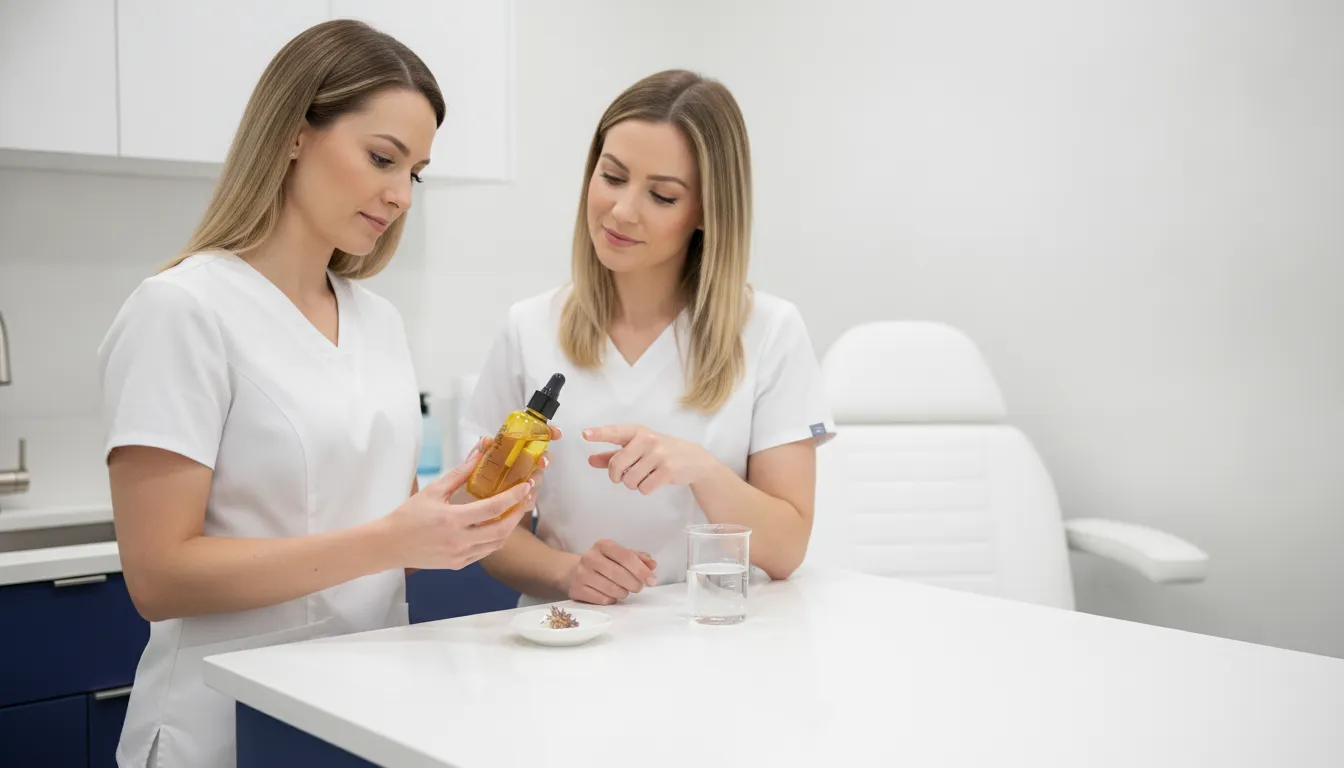
When a medspa evaluates an emerging skincare ingredient, the difficult part is rarely spotting interest. It is deciding whether the product documentation, cosmetic claims, storage directions, and staff language are ready for a real practice workflow.
PDRN skincare should be evaluated as a specific cosmetic product, not as a shortcut from ingredient research to guaranteed results. Review the manufacturer label, intended use, formulation evidence, lot and expiry controls, storage requirements, and claims before adding it to your menu.
That discipline matters because evidence can vary by formulation and study design. A 2024 review also noted that the newer cosmeceutical literature lacks a comprehensive overview, while aesthetic-medicine research has reported mixed results and called for more study. The practical starting point is a clear understanding of what PDRN refers to, what the research actually shows, and where product-specific evidence begins.
What Is PDRN Skincare, and Why Are Practices Evaluating It?
PDRN skincare refers to topical products formulated with polydeoxyribonucleotide, a DNA-derived material discussed in cosmetic and aesthetic-medicine research. A 2024 review describes PDRN as consisting of DNA fragments and notes that the material reviewed was extracted mainly from salmon. That description applies to the reviewed material, not automatically to every product marketed with PDRN language. Practices should confirm the ingredient identity and source in the specific product documentation rather than infer them from a trend term. Read the 2024 review on PubMed.
Interest does not equal a settled product claim. The same review notes that a comprehensive overview of newer PDRN sources and applications in cosmeceuticals is still lacking. Separately, an aesthetic-medicine review reports variable results across studies, including studies with limited or no reported benefit, and calls for more research into optimal use and efficacy. Those findings are useful context for evaluation. They do not establish that every topical formula will produce the same result, or that ingredient-level research validates a particular brand, concentration, delivery system, or routine. Review the aesthetic-medicine evidence in PMC.
Ingredient research is not product-specific evidence
For a practice, the practical distinction is between what has been studied about PDRN generally and what can be supported for the exact product under consideration. A study may examine a defined material, formulation, application method, or research setting that differs from a retail or professional topical product. Before adding an item to a menu or consultation, review its complete label, intended use, manufacturer documentation, and stated cosmetic claims. Ask whether the evidence actually matches those details.
Why formulation and label review matter
Topical performance depends on the finished formulation, not only the ingredient name. Packaging, directions, concentration or composition, intended use, and supporting documentation should all be assessed together. This label-first approach helps staff describe the product accurately, keep cosmetic positioning clear, and avoid turning early or variable research into a promise. It also gives the supervising clinician and practice leadership a defensible basis for deciding whether the product fits the practice’s standards and workflow.
How Should a Medspa Evaluate a PDRN Skincare Product?
A responsible evaluation starts with the product itself, not the popularity of the ingredient. Ask the manufacturer to identify the exact PDRN material, its source, concentration or amount where disclosed, and the complete INCI ingredient list. The label should also state the intended cosmetic use, directions, warnings, responsible manufacturer or distributor, and any limitations relevant to professional use. If those basics are unclear, pause the review rather than filling gaps with assumptions.
Next, request documentation that matches the product you would actually receive. Useful materials may include a current technical sheet, certificate or quality documentation, lot information, expiry guidance, packaging specifications, and claim substantiation. Emage Medical’s available knowledge base does not establish a PDRN-specific SKU, approved use, storage specification, or endorsement. Practices should rely on the manufacturer’s documentation and authoritative sources for product-specific decisions.
Evaluate the evidence by study design and by how closely it represents the proposed product. One study of a PDRN-loaded nanoliposomal formulation measured permeation in vitro over 24 hours using a Franz diffusion-cell method. The authors reported formulation-specific findings involving permeation, sustained release, and stability, while also identifying challenges such as decomposition susceptibility, low bioavailability, and poor stability or skin permeability. Those results can justify better questions about delivery and testing, but they do not prove that every topical PDRN product will perform the same way. Read the methods, formulation details, test conditions, and limitations before translating research into staff language or client expectations.
Finally, test operational fit. Confirm how the product is dispensed and where it is stored according to the exact label. Then define how opened units and damaged packaging are handled, along with how staff will record lot and expiry details. Review whether the claims fit cosmetic positioning and whether the product can be incorporated into the practice’s existing consultation, consent, training, and documentation processes. For a related framework, review professional serum selection for treatments.
Which PDRN Skincare Claims Fit Cosmetic Positioning?
For a medspa, the safest starting point is the product’s exact label and intended use. Cosmetic positioning generally centers on appearance, such as helping skin look more hydrated, smoother. Softer, or refreshed, when those statements are truthful, supported, and appropriate for the specific formula. The FDA explains that cosmetic claims must be truthful and not misleading. It also does not preapprove cosmetic labeling or maintain a list of approved cosmetic claims.
Words matter because marketing can change how a product is regulated. Claims that a product treats or prevents disease, or affects the structure or function of the body. Including skin, may make it a drug under the law, even if the product also affects appearance. Advertising claims involve a separate oversight question, with the Federal Trade Commission regulating advertising while the FDA regulates cosmetic labeling. Have qualified personnel review language before it appears on a website, consent material, social post, or staff script.
Keep the wording tied to observable appearance
Review each proposed statement against the manufacturer’s labeling and available support. Avoid turning ingredient research, injectable literature, or wound-related research into a promise about a topical cosmetic. Also remember that “cosmeceutical” is not a legal product category recognized by the FDA, so the term does not establish a product’s regulatory status.
- Appearance-focused wording: “helps skin look smoother,” “supports a more hydrated-looking appearance,” or “leaves skin looking refreshed,” when the product documentation supports the statement.
- Wording that requires compliance review: “reduces inflammation,” “stimulates collagen,” “repairs the skin barrier,” or “improves healing,” because these may describe biological structure or function rather than appearance.
- Do not use as a casual cosmetic promise: “treats acne,” “heals wounds,” “prevents scarring,” “regenerates tissue,” or “guarantees results.” Remove or escalate disease, treatment, cure, prevention, regeneration, and guaranteed-outcome language.
Keep staff scripts consistent with the approved product materials. If the label, evidence, or intended use is unclear, pause the claim and route it for review rather than filling the gap with stronger language.
How Should Medspas Compare PDRN Skincare Formulations?
A useful comparison starts with documentation, not a familiar ingredient name. Ask whether the supplier can identify the ingredient source and specification, explain the delivery system, and provide labeling that matches the product’s intended cosmetic use. The goal is to understand what was tested, what the practice is purchasing, and what staff can accurately say to clients.
| Criterion | What to compare | Questions for the practice |
|---|---|---|
| Ingredient identity | Source, material description, concentration or specification, and complete ingredient disclosure. | Can the supplier document exactly what is in the formula? |
| Delivery and formulation data | Vehicle, encapsulation, permeation method, release profile, and test conditions. | Are the findings tied to this formula, or only to a general ingredient? |
| Intended use | Label directions, application setting, user qualifications, and compatible workflow. | Does the labeled use fit the planned service? |
| Evidence quality | Study design, controls, endpoints, duration, and whether results are in vitro or clinical. | What can the evidence actually support? |
| Packaging and stability | Container, closure, lot and expiry information, stability data, and handling directions. | Can the practice protect product quality through its workflow? |
| Claims support | Label language, substantiation, warnings, and boundaries for staff and advertising. | Are appearance-focused claims truthful and appropriately limited? |
| Staff workflow | Training, dispensing, documentation, client questions, and escalation procedures. | Can every team member describe the product consistently? |
One formulation study reported higher measured permeation and retention for a PDRN-loaded nanoliposomal formula than free PDRN under its test conditions. It used an in-vitro Franz diffusion cell over 24 hours. The authors also discussed formulation-specific stability and permeability challenges (study details). In-vitro findings do not prove the same outcome for every topical product, so practices should request product-specific evidence rather than transfer results across formulas.
For a broader equipment and treatment context, review this guide to professional treatment product evaluation, then keep topical skincare classified as a cosmetic product rather than a medical device. Emage’s guidance does not establish a PDRN SKU, approved use, or endorsement, so the manufacturer’s documentation remains essential.
What Storage and Handling Controls Should a Practice Use?
There is no universal storage instruction for every PDRN skincare product. Formulation and packaging can affect stability, and published formulation research identifies decomposition and stability as product-specific challenges. A practice should treat the manufacturer’s current label and written instructions as the controlling source, rather than applying a generic temperature or shelf-life rule. Review the formulation research for context, but do not substitute it for the exact product documentation.
Use a label-first process before placing a product into treatment or retail workflow:
- Confirm temperature and light directions. Record the manufacturer’s stated conditions exactly. If the label specifies light protection, use the original packaging or an approved equivalent. Do not add a temperature range or shelf life that the manufacturer has not provided.
- Check the closure. Keep the container closed as directed between uses. Confirm that pumps, caps, droppers, or other dispensing components are intact and compatible with the product’s instructions.
- Track lot and expiry information. Record the lot number and expiration date at receipt, then maintain traceability through storage, dispensing, and disposal.
- Document the open date when required. Some products may include an after-opening period or other open-date policy. Follow it only when the manufacturer specifies one, and make the date visible to authorized staff.
- Dispense cleanly. Use the stated dispensing method, avoid touching product-contact surfaces, and keep the container away from avoidable contamination during service.
- Quarantine exceptions. Remove damaged, leaking, visibly altered, expired, or otherwise questionable product from active use. Label it clearly and follow the practice’s documented disposition process.
- Require staff sign-off. Have the responsible team members acknowledge the product’s storage, opening, dispensing, and quarantine instructions. Recheck the procedure when labeling or packaging changes.
Keep the written procedure with receiving and inventory records, and use it during onboarding and refreshers. For a broader look at medspa staff education and workflow, connect product handling expectations to the practice’s existing training and supervision process.
How Can Staff Discuss PDRN Skincare With Clients?
A useful consultation starts with the client, not the ingredient. Ask what appearance-related goal they have, what products or procedures they currently use, and whether they have relevant sensitivities. Allergies, active skin concerns, or a history that should be reviewed by the appropriate licensed provider. Staff should then identify the exact product, its label, and its intended cosmetic use. Avoid treating “PDRN skincare” as a single standardized category. Formulas, directions, evidence, and claims can differ.
Use appearance-focused, product-specific language
Keep the discussion tied to what the product is labeled to do cosmetically. FDA guidance says cosmetic claims must be truthful and not misleading. Claims that a product treats or prevents disease, or affects the structure or function of the body, can change how the product is regulated. Advertising claims also warrant review because the FTC oversees advertising, while the FDA oversees cosmetic labeling claims.
Sample phrases staff can use include:
- Label check: This product is intended for cosmetic skincare use. Let’s review its label and directions together.
- Evidence check: Some research in aesthetic medicine reports variable findings, so we cannot promise a specific result for every client.
- Scope check: Your goals and history will help determine whether this is appropriate to discuss with the licensed provider.
Do not promise regeneration, tissue repair, disease treatment, guaranteed improvement, or a particular timeline. A 2024 review reports varying results across polynucleotide studies and notes that more research is needed to establish optimal use and efficacy. Staff can acknowledge that uncertainty without dismissing the client’s interest.
Stay within scope and document the conversation
Scope of practice and state rules matter, especially when a medspa operates under licensed medical supervision. Licensed aesthetic providers need accurate product information and language appropriate to their role. Front-desk or nonlicensed staff should not diagnose, recommend treatment for a medical condition, or answer clinical questions beyond their training. Route those questions to the designated licensed provider or supervising clinician.
Document the product discussed, the client’s stated goal, relevant history shared, label-based directions reviewed, expectations discussed, questions asked, and any referral or escalation. For a broader framework, see this guide to microneedling practice documentation. Practices can also connect consultation language to professional skincare service planning without presenting an unverified product as an Emage offering.
When the label, claim, client history, or requested use is unclear, pause the conversation and escalate. A documented question is safer than an improvised answer.
A Practice-Ready PDRN Skincare Evaluation Checklist
Before adding a topical product to your practice, use this final review to confirm that the product, claims, workflow, and oversight are aligned. The goal is not to assume that every PDRN skincare product has the same formulation, evidence, or intended use.
- Collect the documentation. Request the current product information, manufacturer details, ingredient disclosure, intended use, warnings, and any substantiation supplied for the exact product. Emage Medical’s available guidance does not establish a PDRN-specific formula, benefit, storage condition, or approved claim, so do not fill gaps with assumptions. Review the available company context separately from product-specific documentation.
- Read the label. Confirm that the name, ingredients, directions, warnings, lot information, and expiration details match the item your practice would receive.
- Screen every claim. Keep staff and marketing language within supported cosmetic positioning. Do not describe the product as a medical device or imply FDA clearance for topical skincare. Emage’s compliance context makes that distinction explicit.
- Confirm storage instructions. Follow the manufacturer’s exact temperature, light, closure, and handling directions. Do not invent a universal PDRN storage rule.
- Set inventory controls. Decide how the practice will record lot numbers, expiration dates, opening dates if required, damaged packaging, and product quarantine.
- Train the team. Give front-desk staff, providers, and other authorized personnel a shared script based on the label and a clear escalation path for clinical questions.
- Check state scope. Have the supervising clinician or compliance lead confirm that the proposed use, communication, and workflow fit applicable state rules and each person’s license scope.
- Document client discussions. Record the product identified, intended cosmetic use, relevant client questions, disclosures, consent process, and any referral or escalation. Licensed providers need language appropriate to their scope. See the practice audience guidance.
- Set a review date. Recheck the label, supplier documentation, claims, training materials, storage process, and state requirements before the next scheduled review or whenever the product changes.
If your practice is also evaluating professional skincare workflows or aesthetic equipment, a qualified inquiry or Product Tour request can help you identify appropriate next steps. This checklist does not indicate that Emage Medical sells or endorses a PDRN SKU.
Frequently Asked Questions
What is PDRN skincare?
PDRN refers to polydeoxyribonucleotide, a DNA-derived material discussed in cosmetic and aesthetic research. A review describes PDRN as mainly salmon-extracted, but that description does not establish the source, purity, concentration, or performance of every topical product. Review the exact ingredient disclosure and manufacturer documentation before making product-specific statements. Research context is available in this 2024 review.
Is PDRN skincare FDA-approved?
Do not describe a topical PDRN product as FDA-approved or FDA-cleared without product-specific, authoritative documentation supporting that statement. The FDA explains that cosmetic products do not generally receive premarket approval, and cosmetic claims must be truthful and not misleading. Claims that a product treats disease or affects body structure or function can change its regulatory status. Review the FDA’s claims guidance.
How should a medspa evaluate a topical PDRN product?
Start with the full label, INCI list, intended use, manufacturer identity, lot and expiry information, claims support, storage directions, and staff workflow. Ask whether any study matches the actual formulation and route of use. In-vitro findings from one formulation do not prove the same result for another product, so keep evidence discussion separate from cosmetic promises.
Does PDRN skincare require refrigeration?
There is no universal storage rule for every PDRN product. Follow the exact manufacturer’s label and handling instructions, including temperature, light exposure, closure, and use-after-opening guidance when provided. Track lot and expiry information, and quarantine products that are damaged, expired, or stored outside the stated conditions.
How should staff discuss PDRN skincare with clients?
Use appearance-focused, label-supported language, such as explaining that a product is intended to support a cosmetic skincare routine. Avoid promises to treat, cure, repair tissue, regenerate skin, or guarantee a result. Staff should stay within their scope and route clinical or regulatory questions to the appropriate licensed professional.
Contact us about your practice’s next step
If your medspa is evaluating professional skincare or aesthetic-equipment options, a qualified conversation can help you organize product questions around documentation, intended use, staff education, and workflow fit. Keep your PDRN skincare review product-specific and aligned with applicable claim and scope requirements. To request a Product Tour or submit a qualified inquiry, contact the Emage Medical team.