

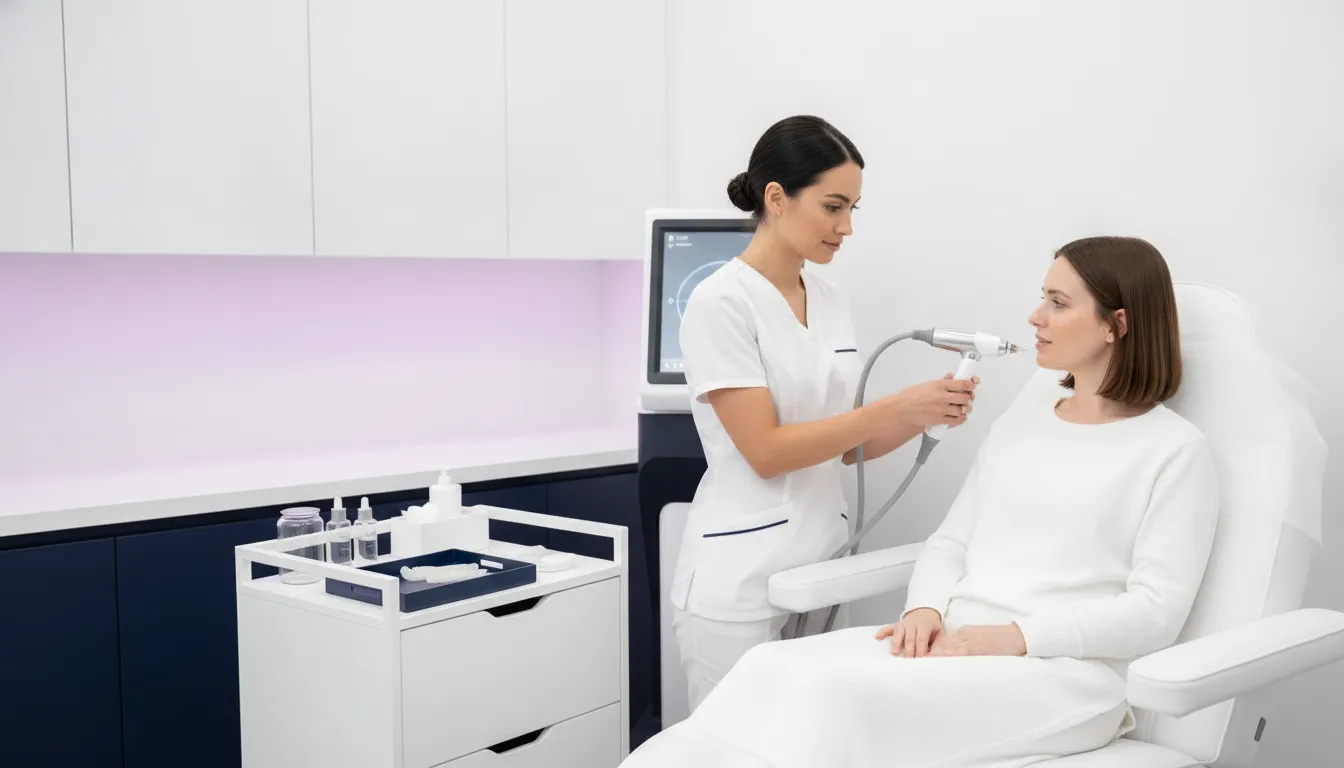
Adding RF microneedling is not simply a matter of purchasing a device and placing it in a treatment room. A successful launch connects equipment selection with medical oversight, staff readiness, repeatable workflows, responsible pricing, patient education, and dependable vendor support.
To understand how to add RF microneedling to your medspa, evaluate the device against your practice size, treatment goals, staffing model, compliance requirements, and total operating costs before you commit. RF microneedling is a medical procedure, so licensed providers, applicable state rules, informed consent, contraindication screening, infection control, and device-specific training all belong in the plan.
The right starting point is a practical comparison of device capabilities and day-to-day fit. From there, you can build the training, workflow, and business systems that support safe, consistent implementation rather than treating the equipment purchase as the entire strategy.
How to Add RF Microneedling to Your Medspa?
When deciding how to add RF microneedling to your medspa, start with the way your practice operates today, not with the longest feature list. A solo provider with a focused skin-rejuvenation menu may prioritize a compact workflow and straightforward training. A larger medspa may need faster setup, multiple cartridge options, and enough versatility to support several providers and treatment goals. In either case, involve your medical director early. Equipment selection is a business decision, while treatment indications, operator qualifications, and patient safety remain clinical and regulatory decisions.
Match the device to your treatment goals
Clarify which services you intend to evaluate before comparing systems. RF microneedling uses small electrodes to deliver radiofrequency energy into and under the skin. Some platforms also offer a fractional non-ablative RF modality, which may be useful for practices seeking more than one RF-based treatment approach in a single system. For example, the Cyto-RF RF microneedling system is marketed as a dual-modality device combining RF microneedling with fractional non-ablative RF and holds FDA clearance K231749. Verify the current labeling, indications, and legally marketed uses for any device you consider. FDA clearance is not the same as FDA approval.
Next, compare the controls that affect your intended workflow. Cartridge configuration and depth range can influence how a qualified provider adapts a treatment within the device’s instructions for use and the practice’s protocols. Cyto-RF, for instance, lists 25 Pin, 49 Pin, and 49 RF cartridge options, with adjustable needle depths from 0.25 mm to 3.5 mm. Those specifications are evaluation points, not a substitute for device-specific training or clinical judgment.
Calculate the total operating cost
Look beyond the purchase quote. Ask about disposable cartridge costs, expected usage, maintenance, warranty coverage, training, installation, financing terms, and any software or licensing fees. Then model realistic utilization based on your provider capacity, room availability, existing demand, and planned marketing. A device that remains idle can weaken the economics of an otherwise promising service. Your comparison should include consumables and staff time, not just the initial equipment cost.
Finally, assess the vendor’s support before signing. Can the team explain setup, workflow, compliance questions, and escalation procedures? Will training be available when staff change? Emage Medical describes nationwide installation, virtual demonstrations, virtual training, and remote support. Use the RF microneedling machine guide for aesthetic practices to organize your evaluation, then request documentation for the specific device, cartridges, warranty, and support terms you are considering.
Step 2: Staff Training Requirements and Certification Considerations
Training is not a box to check after equipment delivery. It is part of deciding whether your medspa is ready to add the service safely and consistently. Begin with the medical director or other qualified clinical leader. That person should review the proposed service, operator qualifications, patient-selection process, and practice policies before treatments are offered.
Confirm oversight and scope of practice
Requirements vary by state, license type, supervision arrangement, and the way a device is used. There is no single certification that universally authorizes every professional to perform RF microneedling. Before scheduling patients, verify applicable state scope-of-practice rules and any supervision, delegation, or facility requirements with your medical director and qualified legal or regulatory advisers. An FDA-cleared device does not replace those checks or make a treatment appropriate for every operator.
Use device-specific training, not just general education
General microneedling or energy-based treatment education can provide useful background, but it does not substitute for training on the specific system your practice purchases. Staff should understand the device controls, applicable cartridges, needle-depth settings, energy delivery, operating sequence, safety features, cleaning requirements, and manufacturer instructions for use. Training should also explain when to stop and escalate a question rather than improvise outside the IFU or the practice’s approved policies.
Ask the manufacturer what training is included, who delivers it, whether it is available remotely or onsite. And how staff can obtain refreshers when new operators join the team. A practical training plan can combine didactic education, supervised hands-on instruction, observation, and a documented competency check. Completion alone is not proof that an operator can apply the training correctly.
Build competency and patient-safety documentation
Define how competency will be validated before independent treatment. Your records may include the training date, trainer, device model, topics covered, supervised practice, assessment method, and medical-director approval. Keep current copies of the IFU and relevant policies where authorized staff can access them. Document the workflow for informed consent, medical history review, contraindication screening, infection control, treatment settings, post-treatment instructions, adverse-event escalation, and follow-up. The exact clinical content should come from qualified clinical leadership, the IFU, and applicable rules, not from a generic blog checklist.
This preparation helps separate the business decision of adding equipment from the clinical decision of treating a particular patient. When evaluating RF microneedling equipment for your practice, include training access, documentation support, and ongoing technical assistance alongside specifications and cost. A strong launch plan gives staff a clear path to ask questions, demonstrate readiness, and protect patients without claiming a universal certification standard.
Step 3: Treatment Protocols and Patient Intake Workflow
- Start with a consultation. Define the concern the patient wants to address, review relevant history, and explain what the service involves in plain language. RF microneedling is a medical procedure, not a home or purely cosmetic treatment, so the consultation should be conducted within the operator’s qualifications and the practice’s medical-director policies. The FDA describes RF microneedling as a medical procedure and recommends trained providers.
- Screen for candidacy through the approved process. Use a written intake form and a clinical review process established by the medical director. Confirm that the proposed service, treatment area, operator, and patient circumstances fit the device’s authorized use, the manufacturer’s instructions for use (IFU), and applicable state requirements. Avoid relying on a generic online contraindication list. If the information is incomplete or the situation is outside the team’s competency, pause and refer it for qualified medical review.
- Complete informed consent before preparation. Discuss the planned service, expected experience, possible risks, alternatives, aftercare responsibilities, and when the patient should contact the practice. Consent should be specific to the service and device, signed before treatment, and stored according to the practice’s recordkeeping policy. Patients should have an opportunity to ask questions rather than being rushed from consultation into treatment.
- Translate the IFU into a controlled room workflow. Before the first appointment, document who verifies the device, cartridge, supplies, room setup, and infection-control steps. Use only approved components and follow the manufacturer’s cleaning, disinfection, cartridge handling, and single-use requirements. Do not treat a marketing description as a clinical protocol. The IFU, medical-director policies, training, and state rules should govern the actual procedure.
- Record the treatment parameters. Create a consistent treatment note that identifies the device and handpiece, treatment area, skin assessment, cartridge or pin configuration. Needle depth, energy settings, passes, topical anesthetic and dwell time when applicable, and the patient’s immediate response. Record the operator and supervising clinician as required. These details make the workflow reproducible and support review without prescribing one setting for every patient.
- Give written aftercare and a follow-up path. Explain what the patient may reasonably notice, which activities or products the practice advises avoiding, and how to protect the treated area. Keep instructions aligned with the device IFU and the medical director’s protocol, rather than copying generalized internet advice. Provide a clear contact route for concerns and a timeframe for follow-up.
- Review every case and improve the process. At follow-up, document the patient’s response, questions, and any unexpected issue. Periodically audit consent, screening, parameter records, infection-control documentation, aftercare, and escalation decisions. This quality review helps the medspa build a safe, repeatable launch workflow while keeping clinical decisions with qualified professionals.
Step 4: Pricing Your RF Microneedling Services for Profitable Returns
Pricing should begin with your practice economics, not a universal treatment figure. Local demand, patient purchasing power, treatment area, provider expertise, and package structure all influence what a service can reasonably support. Your medical director should also review the proposed menu, patient-selection process, and any clinical or compliance considerations before launch.
A practical pricing model starts with the fully loaded cost of one appointment. Review each cost category separately.
- Provider and support-staff time.
- Consultation, treatment, room turnover, and documentation time.
- Disposable cartridges and other consumables.
- Room, equipment, cleaning, administrative, and payment-processing overhead.
- Financing cost or other capital expenses.
- Follow-up time, patient education, and post-treatment support.
Once those costs are clear, set a target contribution margin that fits your practice goals. This gives you a defensible starting point for a single treatment, a series, or a package. Avoid presenting the result as guaranteed revenue or payback. Actual performance depends on demand, scheduling, clinical capacity, retention, and consistent operations.
| Cost category | What to include |
|---|---|
| Labor | Provider and support-staff time for consultation, treatment, room turnover, and documentation. |
| Consumables | Disposable cartridges and other supplies used for each service. |
| Overhead | Room, equipment, cleaning, administrative, and payment-processing costs. |
| Capital | Financing costs and other expenses associated with the device. |
| Follow-up | Patient education, follow-up time, and included post-treatment support. |
Test the menu before you commit to a forecast
Build a small initial menu with clearly defined treatment areas and inclusions. Then validate it through conversations with existing patients, consultation requests, and feedback from the team. If you are evaluating capital options, aesthetic equipment financing may be one option to discuss, but financing terms should be modeled as a real practice expense rather than treated as evidence of profitability.
Track the service separately from the rest of the business. Review utilization, consultation-to-booking conversion, completed treatments, repeat visits, cancellations, package completion, average provider time, consumable cost, and actual overhead. Compare the original model with recorded costs each month. A busy schedule can still produce weak returns if appointments run long, supplies are overspent, or follow-up work is not included in the price.
Keep the model adjustable during the first launch period. Responsible pricing is an operating decision that should be refined with real utilization and cost data. It is not a promise that every medspa will recover its investment on a fixed timeline.
Step 5: Marketing Your New RF Microneedling Service to Existing and New Patients
Marketing should help prospective patients understand the service, not pressure them into treatment. Start with education-first messaging that explains what RF microneedling is and who may be a candidate. Explain the consultation and treatment workflow, and why a qualified provider must determine suitability. Avoid guaranteed results, universal timelines, or language that makes clinical outcomes sound automatic. The FDA describes RF microneedling as a medical procedure, so your public content should also reflect appropriate professional oversight and safety expectations. See the RF microneedling machine guide for aesthetic practices for a broader planning framework.
Start with conversations you already own
Existing clients are often the most relevant first audience because your team already understands their goals, treatment history, and communication preferences. Add a short educational discussion to appropriate consultations, follow-up appointments, or skincare conversations. Staff can explain that the practice now offers an RF microneedling consultation, then direct interested patients to a licensed provider for candidacy, risks, expected care, and consent. This approach is more useful than presenting the service as a universal add-on.
Create consistent talking points for front-desk staff, providers, and patient coordinators. Everyone should describe the service accurately, avoid diagnosing through marketing language, and know when to refer a question to the medical director or treating provider. Written materials should align with the device instructions for use, your approved protocols, and applicable state requirements.
Build a clear digital launch path
Publish a dedicated service page with plain-language explanations, an overview of the consultation process. Candidacy considerations, frequently asked questions, aftercare guidance approved by your clinical team, and a clear inquiry form. Support the page with email education, social content, and appointment reminders that answer one question at a time. If you use before-and-after photos or testimonials, obtain documented patient permission. Use images that accurately represent the individual case, and avoid implying that the same result is guaranteed for every patient.
Referral pathways can extend reach without relying on exaggerated claims. Train complementary providers and local professional partners on the type of patient inquiry your practice accepts, then give them compliant educational materials and a direct contact route. Track inquiries by source, consultation bookings, completed consultations, treatment starts, and common questions. Reviewing these measures monthly can show whether the message, referral process, and scheduling experience need adjustment.
Emage Medical describes support that can include startup guidance, budgeting, advertising campaigns, brand promotion, web content, and launch planning. Explore marketing support for your practice while confirming which services and claims are current for your launch.
What Ongoing Support Should You Expect from Your Device Manufacturer?
Buying an RF microneedling system is the beginning of implementation, not the end. A dependable manufacturer should help your team move from installation to consistent, compliant use while keeping the business side of the launch organized. Before choosing a device, ask what happens after delivery, who handles troubleshooting, and which services remain available once your staff is treating patients.
Look for support that continues beyond installation
Installation should include more than placing equipment in a treatment room. Confirm what is included in setup, whether staff receive device-specific clinical and operational training, and how new team members can be trained later. Emage’s customer onboarding materials describe practice-location installation, clinical training, staff training, marketing activation, and launch planning. Those details matter because a medspa may need refresher training as protocols evolve, employees change, or treatment volume increases.
Support should also be reachable when a question affects the day’s schedule. Ask whether the manufacturer offers a real person, which channels are available, and how an issue is escalated if first-line troubleshooting does not resolve it. Emage describes customer portal access, phone support, warranty coverage, continued consultation training, marketing support continuation, and software updates as elements of its customer support model. Review the current terms directly through Emage’s marketing and support resources rather than relying on an old sales summary.
Clarify warranty, software, consumables, and escalation
A warranty should clearly explain what is covered, what is excluded, how service is initiated, and whether parts, labor, shipping, or loaner equipment are included. Also ask whether the system requires recurring software or licensing payments, how updates are delivered, and what happens if an update affects workflow. The same conversation should cover cartridge availability, consumable specifications, ordering procedures, storage, and expected lead times. These operational details can affect scheduling and total cost of ownership even when the initial equipment price looks attractive.
Finally, ask the manufacturer to outline an escalation path for technical faults, documentation questions, and training needs. Your medical director and qualified operators remain responsible for clinical decisions, scope-of-practice compliance, informed consent, contraindication screening, infection control, and following the device’s instructions for use. For a broader equipment checklist, review the RF microneedling machine guide for aesthetic practices. A vendor that explains support boundaries clearly helps your practice plan responsibly and avoid treating manufacturer access as a substitute for clinical oversight.
Frequently Asked Questions
What should a medspa confirm before offering RF microneedling?
Confirm medical-director oversight, operator qualifications, applicable state scope-of-practice rules, informed consent, contraindication screening, infection-control procedures, and device-specific protocols. Verify the device’s FDA-cleared indications and intended treatment areas, then build written workflows around the manufacturer’s instructions for use. RF microneedling is a medical procedure, so it should be performed by appropriately trained, licensed providers rather than treated as a simple cosmetic add-on. The FDA describes RF microneedling as a medical procedure.
What should patients avoid before RF microneedling?
There is no single preparation rule that fits every patient or device. Use the provider’s screening process and clinical protocol to review medications, skin condition, recent procedures, contraindications, and infection risk before treatment. Give written preparation instructions that match the device instructions for use and the medical director’s policy. Do not promise that a particular preparation step guarantees a result.
How can a practice improve RF microneedling results and safety?
Start with appropriate patient selection, a documented treatment plan, trained operators, controlled parameters, infection prevention, and consistent aftercare. Record the device and handpiece, skin type, energy, needle depth, cartridge or pin configuration, passes, treatment area, and patient response. Review outcomes and follow-up consistently, while avoiding universal claims because results vary with clinical judgment, protocols, and patient factors.
How many RF microneedling sessions should a patient schedule?
There is no universal session count that a practice should promise. The medical provider should determine whether treatment is appropriate, discuss realistic expectations. And recommend timing based on the patient’s goals, skin condition, treatment area, response, and the device’s cleared use. Present any package or maintenance plan as an individualized clinical recommendation, not a guaranteed course or outcome.
Ready to Add RF Microneedling to Your Medspa?
A product tour can help you evaluate equipment, training, workflow, and ongoing support before making a purchasing decision. Request a free remote RF microneedling product tour to discuss your medspa’s needs with the Emage Medical team. The tour takes under 10 minutes and comes with no obligation, so you can ask practical questions and determine whether the next step fits your practice.