

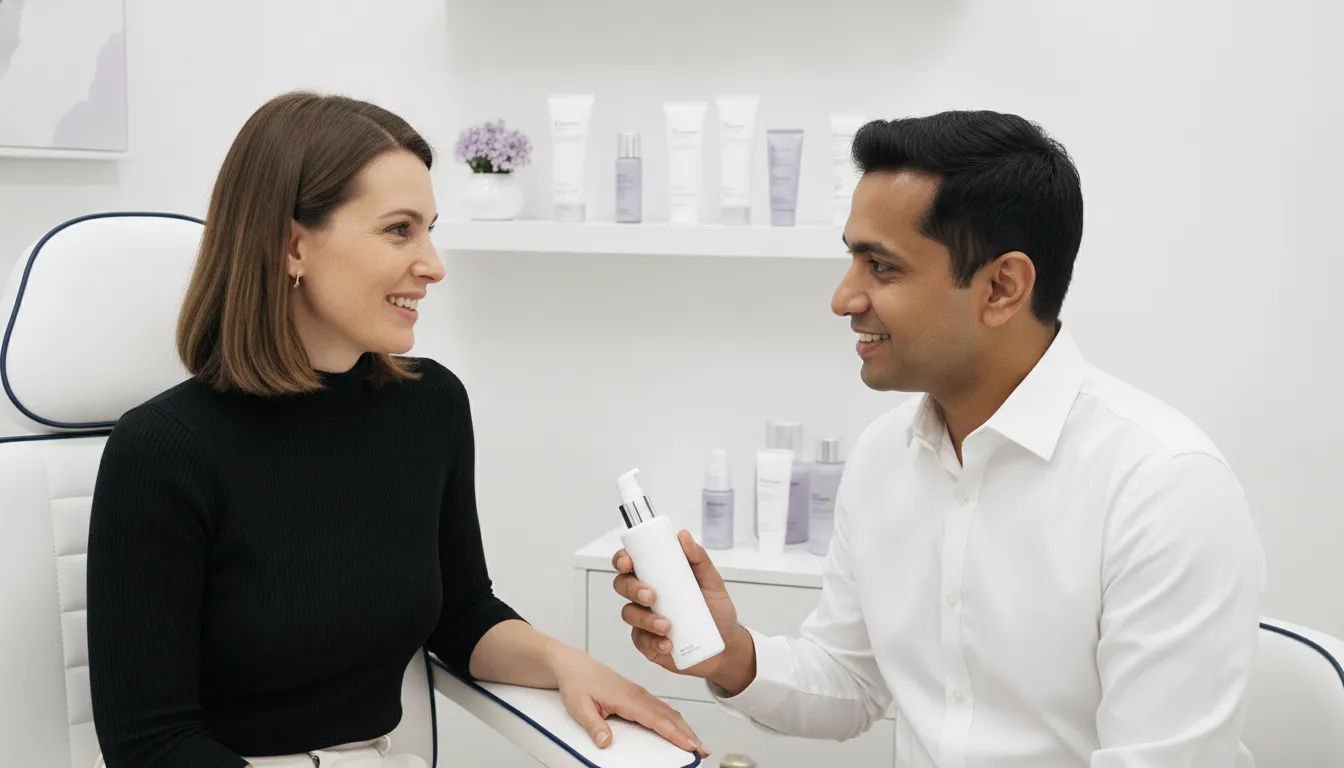
Adding another treatment is not the same as building a stronger aesthetic practice. Sustainable expansion depends on choosing services that fit your team, workflow, space, compliance responsibilities, and the conversations already happening with clients.
Request a free product tour to compare service-line options for your practice.
Aesthetic practice growth means making coordinated decisions about service lines, technology, consultations, and repeat-care opportunities so your practice can expand its options without relying on guaranteed revenue or clinical outcomes.
Hair restoration, professional skincare, and skin imaging may each support a different part of that strategy. The right starting point is to define what growth should improve in your practice, then evaluate where each opportunity fits operationally and professionally.
What Does Aesthetic Practice Growth Actually Mean?
Aesthetic practice growth is not simply a fuller appointment book or a larger equipment list. It is the disciplined process of improving how a practice attracts appropriate clients, conducts consultations, delivers services, and creates sustainable next steps in the client relationship. A practice can add appointments and still struggle if its service mix is difficult to explain. Its workflow is inefficient, or its team cannot consistently convert consultations into appropriate care plans.
A useful starting point is to define what growth should accomplish for your practice. That may include improving consultation quality, adding a service that fits existing clinical capabilities, creating more consistent follow-up, strengthening retention, or making better use of underutilized rooms and staff time. Revenue potential matters, but it should be evaluated alongside client experience, clinical oversight, compliance, and the resources required to deliver the service well.
Start with a baseline, not a guess
Before selecting a device or launching a new service, document the current operating picture. Review consultation volume, conversion patterns, repeat visits, average time per appointment, room utilization, and the services clients ask about most often. Also look at where prospects leave the process. For example, a practice may need clearer education during consultations rather than more leads, or it may need a service that complements an existing treatment journey rather than another unrelated offering.
These baseline measures create a practical way to evaluate change. They also help owners distinguish a genuine improvement from a temporary increase in bookings. Retention, team capacity, documentation, and follow-up should remain visible after a new service is introduced.
Include every decision-maker in the planning process
Aesthetic equipment and service-line decisions often involve more than one person. The practice owner may assess the business case, a medical director may review clinical and regulatory considerations, and a manager or lead provider may evaluate workflow and training needs. In a typical B2B buying journey, two to four decision-makers may be involved, and the process can take four to twelve months. That is a planning consideration, not a forecast or promise.
Mapping those roles early makes evaluation more thorough. Confirm who will use the technology, who is responsible for licensed oversight, how state requirements apply, and what evidence each decision-maker needs before moving forward. Products also have different regulatory classifications, so do not assume that every imaging system. Cosmetic device, or topical skincare product has the same status as an FDA-cleared medical device.
This broader framework complements, rather than replaces, tactical advice on how to grow aesthetic practice revenue. The next step is to connect the baseline and buying process to a service line that fits your patient needs, clinical capacity, workflow, and compliance responsibilities.
Build a Service Mix Around Patient Needs and Practice Capacity
A strong service mix starts with the people you serve, not with a device catalog. Review the concerns patients and clients already bring to consultations, the services they ask about but cannot currently receive, and the follow-up care your team can realistically deliver. Then compare those needs with your clinicians’ scope of practice, current training, room availability, staffing model, and appointment flow. A service line may appear attractive on paper but create delays or inconsistent delivery if it depends on capacity your practice does not have.
Demand validation should be practical. Review consultation notes, inquiry themes, waitlists, referral conversations, and existing service utilization. Ask whether the opportunity fits your current audience and whether the team can explain it clearly. A limited pilot, a structured consultation question, or a short educational campaign can help you test interest before making a larger capital commitment. This approach supports aesthetic practice growth without treating demand, revenue, or patient outcomes as guaranteed.
Evaluate adjacent service lines carefully
Hair restoration can be an evaluated opportunity for practices whose patients regularly raise concerns about hair thinning or appearance. The clinical model, provider qualifications, documentation, and patient-selection process should be defined before adding a related service. Hair restoration techniques and protocols continue to evolve, and published guidance recognizes that evidence is not available for every technique or protocol. Licensed oversight and applicable state requirements must remain part of the evaluation. Emage Medical lists HairPRO within its imaging and product portfolio, but product availability should not be interpreted as a promise of hair growth or a specific clinical result. Practices can review hair restoration technologies as one input into their assessment.
Professional skincare is another possible extension of the care journey. Cosmetic topical products and professional serums may support education, home-care discussions, and repeat-care opportunities when they align with the practice’s existing consultations. Build a clear process for product recommendations, usage guidance, inventory management, and follow-up. Keep cosmetic positioning distinct from medical treatment claims, and make sure staff understand what they can discuss within their roles.
Match the opportunity to the operating model
Before selecting equipment or products, map the complete workflow: who conducts the consultation, who performs or supervises the service. Which room and supplies are required, how results are documented, and what happens at the next visit. Review scheduling capacity during the hours when demand is most likely. Also identify training needs, consent and recordkeeping requirements, and the state-specific rules that apply to licensed oversight.
Emage’s portfolio includes skin imaging systems, Préime DermaFacial, professional serums, HairPRO, and other professional aesthetic technologies. These products do not share one regulatory classification. The knowledge base distinguishes FDA-cleared devices such as CytoPen and Cyto-RF from imaging systems, cosmetic DermaFacial equipment, and topical skincare. Confirm the intended use, claims, supervision requirements, and current support terms for each product before purchase. The best service mix is the one your team can deliver consistently, explain accurately, and improve through measured feedback.
How Hair Restoration Can Expand an Aesthetic Practice
Hair restoration can be evaluated as a service-line opportunity when it fits the practice’s patient conversations, provider scope, staffing model, and operational capacity. The first question is not whether a device will create demand on its own. It is whether your team is already hearing relevant concerns and has a responsible way to assess. Educate, document, and follow up with people who ask about hair-related services.
Start with the consultation and patient fit
Review the conversations your providers and front-desk team are already having. Are patients asking about changes in hair density, appearance, or confidence? Are existing services creating natural opportunities to discuss adjacent concerns? These questions can help determine whether hair restoration deserves a formal demand test, rather than an immediate equipment purchase.
Patient selection should remain individualized. Hair-transplant guidelines describe minimum standards while noting that techniques and protocols continue to evolve, and that controlled evidence is not available for every technique or protocol in use. Use that context to build a consultation process that documents the patient’s goals, relevant history, expectations, and appropriate next steps. The clinical team should determine when evaluation, referral, or another course of care is appropriate.
Map the workflow before adding equipment
Define who owns each stage of the service line. A workable process may include an initial inquiry, a licensed provider consultation, documentation and consent, treatment planning where appropriate, scheduling, and follow-up. Clarify which tasks may be handled by trained support staff and which require licensed oversight under your state rules. Also decide how photographs or other records will be stored, reviewed, and used in future conversations.
Equipment should support a documented process, not substitute for one. Include room requirements, setup and cleaning procedures, consumables, staff training, patient education materials, and time needed for follow-up. Create a simple measurement plan before launch. Track inquiries, completed consultations, accepted plans, cancellations, staff time, and patient questions. These operational signals can show whether the opportunity is viable without promising a specific volume, revenue result, or hair-related outcome.
Evaluate HairPRO within the broader portfolio
HairPRO is part of Emage Medical’s portfolio. Practices can review the hair restoration technologies available and ask how a solution would fit their current consultation model, provider expertise, documentation standards, and growth priorities. Keep the evaluation specific to the product information and intended use. Do not present HairPRO as a guarantee of hair growth or a particular patient outcome.
Compliance belongs in the business case from the beginning. Confirm applicable state requirements, licensed medical oversight, scope of practice, informed-consent expectations, advertising language, privacy procedures, and product classification before promoting or providing the service. A careful pilot with defined responsibilities and review points can help an aesthetic practice assess demand and workflow while protecting patient trust.
Use Professional Skincare to Extend the Care Journey
Professional skincare can give an aesthetic practice another way to continue the client conversation between visits. Used thoughtfully, a topical product line can support education, reinforce a consistent home-care routine, and create a clearer path for follow-up discussions. It should not be presented as a guaranteed treatment result or as a substitute for clinical assessment.
The opportunity begins during the consultation. A provider can discuss the client’s goals, current routine, product tolerance, and preferences, then explain where professional serums or other topical products may fit. Conversations about appearance, hydration, texture, and radiance are appropriate when they accurately describe the cosmetic purpose of the products. They also give the team a practical reason to check in later, ask how the routine is working for the client, and determine whether the next visit should focus on education, maintenance, or another service discussion.
Make home-care education part of the workflow
Skincare should be integrated into the practice’s process rather than treated as an isolated retail add-on. Create a simple, consistent workflow for introducing products, documenting the recommendation, explaining use, and answering routine questions. The exact process should reflect the products, the practice’s policies, and the role of each licensed professional. Staff should avoid making medical claims that the product labeling and approved materials do not support.
A clear conversation can cover what the product is intended to do cosmetically. How it fits with the client’s existing routine, and when the client should contact the practice with concerns. This approach helps the team set realistic expectations while giving clients useful information they can act on at home. It also reduces the risk of presenting topical skincare as equivalent to an FDA-cleared medical device. Regulatory classifications differ, so practices should review product documentation and follow applicable state requirements before adding a line to their workflow.
Plan for repeat conversations, not automatic repeat sales
Professional skincare may support repeat-care planning because clients often benefit from structured education and periodic review. A follow-up can explore whether the routine is convenient, whether the client notices changes in hydration or radiance, and whether the products remain appropriate for the person’s goals. The outcome of that conversation may be continued use, a revised routine, or no further product recommendation. That client-first flexibility is more sustainable than assuming every consultation will lead to a purchase.
Emage Medical’s professional skincare portfolio includes professional serums and the Emma Aesthetics line. Practices evaluating a line should consider product fit, staff training, documentation, inventory controls, and how the products complement existing services. These decisions belong alongside broader marketing strategies for aesthetic professionals, but skincare itself should remain grounded in accurate cosmetic positioning. With the right education and follow-up process, it can become one practical part of a broader aesthetic practice growth plan.
Why Skin Imaging Strengthens Consultations and Retention
A consultation becomes more useful when the conversation is grounded in what the client and provider can review together. ImagePro skin imaging systems can support that process by giving the practice a structured visual reference for consultations, treatment recommendations, documentation, and before-and-after comparisons. The system is not a medical diagnosis, and images should not replace a qualified professional’s assessment. Instead, imaging can help organize the consultation and make priorities easier to discuss.
Make the consultation more specific
Clients may describe concerns in broad terms, such as uneven tone, visible texture, or signs of aging. A consistent imaging process can help the provider examine the relevant areas with the client and explain which cosmetic concerns may be appropriate to address. That creates an opportunity to ask better questions: What change does the client want to see? Which concern matters most? What level of maintenance fits the client’s schedule and expectations?
This visual structure can also help the team explain why a recommendation is being made. Rather than presenting a product or service as a generic answer, the provider can connect the discussion to the client’s stated goals and the practice’s available options. The result may be a clearer, more personalized consultation, without promising a particular treatment outcome or suggesting that every visible feature requires treatment.
Support documentation and follow-up conversations
Documentation is another practical use. When the practice follows a consistent process, images can help record the starting point and provide context for future appointments. A provider can revisit the original consultation, review what was discussed, and determine whether the client’s goals or routine have changed. This supports continuity when more than one team member participates in the client experience.
Before-and-after comparisons can make follow-up conversations more concrete, provided the practice uses consistent lighting, positioning, timing, and consent procedures. Comparisons should be presented as documentation of an individual experience, not as a guarantee of what another client will experience. They can help the team discuss next steps, maintenance, and whether a different service or professional skincare routine deserves consideration.
Connect imaging to retention without overpromising
Retention is built through relevant experiences and thoughtful follow-up, not through technology alone. Imaging may create more natural reasons to reconnect with a client, review progress, update goals, or discuss an ongoing cosmetic care plan. It can also help the practice identify where education is needed before the client makes a decision. Those touchpoints may support loyalty when they are useful, appropriately timed, and aligned with the client’s interests.
For a deeper look at the business case, review skin imaging technology ROI. Practices can also explore Image Pro HYBRID skin imaging as one example of the ImagePro portfolio. Before adopting any system, confirm its intended use, regulatory classification, documentation requirements, consent process, and applicable state rules. Imaging systems do not share the same classification as FDA-cleared devices, and cosmetic imaging should not be presented as a diagnostic medical device.
How Do You Choose Equipment for Sustainable Growth?
Equipment selection should begin with the practice question, not the device category. A useful choice connects an unmet client need with a workable consultation, treatment, documentation, and follow-up process. That makes the purchase relevant to aesthetic practice growth without assuming that a new platform will automatically create demand or revenue.
Use the comparison below as a starting point. The best first capability is usually the one your team can explain clearly, operate consistently, and measure after launch. It should also fit your existing staff, room availability, clinical protocols, and service mix.
| Capability | Primary growth question | Workflow implications | Compliance check | Sensible next step |
|---|---|---|---|---|
| Skin imaging | Would clearer visual documentation strengthen consultations and recommendations? | Define who captures images, how they are reviewed, how records are stored, and how follow-up comparisons are discussed. | Confirm the system’s intended use and classification. Do not describe a non-medical imaging system as a medical device. | Map the consultation from intake through follow-up, then review an imaging demonstration with the staff who will use it. |
| Hair restoration | Is there a qualified team and a clear consultation pathway for clients asking about hair-related services? | Plan screening, consultation ownership, documentation, referrals where appropriate, and follow-up communication before adding the capability. | Review product claims, professional scope, applicable state rules, and clinical oversight. Avoid promising hair growth or a specific outcome. | Interview the team about demand and readiness, then evaluate a platform such as HairPRO against the planned workflow. |
| Professional skincare or DermaFacial | Can education and home-care conversations create a more consistent care journey? | Assign consultation and product education responsibilities, establish inventory controls, and document appropriate cosmetic recommendations. | Keep cosmetic skincare and DermaFacial claims distinct from medical-device claims. Review labeling and permitted use for each product. | Audit current skincare conversations and repeat-care gaps before selecting products, protocols, or equipment. |
| RF microneedling | Does the practice have demand, qualified operators, and capacity for another procedure pathway? | Account for consultation, consent, room turnover, treatment protocols, aftercare, and follow-up scheduling. | FDA clearance varies by product. For example, Cyto-RF is described as FDA-cleared, but every device and intended use must be verified separately. Licensed oversight and state rules still apply. | Have the medical director and operators review the intended use, training needs, protocols, and patient-selection process. |
These categories are not interchangeable. Imaging may improve how a team explains recommendations, while professional skincare may support education and repeat-care conversations. Hair restoration requires particular attention to consultation scope and evidence. RF microneedling adds a procedure workflow that may require different staffing, training, documentation, and oversight.
Regulatory language deserves its own review before any decision is finalized. Emage’s portfolio includes FDA-cleared CytoPen and Cyto-RF devices, along with imaging systems, cosmetic DermaFacial equipment, professional serums, and HairPRO. Those products do not all share the same regulatory classification. Confirm the current product documentation, intended use, labeling, and state requirements with the appropriate licensed professionals.
Finally, test the decision in the real practice. Ask who will introduce the capability, what happens during a busy day, where documentation lives, and which follow-up metric will show whether the workflow is being used. A focused demonstration and cross-functional review can reveal more than a feature list. The goal is not to own the most equipment. It is to select a capability your practice can deploy responsibly and explain consistently.
Turn Practice Growth Into a Measurable Operating Plan
Sustainable growth is easier to manage when it is treated as an operating decision rather than a one-time equipment purchase. The goal is to connect a service opportunity to patient demand, licensed workflow, team readiness, and measurable follow-through. Use the following sequence to test one opportunity at a time without assuming that any device, skincare line, or marketing activity will produce guaranteed revenue or outcomes.
- Establish your baseline. Document the current state before choosing a new service line. Review consultation volume, booking rate, completed visits, repeat visits, average schedule utilization, and the number of retail or home-care conversations already taking place. Add qualitative information, including common client questions, reasons for declining a recommendation, staff confidence, and feedback about the consultation experience. This baseline gives the team something concrete to compare after launch. It also helps separate a capacity problem from a demand problem. If the schedule is already full, the next decision may involve workflow and staffing rather than more promotion.
- Choose one service-line hypothesis. Select a single opportunity that fits your existing patient profile, clinical interests, room availability, and team capabilities. A hypothesis might be that structured imaging will improve consultation conversations, that professional skincare will create a clearer repeat-care pathway, or that a hair-restoration offering deserves further evaluation. Keep the statement specific: identify who it is for, what need it addresses, and which part of the current experience it should improve. Avoid launching several unrelated services at once, because the results will be difficult to attribute. Marketing consultancy for aesthetic clinics may help you assess how the opportunity should be positioned, but the service still needs to fit your practice operations.
- Validate demand and compliance before committing. Review consultation notes, waitlist patterns, client surveys, referral questions, and staff observations for evidence of genuine interest. Then confirm the regulatory classification, intended use, state requirements, supervision structure, documentation standards, and required disclosures with the appropriate licensed professionals and advisors. Do not treat every product as FDA-cleared, and do not describe cosmetic skincare or non-medical imaging systems with unsupported medical claims. If the opportunity requires capital planning, compare the total implementation cost, consumables, room changes, training time, and cash-flow implications. You can review aesthetic equipment financing options, while verifying current terms directly before making a decision.
- Select equipment and supplies around the workflow. Evaluate how the proposed technology will be used from the first consultation through documentation, treatment or recommendation, follow-up, and repeat care. Ask who operates it, how long each step takes, what supplies are consumed, where records are stored, and how the service fits the appointment calendar. Consider training, warranty terms, support availability, and purchasing requirements, but verify current terms rather than relying on general assumptions. The best fit is not necessarily the most feature-rich option. It is the option the team can use consistently within a compliant, financially responsible process.
- Train the team and define the handoffs. Assign ownership for consultations, clinical review, scheduling, product education, documentation, and follow-up. Use training to establish a consistent explanation of the service, appropriate patient selection, contraindication screening where applicable, escalation paths, and language that avoids promises. Practice the handoff from consultation to booking and from appointment to home-care discussion. Before launch, make sure every team member knows what they may say, what requires licensed oversight, and where questions should be directed.
- Launch a measured pilot, then review and refine. Start with a defined pilot period or a limited number of appropriate consultations. Track consultations, bookings, completed visits, repeat visits, schedule capacity, retail or home-care conversations, cancellations, staff time, and direct feedback. Review both quantitative results and client comments. A weak booking rate may indicate positioning, pricing, scheduling friction, or limited demand, while strong interest with low capacity may point to an operational constraint. Refine the workflow, education, or marketing message before expanding. This disciplined cycle turns aesthetic practice growth into an ongoing learning process instead of a claim made before the evidence exists.
Request a free product tour to discuss equipment, hair restoration, and professional skincare options with Emage Medical.
Frequently Asked Questions
How profitable is an aesthetics business?
Profitability depends on the practice model, service mix, pricing, capacity, staffing, retention, and operating costs. New equipment or products do not guarantee revenue. Evaluate whether a proposed service can fit your workflow, support a clear consultation process, and create appropriate repeat-care opportunities before projecting financial results.
What does aesthetic practice growth mean?
Aesthetic practice growth means improving the practice as a business and care environment, not simply increasing appointment volume. It can include expanding relevant services, strengthening consultations, improving documentation, developing the team, and creating a more consistent client experience. The right priorities depend on your goals, capacity, licensed oversight, and applicable state requirements.
What are the current trends in aesthetics?
Common areas of focus include service diversification, consultation-centered technology, professional skincare, hair restoration, workflow efficiency, and stronger retention efforts. Treat these as evaluation areas rather than automatic growth strategies. Review the evidence, regulatory classification, training needs, and operational fit for each option before adding it.
How should a practice evaluate hair restoration and professional skincare?
Start with patient or client needs, provider qualifications, state rules, consultation workflow, documentation, product classification, training, and follow-up processes. HairPRO is part of Emage Medical’s portfolio, while professional serums and cosmetic skincare should be presented with cosmetic language. Neither category should be promoted with guaranteed hair-growth, treatment, or revenue claims.
Ready to Explore Your Next Growth Opportunity?
A thoughtful product review can help you compare technology, hair restoration, and professional skincare options against your practice’s goals, workflow, and compliance requirements. Request a brief, remote, no-obligation product tour to discuss which service-line options may fit your aesthetic practice. Request a free product tour when you are ready to start the conversation.