

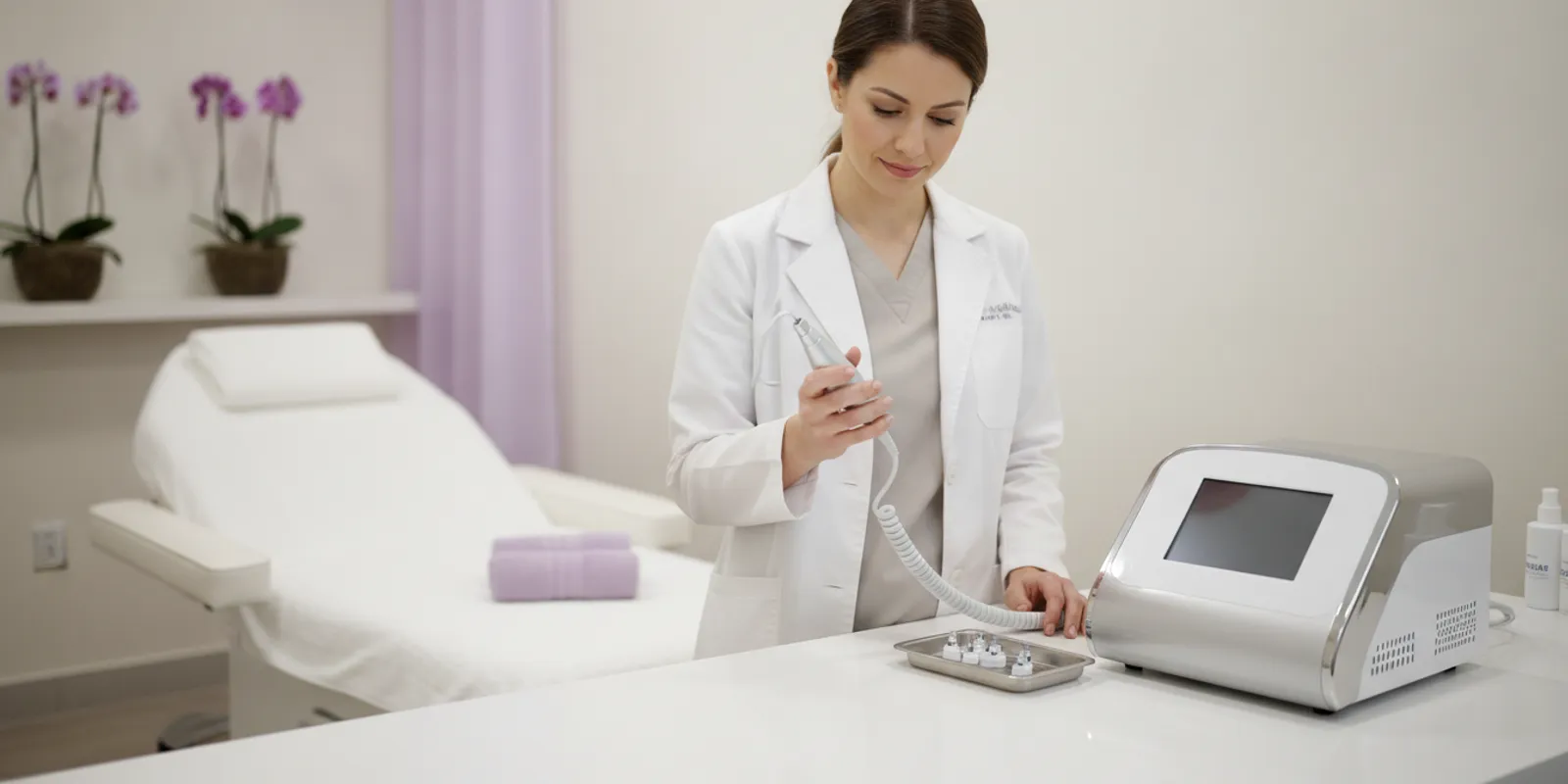
Choosing a microneedling machine for medical spa use means evaluating more than the handpiece or advertised features. The device must fit your services, team, patient-care workflow, and the rules that apply where you practice. This guide lays out a practical way to compare options and prepare questions before you invest.
Call Emage Medical to discuss professional microneedling options
What should a medical spa expect from a microneedling machine?
Professional microneedling devices are designed to create controlled punctures in the skin using a powered handpiece and a single-use needle cartridge or tip. The details vary by system. Depending on the device and its labeling, adjustable depth, speed settings, cartridge design, and handpiece ergonomics can affect how a trained provider plans and performs a service.
Start with the services you actually intend to offer. A machine is not a complete treatment plan by itself. Your protocols, staff qualifications, patient screening, infection-control practices, consent process, aftercare instructions, and local scope-of-practice requirements all matter. If you are still building the service, see this professional microneedling services practice launch guide for related planning considerations.
Also be precise about regulatory language. The FDA explains that it has reviewed and legally authorized specific microneedling products as medical devices for specific uses and areas of the body. That does not mean every device has the same authorization or that one product’s status applies to another. Review the exact manufacturer labeling and regulatory information for the model you are considering. The FDA’s microneedling devices overview is a useful starting point.
Which type of microneedling system fits your practice?
“Microneedling machine” can describe several forms of equipment. Compare the complete system and the way your team will use it, rather than relying on a category label or a product photo. The table below is a starting point; actual capabilities and requirements depend on the individual device and its documentation.
| Option to compare | What to look at | Questions for the practice |
|---|---|---|
| Powered pen-style device | Handpiece balance, control layout, available depth settings, and cartridge compatibility | Can providers hold and operate it comfortably during the planned workflow? |
| System with multiple cartridge choices | Cartridge types, sterile packaging, single-use instructions, and replenishment availability | Which approved cartridges match the services and protocols we plan to offer? |
| Device with adjustable settings | How settings are selected, displayed, documented, and limited by the instructions for use | Can staff follow a consistent, training-based protocol without improvising? |
| Entry into a new service category | Training, patient screening, consent, cleaning, storage, and post-service procedures | What policy, supervision, and staff preparation must be in place before launch? |
These categories are not substitutes for a manufacturer’s specifications. Ask for the exact model name, user manual, device labeling, cartridge instructions, and any applicable regulatory documentation. Then match those materials against the planned service. If a feature is not described in the documentation, do not assume it is available or appropriate for your protocols. Practices comparing device approaches can also review this guide to microneedling pens and RF microneedling machines.
How should you evaluate device features?
Build a short list of practical requirements before comparing brands. A feature matters when it supports the treatment workflow you have planned and can be used as directed. These checks can help you distinguish a useful specification from a marketing phrase.
Check depth controls and operating guidance
Depth settings may be relevant to treatment planning, but a wider adjustment range is not automatically a better fit. Confirm what the device permits, how settings are selected, and what the manufacturer’s instructions say about use. Your clinical protocols should be based on staff training, the device labeling, and applicable professional guidance, not an assumption that a machine setting determines who can safely provide a service.
For a closer look at the terminology used for different needle configurations, review this guide to microneedling needle cartridge sizes. Treat general explanations as a starting point, then verify the options offered for the specific machine you are considering.
Review the handpiece and cartridge workflow
Ask how the handpiece is cleaned, which components are single use, how cartridges attach, and how used supplies are discarded under your policies. Have the people who will perform the service review the setup. They can identify practical concerns such as grip, cable movement, visibility of controls, and how easily the team can prepare the room without disrupting clean and used-item separation.
Confirm that replacement cartridges are available for the intended device and that their storage and handling requirements work for your practice. Do not assume cartridges are interchangeable across brands or models. The product documentation should identify compatible components and directions for use.
Look for usable controls and reliable support
Ask for a demonstration of the complete workflow, including setup, adjustments, shutdown, and routine care. The interface should make the specified controls understandable to trained users. Ask what training is provided, who can access it, how questions are handled after installation, and where the current manual and service information are kept.
Before making a decision, establish what support covers and what it does not. Request the written warranty and support terms. Confirm how to report a malfunction, how the device is serviced, and whether the practice needs to take any steps to maintain coverage. Do not rely on a verbal summary if the written terms differ.
Test the workflow with a realistic room setup
A product demonstration is more useful when it resembles the way your team will work. Ask the supplier to show the device from unpacking and inspection through setup, simulated operation, shutdown, and storage. Have a provider check whether controls can be seen while holding the handpiece, whether the cord or other components interfere with movement, and whether the cartridge can be attached and removed according to the directions.
Then map each action to a role. Who checks the model and supplies before the appointment? Who prepares the room and handles clean versus used components? Who records the relevant device and cartridge details? A short walk-through can expose missing steps before launch. Record unanswered questions and get written clarification rather than asking staff to fill gaps from memory.
What regulatory and practice requirements should you verify?
Regulation is not one-size-fits-all. Device status, intended use, provider scope, delegation, and supervision can involve different rules. FDA authorization for a particular device does not, by itself, answer whether a specific person may use it in a particular setting or for a particular service. Likewise, a state rule about a provider’s scope does not establish that every device is authorized for every use.
The American Med Spa Association discusses microneedling regulation and the role of state nursing or medical boards in its overview of how microneedling is regulated. Use this as general context, not a substitute for checking the current rules that apply to your practice. Requirements may vary by state, provider credential, device, and treatment plan.
Before purchase or launch, make a verification list:
- Confirm the exact device model and intended use in the manufacturer’s current documentation.
- Check the relevant state board rules and any applicable requirements for your facility and providers.
- Clarify whether supervision, delegation, or a medical director is required for your planned service.
- Confirm which staff members may perform each task and what training or documentation is expected.
- Ask your compliance or legal adviser how to resolve any conflicting or unclear guidance.
- Keep the device labeling, training records, maintenance information, and written protocols accessible to the team.
Do not treat a sales conversation as a legal determination. If the device or scope questions are unclear, get guidance from the relevant board or a qualified professional before you buy or offer the service.
How can you assess patient-care readiness?
Equipment selection should be connected to a complete operating plan. A practice needs a consistent process for deciding whether a service is appropriate for an individual patient. That process should be created and overseen by qualified professionals and should follow the device’s labeling, applicable requirements, and the practice’s clinical policies. For further background, see this overview of microneedling contraindications, and verify all screening guidance against your own clinical protocols.
At a minimum, review how your team will manage consultation and screening, informed consent, treatment documentation, room preparation, infection control, and post-service communication. Define who is responsible for each step. Plan how the team will handle a question or concern after treatment, and make sure staff know when to escalate it to the appropriate clinician.
Turn these responsibilities into a repeatable sequence. Before an appointment, confirm that the planned service is within the provider’s role and the device’s instructions, that required supplies are available, and that the patient information and consent process are ready. During room preparation, follow the practice’s established cleaning and infection-control procedures and keep single-use components separate as directed. Afterward, record the information your protocol requires, dispose of used supplies appropriately, and provide the approved aftercare information. This is an organizational outline, not a treatment protocol; clinical details belong in the practice’s approved procedures.
Keep patient-facing information accurate and aligned with the device documentation. Avoid promising a particular result or implying that results are guaranteed. If the practice offers more than one microneedling approach, explain the differences in plain language and document the recommendation process according to your policies.
New teams can also use a written launch checklist. Include staff training, supply inventory, device inspection, cleaning steps, consent forms, treatment-room setup, documentation templates, and a process for reviewing the first cases internally. A checklist does not replace clinical judgment; it helps the team carry out approved procedures consistently.
How should you compare the total purchase decision?
Compare more than the equipment itself. List the full set of items and support your practice would need to begin and maintain the service. Ask vendors to clarify which items are included, which are optional, and which require separate purchases. Request written terms so you can compare like with like.
- Device and accessories: Record the model, included handpiece, power supply, case, and any other components.
- Consumables: Identify compatible cartridges, packaging, ordering process, and storage requirements. Do not assume a cartridge supplied for one model fits another.
- Training: Confirm format, intended participants, available materials, and how the team can ask follow-up questions.
- Service and warranty: Read the written coverage, exclusions, service process, and maintenance requirements.
- Practice readiness: Estimate the staff time, room changes, policies, and recordkeeping needed before the first service.
- Commercial terms: Review the written purchase terms and any separately offered options with the appropriate decision-makers.
A simple comparison sheet can prevent a low headline figure or a long feature list from dominating the decision. For each system, record the same facts: model, documentation received, intended workflow, training plan, consumables, service terms, and unresolved questions. If a vendor cannot answer an important question, mark it as open rather than filling the gap with an assumption.
One practical way to use the sheet is to separate requirements from preferences. A requirement might be access to current device instructions or a documented supply-replacement process. A preference might be a particular control layout or handpiece feel. First rule out options that fail a requirement; then compare preferences among the remaining devices. This prevents a convenient feature from overshadowing a gap in documentation, training, or support.
Documentation is part of a well-planned service workflow. This microneedling before-and-after practice guide offers additional context for practices organizing patient records and service processes.
What should you ask a supplier before buying?
Use a structured conversation to get specific answers. Bring the people who will operate the device and the person responsible for compliance or purchasing. Ask the supplier to show you the relevant documentation rather than giving a general assurance.
- What is the exact model, and where can we review its current instructions and intended-use information?
- Which settings and cartridges are available for this model, and what does the manufacturer specify for each?
- What training is included, who provides it, and how can staff access materials afterward?
- What cleaning, maintenance, and storage steps does the manufacturer require?
- What is included in the written warranty, and how does service work if the device needs attention?
- Which supplies are compatible, and what information should we use to reorder the correct items?
- Can our team see a complete demonstration, including setup, use of controls, and cleanup?
- What questions about staff scope or oversight should we verify with our state board or adviser?
When you compare answers, separate documented facts from opinions. A product brochure may help you identify features, but the manual, labeling, written terms, and applicable rules are what your team should use to verify the details.
After the conversation, send a brief follow-up listing the model discussed, documents received, points still open, and who will confirm each item. This creates a clean handoff between the supplier, clinical lead, and purchaser. It also gives the team a record to revisit if the model or service plan changes before installation.
How can you make a practical shortlist?
Keep the shortlist small enough for a careful side-by-side review. Start by describing the intended service, the providers involved, and the patient-care workflow in a few lines. Use that same description with each supplier so the answers are comparable. Then collect the same core materials for each option: model identification, current instructions, cartridge information, training outline, maintenance requirements, written support terms, and any relevant regulatory documentation.
Next, review the materials with the people who will own each part of implementation. A clinical lead can assess whether the documentation supports the planned workflow. The staff who will operate the device can evaluate setup and controls. The purchasing lead can compare included items and ongoing supply needs. A compliance adviser can help resolve scope or supervision questions. If a critical detail remains uncertain, pause the selection and identify what evidence or advice is needed.
Finally, write down why the preferred option fits the practice. Tie each reason to a documented feature or an operational need, not a broad promise. Note any limitations, open tasks, and the person responsible for resolving them. This record makes the decision easier to explain to the team and gives you a baseline for reviewing the service after launch.
Frequently Asked Questions
Can any medical spa buy a microneedling machine?
Do not assume that a single rule applies to every practice or provider. The answer can depend on the state, provider qualifications, device, and planned use. Verify those details with the relevant state board and qualified advisers, and review the specific device documentation before purchase.
Does FDA authorization mean every microneedling use is allowed?
No. The FDA describes authorization for specific microneedling products and specific uses or body areas. Check the information for the exact device you are evaluating. Do not apply one product’s authorization to a different model or use.
What is the most important feature in a professional microneedling device?
There is no single feature that is best for every practice. Start with your planned services, provider workflow, device documentation, cartridge options, training, and support. A feature is useful when it fits the intended workflow and can be used as directed by trained staff.
Should a practice choose the machine with the most settings?
Not necessarily. More settings do not automatically make a device a better match. Choose based on the documented capabilities, the needs of your practice, training, and the protocols your qualified team can support.
Call Emage Medical to discuss your practice’s microneedling needs
A careful comparison helps your team choose equipment that fits its planned services, documentation, and operating process. Verify the device and practice requirements before introducing the service to patients.