

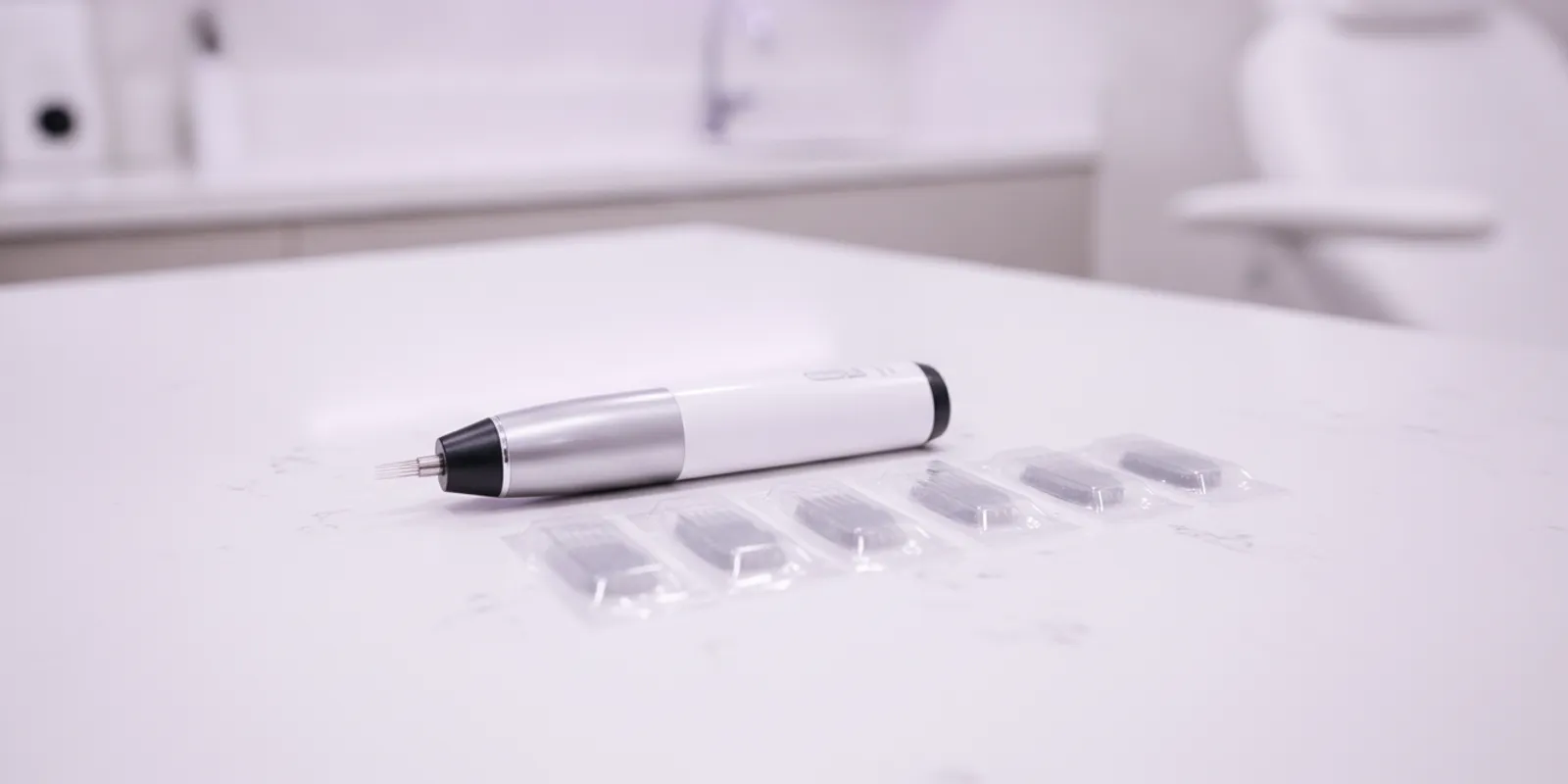
When researching microneedling needle cartridge sizes, start by separating the cartridge label from device compatibility and clinical decisions. A number on a package may describe one feature, while another number may refer to a model, depth range, or package identifier. This professional buying guide focuses on equipment evaluation and recordkeeping, not treatment instructions.
Contact Emage Medical with equipment questions
What does cartridge size mean?
There is no reason to assume that the word “size” has one universal meaning across microneedling products. A product page or package may use a number to identify needle configuration, cartridge model, compatible handpiece, or another product attribute. Depth specifications may appear nearby, but that does not mean they describe the cartridge itself. The label has to be read in the context of the specific device and its current documentation.
Start with the exact product name and part number rather than a shorthand phrase. Record where each detail came from: the box, the product listing, the device manual, or written confirmation from the manufacturer or authorized supplier. If two sources use different terms, keep both descriptions in your notes and ask which one is the official identifier. Do not resolve a mismatch by guessing from appearance.
This distinction matters when teams search online. A query for a particular count may return products with similar descriptions that are not verified for the same pen. Likewise, an image that looks similar does not establish that a cartridge will attach, operate, or be approved for a particular system. The safest purchasing comparison is based on a named device model and a documented cartridge identifier.
For broader background on how professional services fit into a practice, see Emage Medical’s professional microneedling practice guide and this overview of professional microneedling pens.
Which specifications should buyers compare?
Build a comparison from facts that can be checked, not from a single number in a product title. These are useful fields for a purchasing worksheet:
- Device identity: Record the complete pen or system name, model, and generation where stated.
- Cartridge identity: Capture the official name, part number, and any configuration description shown on the package or current product materials.
- Compatibility: Note which exact device model the manufacturer or authorized supplier confirms. If confirmation is missing, mark the question as open.
- Other stated specifications: Copy any depth or operating information accurately and note whether it describes the device, handpiece, or cartridge.
- Package details: Record quantity per box, packaging format, and any product identifiers used for ordering.
- Documentation: Save the current instructions, listing, quote, and any written clarification with the date checked.
A comparison is only meaningful when the entries refer to the same kind of information. Do not compare a device’s adjustable depth range with a cartridge configuration label as if they were equivalent. Avoid converting one manufacturer’s code into another manufacturer’s terminology unless the manufacturer supplies that mapping. When a listing is incomplete, ask the supplier to identify the precise product and provide applicable documentation before you place an order.
| Item to compare | What to record | Question to resolve |
|---|---|---|
| Device model | Full model and generation | Which exact handpiece or pen is involved? |
| Cartridge configuration | Official label and part number | What does the stated number describe? |
| Compatibility | Manufacturer or supplier confirmation | Is fit documented for this exact device? |
| Depth information | Wording and source, without interpretation | Does this refer to the device or cartridge? |
| Pack and ordering | Quantity, identifier, and order description | Does the quote match the requested pack? |
| Use and handling | Current product labeling and instructions | What controls does the product documentation specify? |
How can a practice verify cartridge compatibility?
Compatibility should be confirmed for the exact device and cartridge combination. A broad statement such as “fits most pens” is not a substitute for a model-specific answer. Nor should a practice infer compatibility because a cartridge has a familiar shape, connector, or marketing description. A mismatch can create purchasing, inventory, or workflow problems, even before any product is considered for use.
- Identify the device. Write down the product name, model, and generation from the device label and its current documents.
- Identify the cartridge. Use the official product name and part number shown in current manufacturer materials or on the packaging.
- Check the source. Look for a compatibility statement in the current instructions or product documentation. Note its date and version when available.
- Resolve gaps in writing. Send the device and cartridge identifiers to the manufacturer or authorized supplier and ask whether that exact pairing is supported.
- Save the answer. Attach written confirmation to the purchasing file and inventory record so the same check does not have to be repeated from memory.
For an office with more than one pen, perform this check for each model rather than creating one general compatibility list for the whole practice. A replacement device, updated model, or different handpiece may change which documents apply. Keep a record of when the team last verified the pairing and who reviewed the source.
If the answer remains unclear, hold the order until the question is resolved. Do not use a generic marketplace listing as the authority for fit when it conflicts with the product manufacturer’s information. You can also review Emage Medical’s CytoPen product overview for product context, while relying on current product documentation for the specific model and cartridge being considered.
How should practices compare different cartridge labels?
Labels are most useful when treated as identifiers, not as a ranking. A higher needle count, different configuration, or larger-looking cartridge is not automatically “better” for every practice. Those features alone do not establish compatibility, intended use, performance, or suitability for a clinical situation. Buyers should compare descriptions as published and seek clarification about any ambiguous label.
Try a simple side-by-side review. First, make sure the products are intended for the same device model. Next, check whether the labels describe the same attribute. Then compare package quantity and ordering information. Finally, list unresolved questions separately from confirmed facts. This keeps the team from treating the clearest or largest number as the deciding factor.
For example, a supplier quote might include a cartridge name and a number but omit the part number. A second quote might include a part number and package count but not explain compatibility. Those quotes are not ready for a price comparison. Ask each supplier to specify the official item, exact model fit, and units per package. Only then can the practice tell whether the offers are comparable at all.
It also helps to preserve the original language. If a product document calls a feature by a particular name, copy that wording into the comparison rather than substituting an informal abbreviation. In the notes column, add a plain-language explanation only when the source supports it. This reduces the chance that the purchasing worksheet will silently change the meaning of a specification.
What should buyers check in product labeling and documentation?
Product labels and instructions are central to understanding a cartridge’s identity and handling requirements. Read the current documentation for the specific item. Follow its statements on packaging, storage, use, and disposal. This article cannot replace product instructions, professional training, or applicable requirements. The FDA provides general information about medical devices at FDA.gov; product-specific labeling remains the source to consult for the item in question.
When a product arrives, compare the delivery with the purchase order and the supplier’s confirmation. Check that the product name and identifier match, that the quantity is what was ordered, and that the package condition is consistent with the applicable instructions. If the shipment is incomplete, damaged, mislabeled, or different from the order, follow the practice’s receiving process and ask the supplier to resolve the issue before the product is added to available stock.
Keep the box or associated identifiers available long enough to complete the practice’s documented receiving checks. Avoid transferring cartridges into unlabeled containers or relying on memory to identify open packages. If the team uses an internal inventory label, retain the official product name and identifier in the supporting record. That makes it easier to trace a question back to the supplier, order, or instructions later.
Product pages can be useful, but web copy may change. Save a copy or note the date and source of important purchase information. If the package and online description differ, do not assume one is correct without checking. Ask for current written clarification, and update the inventory record once the discrepancy has been addressed.
How can a practice organize purchasing and inventory?
A consistent record helps different team members make the same distinction between device, cartridge, and package. Create a row for each device model and each compatible cartridge item confirmed by the manufacturer or authorized supplier. Include the purchase source and date checked. Keep the official name visible even if the team also uses a short internal label.
A useful inventory record can include:
- Device name, model, and generation.
- Cartridge name, official part number, and configuration as labeled.
- Written compatibility source, reviewer, and date confirmed.
- Supplier, order number, date received, and package quantity.
- Receiving status and any discrepancy or resolution.
- Location of current product instructions and related records.
Set a review trigger for changes that could make older records unreliable. Examples include acquiring a different device model, receiving a revised product label, changing suppliers, or finding an inconsistency during receiving. The trigger does not mean that a cartridge is incompatible; it means the practice should check the current information rather than assume the prior record still applies.
Separate purchasing controls from clinical workflow. A buyer can verify identifiers, package details, and documentation. Licensed professionals should use their training and the current device instructions when considering clinical matters. The microneedling screening guide addresses a separate practice topic; cartridge counts and purchase records do not replace screening or clinical judgment.
What questions should you ask a supplier before ordering?
Clear questions make supplier responses more actionable. Include the model and generation in the first message, then ask about the precise cartridge identifier rather than asking only for “the right size.” Request answers in writing when the information will be used for recurring orders or training other staff.
- What is the complete product name and part number for the cartridge?
- Which exact device model and generation is this item documented to fit?
- Where can I find the current compatibility statement or instructions?
- What does the number or configuration wording on the listing refer to?
- How many units are included in the quoted package?
- Are there handling, storage, or disposal instructions in the current labeling that our receiving process should capture?
- If a package arrives with a different identifier, what is the supplier’s process for resolving the discrepancy?
Ask the supplier to distinguish confirmed information from a general description. For instance, “This is the product we usually send” does not answer whether a specific cartridge is confirmed for a specific model. A written response should name both items. If the supplier cannot verify the pairing, ask where the manufacturer’s current documentation can be obtained.
Keep the exchange with the quote and purchase record. This provides a useful audit trail if staff, equipment, or suppliers change. It also helps when a practice needs to reorder: the team can point to the exact item that was previously checked rather than selecting a similar-looking listing.
How does a device example fit into the comparison?
Product specifications are meaningful only when tied to their source and model. Emage Medical describes the CytoPen S2 as a 36-needle microneedling device with adjustable depth from 0.25 mm to 2.5 mm. Those are stated device specifications, not advice for choosing a cartridge or a treatment setting. Buyers comparing products should confirm the current labeling and model details relevant to their order.
Use a product example to test the quality of a purchasing worksheet. Can the team distinguish the device’s stated depth information from a cartridge’s model designation? Can it record the exact item number and source for the cartridge being ordered? Can it find written evidence of fit for the particular device? If a worksheet makes those distinctions visible, it is more useful than a list that contains numbers without context.
For practices adding a service, equipment review is only one part of planning. The med spa planning guide and information on microneedling equipment purchasing considerations cover broader business questions. Keep equipment selection, purchasing documentation, and clinical decisions in their proper lanes.
What common purchasing mistakes should you avoid?
- Choosing by number alone. A count or code may not mean what the buyer assumes. Ask what it identifies and check the source.
- Assuming visual fit means documented compatibility. Similar shapes or connectors do not confirm manufacturer support for a particular device.
- Comparing unlike specifications. A cartridge label, device depth range, and package quantity are different fields.
- Relying on outdated pages. Check current documentation and retain the date or version used for the decision.
- Leaving out the part number. A shorthand description can be difficult to repeat accurately when the team reorders.
- Skipping receiving checks. Confirm product identity and quantity before stock is treated as matching the order.
- Turning purchasing guidance into clinical direction. A configuration comparison is not a treatment protocol or a recommendation for a patient.
These issues are easier to prevent with a short, repeatable process than to correct after an order has been placed. Use the same fields for each supplier, record open questions, and do not mark a detail as confirmed until the source supports it.
Call Emage Medical to discuss professional microneedling equipment
Frequently Asked Questions
Does a higher needle count mean a better cartridge?
No. Needle count alone does not establish compatibility, intended use, or suitability for a clinical situation. Compare products using their documented specifications and the exact device model.
Can cartridges from different brands fit the same pen?
Do not assume that they can. Check current device documentation or obtain confirmation from the manufacturer or authorized supplier for the exact model and cartridge identifier.
Can cartridge size determine a treatment setting?
No. A cartridge label or device specification is not a clinical recommendation. Follow current product instructions, professional training, applicable requirements, and clinical judgment.
What should I do if the package identifier differs from the quote?
Pause the receiving process for that item and compare the package with the order record. Ask the supplier to resolve the discrepancy and document the answer before updating inventory.
How often should a compatibility record be reviewed?
Review it when the device model, cartridge labeling, supplier, or relevant product documentation changes, and whenever the team finds a mismatch. Keep the current source and review date with the record.
By keeping cartridge identifiers, device compatibility, product labeling, and clinical decisions distinct, a practice can compare microneedling equipment more clearly and ask better questions before ordering.