


RF microneedling vs traditional microneedling is a practical equipment question for aesthetic practices.
Both approaches use controlled needle penetration as part of a professional aesthetic workflow. The important difference is that RF microneedling adds radiofrequency energy to the device and treatment plan. That changes the conversation for practitioners. They must assess modality selection, energy controls, training, documentation, and equipment fit. For a broader equipment framework, read Emage Medical’s RF microneedling machine guide for aesthetic practices.
Request a product tour to compare professional microneedling equipment with an Emage Medical specialist.
How Traditional Microneedling Works and What It Delivers
Traditional microneedling uses a pen or handpiece to create controlled microchannels through mechanical needle movement, without radiofrequency delivery.
The provider selects the device, cartridge, depth, speed, and technique. That choice must follow the device instructions, intended use, practice protocol, and individual assessment.
For a practice, traditional microneedling can add a focused mechanical needling service without a separate RF energy platform.
The team still evaluates the pen or handpiece, cartridge supply, sanitation process, training pathway, documentation, and qualified services.
What traditional microneedling changes in the treatment plan
- Mechanical delivery: The device creates controlled needle penetration without adding RF energy.
- Protocol design: Providers build the workflow around cartridge selection, needle depth, passes, topical products when allowed, and aftercare instructions.
- Equipment scope: The platform may be appropriate when the practice wants a dedicated microneedling device rather than a combined microneedling and RF system.
- Team readiness: Staff still need product-specific training, scope-of-practice clarity, infection-control procedures, and a consistent recordkeeping process.
Traditional does not mean basic or automatically appropriate for every patient. The practice must follow the selected device’s current labeling, instructions for use, local requirements, and the judgment of qualified professionals.
How RF Energy Changes the Treatment Equation
RF microneedling combines mechanical needle penetration with radiofrequency energy delivered through a device-specific electrode or needle configuration.
The added modality may let a practice plan around needle placement and controlled thermal delivery. It also adds settings, training requirements, safety checks, and documentation responsibilities.
The distinction matters because RF microneedling is not simply traditional microneedling with a stronger setting. Device design, cartridge choice, energy delivery, needle depth, timing controls, and intended use all shape the evaluation.
A 2023 review describes RF microneedling as a technology category with different device designs and clinical applications. Practitioners should assess the specific platform rather than generalize from one machine to another. Review the published RF microneedling technology overview.
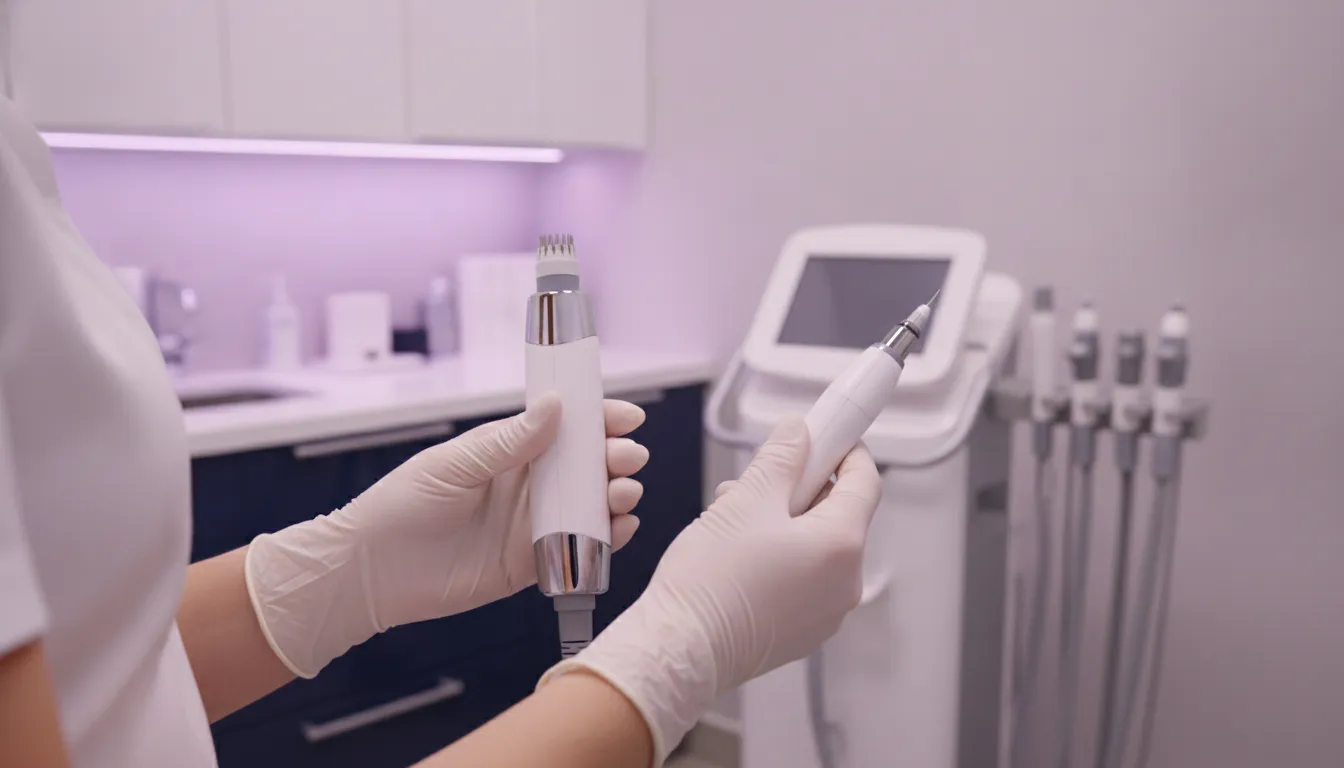
What practitioners gain and what they must manage
- More variables to evaluate: The team must understand the relationship between needle depth, energy settings, timing, electrode design, and the device’s intended use.
- Broader modality planning: A combined platform can support a practice that wants both microneedling and RF workflows, provided the device and provider qualifications support those services.
- More training depth: Staff need education specific to RF delivery, device controls, patient screening, risk communication, and response protocols.
- Closer documentation: The record should capture the device, cartridge or tip, settings, treatment area, and other information required by the practice protocol and applicable rules.
RF energy is not a substitute for clinical judgment. It is an additional modality that must be used within the selected product’s labeling and the provider’s qualifications.
A Practice-Level Comparison of RF Microneedling vs Traditional Microneedling
At the practice level, traditional microneedling is a mechanical needle-delivery service. RF microneedling adds radiofrequency energy to the system.
The right choice depends on the services the practice is qualified to provide, the workflow it can support, and the modality flexibility it wants to offer.
| Practice consideration. | Traditional microneedling. | RF microneedling. |
|---|---|---|
| Core modality. | Mechanical needle penetration. | Mechanical needle penetration plus device-specific RF delivery. |
| Primary controls to evaluate. | Cartridge, depth, speed, technique, and workflow. | Cartridge, depth, RF output, timing, electrode design, and workflow. |
| Training profile. | Needle technique, sanitation, screening, and documentation. | All traditional requirements plus RF-specific settings, screening, and safety training. |
| Equipment decision. | Focused pen or handpiece may meet the practice’s scope. | Combined or RF-focused platform may fit a practice seeking an added energy modality. |
| Best comparison question. | Can our team deliver a consistent mechanical-needling workflow? | Can our team safely support both needle and RF workflows under current training and labeling? |
| Buying priority. | Usability, cartridge options, training, service, and documentation. | All traditional priorities plus energy controls, electrode options, compliance materials, and support. |
Bottom line: Traditional microneedling may fit a practice seeking a focused mechanical-needling service.
RF microneedling may fit a qualified, trained team that is prepared to add a controlled RF modality. A dual-modality device can reduce the need to choose one workflow. It does not remove the need for device-specific training.
When Should a Practice Choose RF Microneedling vs Microneedling Alone?
A practice should compare RF microneedling with traditional microneedling by starting with its intended services and operational readiness, not with a promise of a particular patient result. Review the practice’s provider qualifications, target concerns, room workflow, training plan, equipment budget, consumable requirements, and documentation standards before selecting a modality.
Traditional microneedling may fit when
- The practice wants to add a mechanical microneedling service with a focused equipment footprint.
- The team is building its first microneedling workflow and wants a simpler modality scope.
- Cartridge availability, pen ergonomics, training, and predictable room setup are the primary buying factors.
- The planned service menu does not require radiofrequency delivery.
RF microneedling may fit when
- The practice is qualified and prepared to deliver a device-specific RF modality.
- The team wants to evaluate needle delivery and RF energy within one coordinated workflow.
- Providers need settings and electrode options that support the selected device’s intended use.
- The practice can support deeper training, patient communication, documentation, and safety procedures.
Read Emage Medical’s RF microneedling machine guide for a broader equipment and practice-evaluation framework.
Which Patient and Practice Factors Should Providers Assess?
Providers should assess the patient’s goals, relevant history, skin characteristics, treatment area, timing, and ability to follow the selected protocol before recommending either modality. Practices should not use a generic comparison chart as a patient-specific treatment recommendation. The qualified provider must apply the device’s current labeling, screening process, and professional judgment.
Skin type and seasonal planning
Skin tone, tanning history, recent procedures, medications, and healing history may affect how a provider evaluates a planned service.
RF is not light-based. That fact alone does not establish suitability for every person or device. Confirm the selected product’s labeling. Use a documented screening process rather than relying on a broad claim such as “safe for all skin types.”
Concern, downtime, and expectations
The practice should explain what the modality is designed to do, what the patient may experience, and what follow-up involves. It should also explain which outcomes cannot be guaranteed.
Traditional microneedling and RF microneedling both require realistic expectations. Avoid promising treatment of a condition or a guaranteed cosmetic result. Use such claims only when the product’s authorized intended use and the practice’s approved materials support them.
Safety communication
RF microneedling is a medical procedure that requires qualified use and careful patient communication. The FDA has published a safety communication about reported serious complications with certain uses of RF microneedling, including burns, scarring, fat loss, disfigurement, and nerve damage. Practices should review the FDA safety communication and align training, consent, screening, and aftercare with the selected device and applicable requirements.
What Should Practitioners Evaluate Before Buying Equipment?
Practitioners should evaluate the complete equipment system, not just the words “RF microneedling” on a product page. A disciplined comparison protects the practice from buying a device that looks capable in a brochure but does not fit provider qualifications, workflow, documentation, or long-term support needs.
- Intended use and clearance: Confirm the device identity, intended use, regulatory documentation, and current instructions. Emage Medical identifies Cyto-RF with FDA clearance K231749; the FDA 510(k) record is a useful starting point for verification, not a substitute for the manufacturer’s current labeling.
- Needle and electrode options: Compare cartridge types, needle configuration, adjustable depth, and how RF is delivered. Cyto-RF lists 25 Pin, 49 Pin, and 49 RF cartridges, with an adjustable depth range of 0.25 mm to 3.5 mm on its product information.
- Energy controls: Ask how providers set RF frequency, output, timing, and delivery pattern. Cyto-RF lists 1 MHz frequency, up to 50 W output, and control through a 15-inch LCD touchscreen, foot pedal, or handle trigger.
- Training and scope: Confirm who trains the team, what the training covers, how competency is documented, and which providers can perform each service under local rules.
- Consumables and maintenance: Review cartridge availability, storage, ordering process, equipment cleaning, service response, and the total workflow cost without inventing or assuming a price.
- Patient communication: Confirm that the practice has compliant materials for explaining the device, realistic expectations, risks, aftercare, and when to refer or escalate.
- Support and warranty: Get warranty terms, service contacts, training access, and escalation procedures in writing. Do not treat a general marketing statement as a substitute for the live product page or sales documentation.
How Does the Modality Choice Affect Practice Workflow?
Modality choice affects the entire patient journey, from consultation and scheduling through room setup, treatment documentation, follow-up, and inventory. Traditional microneedling may require a focused pen workflow. RF microneedling adds energy settings, electrode or cartridge decisions, additional training, and more detailed checks before the provider starts.
A combined platform such as Cyto-RF can be attractive when the practice wants a coordinated equipment strategy. Emage Medical’s product page describes Cyto-RF as combining RF microneedling with fractional non-ablative RF and lists a 15-inch touchscreen, multiple cartridge options, and adjustable depth. The practice should still confirm that the device’s current documentation and training match its own services.
Before purchase, map one complete workflow on paper:
- Consultation: Identify the patient’s goals, relevant history, and whether the proposed service is within the practice’s qualifications.
- Preparation: Confirm room setup, sterile or single-use supplies, device checks, consent, and documentation.
- Delivery: Follow the selected device’s instructions, settings, treatment plan, and provider scope.
- Aftercare: Give approved aftercare information, document the encounter, and establish the follow-up process.
- Review: Track workflow consistency, consumables, training questions, and patient communication issues.
Explore Cyto-RF or request a product tour to discuss whether a professional RF platform fits your practice.
Frequently Asked Questions About RF Microneedling vs Traditional Microneedling
What is the main difference between RF microneedling and traditional microneedling?
Traditional microneedling uses mechanical needle penetration. RF microneedling combines needle penetration with radiofrequency energy delivered through a device-specific configuration. That added modality changes the training, settings, screening, documentation, and equipment evaluation required of the practice.
Can RF microneedling replace traditional microneedling?
RF microneedling does not automatically replace traditional microneedling. A qualified practice should compare its intended services, provider qualifications, patient needs, workflow, and device labeling. Some practices may prefer a focused microneedling pen, while others may value a platform that supports both microneedling and RF workflows.
Which modality is better for an aesthetic practice?
Neither modality is universally better for every aesthetic practice. Traditional microneedling may fit a focused mechanical-needling workflow, while RF microneedling may fit a qualified team seeking an added RF modality. The decision should be based on training, intended use, workflow, support, and patient communication rather than a guaranteed result claim.
Is RF microneedling safe for every patient?
No general article can determine whether RF microneedling is appropriate for every patient. A qualified provider must assess the individual, follow the selected device’s current labeling, and use the practice’s screening and consent process. Practices should also review the FDA’s current safety communication about certain RF microneedling uses.
How should a practice compare RF microneedling devices?
Compare intended use, clearance documentation, needle and electrode options, energy controls, training, consumables, maintenance, warranty, support, and the full patient workflow. A product tour can help the team ask device-specific questions and determine whether the platform matches its qualified services and operational readiness.
Make the comparison a practice decision. Review the modality, training, device documentation, workflow, and support requirements before you buy. Request a product tour with Emage Medical to discuss professional equipment options.
Professional use note: This article is educational and does not provide medical advice or a patient-specific treatment recommendation. Follow the selected device’s current labeling and instructions for use, applicable laws and regulations, facility policies, and the judgment of qualified medical professionals.