

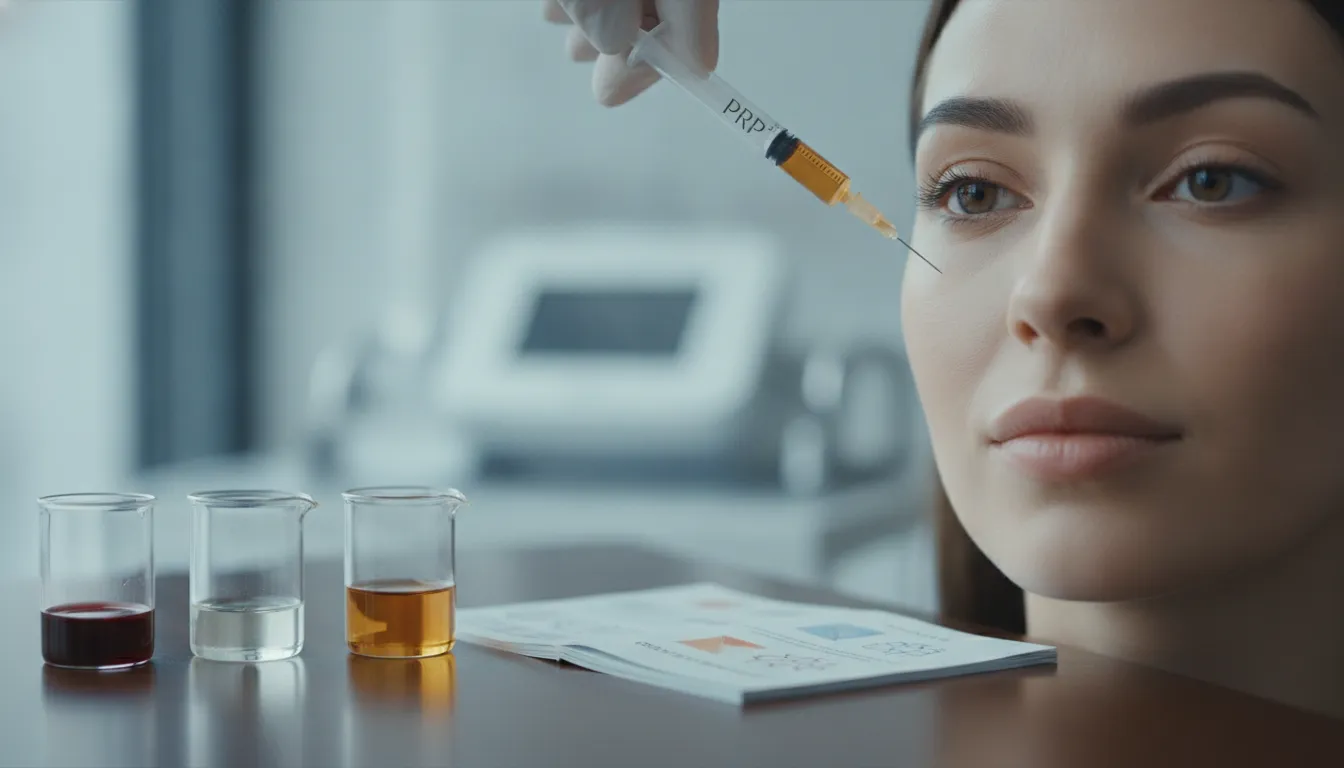
Under-eye concerns do not all come from the same source. Fine lines may reflect collagen loss, while dark circles can relate to pigmentation, visible blood vessels, thin skin, hollows, or shadows. PRP under eyes may help when skin quality plays a major role. It uses platelets and plasma from your own blood to support the skin’s natural repair process. The treatment usually requires patience, since improvements appear over several weeks or months rather than immediately. Before scheduling an appointment, you should understand the procedure’s benefits, limitations, risks, recovery, and alternatives. This guide covers the key details patients and aesthetic practices should review.
Key Takeaways
- Identify the concern before choosing PRP: PRP may help improve fine lines, crepey texture, thin skin, and some forms of dark circles, but it does not restore lost volume or remove prominent under-eye bags.
- Prepare patients for a gradual process: Temporary swelling, bruising, redness, and tenderness may occur, while visible changes often develop over several weeks or months and may require multiple treatments.
- Prioritize clinical consistency and patient safety: Use qualified providers, sterile protocols, anatomy-focused training, informed consent, standardized imaging, clear aftercare, and scheduled follow-up to support responsible treatment.
What Is PRP Under the Eyes, and How Does It Work?
Platelet-rich plasma, or PRP, is a preparation made from a small sample of your own blood. A provider processes the sample to concentrate platelets and plasma, then applies or injects the preparation into the delicate skin beneath the eyes. The goal is to support skin repair and improve texture, not to add volume or change the shape of the face.
Under-eye PRP may suit patients concerned about fine lines, crepey texture, thin skin, or mild dark circles. Because these concerns can have different causes, results vary from person to person. Skin thickness, age, sun exposure, overall health, treatment technique, and provider experience all play a role. A consultation can help determine whether PRP addresses the reason your under-eye area looks tired, or whether another option may be more appropriate.
How Providers Prepare PRP From Your Blood
A provider begins by drawing a small amount of blood, usually from your arm. The sample is placed in a centrifuge, which separates the blood into its primary components. The provider then collects the platelet-rich plasma and prepares it for the selected treatment method. Coastal Plastic Surgeons describes the basic PRP preparation process.
PRP may be delivered through carefully placed injections, microneedling, or a combination approach. The process varies by practice and treatment plan. Sterile handling is especially important around the eyes, where the skin is thin and sensitive. Ask how the practice processes PRP, maintains sterility, and chooses the delivery method.
How Platelets and Growth Factors Support Collagen Remodeling
Platelets contain signaling proteins and growth factors involved in the body’s healing response. When PRP is introduced into the skin, these components may support tissue repair, collagen production, elastin support, and overall skin quality. Over time, this activity may help the under-eye area look smoother, firmer, and more resilient. Women’s Health explains how PRP growth factors may support collagen and skin quality.
The process is gradual rather than instant. PRP does not create the immediate tightening effect associated with some procedures, and it cannot guarantee a specific result. Age, lifestyle, sun exposure, smoking, general health, and the severity of the concern can affect how the skin responds. Your provider should explain the expected timeline and how progress will be assessed.
How PRP Improves Skin Quality, Not Structural Volume
PRP is primarily a skin-quality treatment. It may improve the appearance of fine lines, thin skin, mild crepiness, and certain forms of discoloration. It does not act like a dermal filler, so it cannot replace lost fat, fill a deep tear trough, or restore volume beneath the eyes.
This distinction helps set practical expectations. A patient with thin, translucent skin may see a more noticeable change than someone whose main concern is a pronounced hollow, prominent fat pad, or significant under-eye bag. A provider may recommend another treatment, a combination plan, or no procedure if PRP is unlikely to address the underlying anatomy.
Review the Evidence, Treatment Limits, and FDA Status
Research on PRP for facial rejuvenation, including treatment around the eyes, is still developing. Some patients report improvements in skin texture and fine lines, but studies vary in how providers prepare PRP, deliver it, measure results, and schedule sessions. These differences make it difficult to promise one standard outcome, treatment protocol, or timeline.
PRP is not specifically approved by the US Food and Drug Administration as a cosmetic treatment for under-eye rejuvenation. A practice may use a patient’s own blood product under applicable medical and state requirements, but this does not mean the treatment is risk-free or suitable for every patient. The FDA provides information about regenerative medicine products that can help patients understand why approval status matters.
Ask your provider what evidence supports the proposed treatment, how many sessions they recommend, and what they consider a successful result. A responsible treatment plan should also explain the procedure’s limitations and identify alternatives when PRP does not match the concern.
Understand Why “Natural” Does Not Mean Risk-Free
Because PRP comes from your own blood, the risk of an allergic reaction to a donor substance is not the same as it would be with a synthetic or donor-derived product. However, the procedure still involves a blood draw, skin punctures, and treatment near the eye. Common temporary effects include bruising, redness, swelling, tenderness, and puffiness.
These effects may last about seven to 10 days, although recovery varies. Infection, prolonged swelling, skin irritation, and improper placement are less common but important risks to discuss. Medical conditions and medications also matter, particularly if you have a bleeding disorder, an active infection, significant skin irritation, or take medication that increases bruising. OVME outlines common side effects and recovery considerations for under-eye PRP.
Before treatment, your provider should review your medical history, explain warning signs, and give you clear aftercare instructions. Contact the practice promptly if you develop worsening pain, spreading redness, severe swelling, drainage, fever, or vision changes after treatment.
What Can PRP Under the Eyes Improve and What Can’t It Treat?
PRP under-eye treatment is intended to improve skin quality, not replace lost volume or change the structure of the eye area. During treatment, a provider uses a concentrated portion of the patient’s own blood to support the skin’s repair process. The aim is usually a gradual change in texture, tone, and resilience rather than an immediate, dramatic transformation.
Results depend on the cause of the concern, the patient’s skin characteristics, and the technique used. A consultation can help determine whether PRP is appropriate or whether another option, such as filler, laser treatment, skincare, or surgery, may be more suitable. The American Academy of Dermatology explains that dark circles can have several causes, including genetics, aging, allergies, sun exposure, and shadows created by hollows.
PRP may be most useful when thin, aging skin is the primary concern. It may offer less noticeable improvement when darkness comes from deep hollows, prominent fat pads, or pigmentation that requires a more targeted treatment. Understanding what PRP can and cannot address helps patients make informed decisions and gives providers a clearer basis for treatment planning.
Improve Dark Circles From Thin Skin and Visible Blood Vessels
PRP may help reduce the appearance of dark circles when thin under-eye skin allows blood vessels to show through. As the skin becomes thinner, reddish or blue tones beneath the surface can become more noticeable, especially in people with fair or translucent skin. Supporting collagen production and overall skin quality may make the area appear stronger and more even over time.
The change is typically subtle and develops gradually. PRP does not remove blood vessels, and it cannot guarantee that discoloration will disappear. Patients may need a series of treatments and occasional maintenance sessions. Providers should also check for allergies, eczema, frequent eye rubbing, and other sources of irritation that may contribute to persistent darkness.
Soften Fine Lines, Crow’s Feet, and Crepey Texture
PRP may soften fine lines and crow’s feet by supporting collagen remodeling in the treated skin. Collagen provides structure, while elastin helps the skin stretch and return to its original shape. As these proteins decline with age, the under-eye area may look thin, crinkled, or crepey.
Because collagen remodeling takes time, patients may notice early changes in smoothness after several weeks, with further improvement over the following months. PRP is generally better suited to mild or moderate texture concerns than deep wrinkles that remain visible when the face is relaxed. Consistent sun protection also matters, since ultraviolet exposure contributes to collagen breakdown. The American Academy of Dermatology recommends broad-spectrum sunscreen as part of a regular skincare routine.
Address Mild Laxity and Uneven Skin Quality
PRP may improve mild under-eye laxity by supporting healthier, more resilient skin. Some patients may also see a smoother surface and more even texture as the area responds to treatment. These changes can be helpful when early signs of aging affect skin quality, but the patient does not have significant sagging or structural changes.
Expectations should remain modest. PRP cannot tighten loose skin like surgery, reposition fat, or lift the lower eyelid. A provider may recommend PRP alone for mild laxity or combine it with another procedure when multiple concerns are present. Baseline photographs and skin imaging can make gradual changes easier to assess. Emage Medical’s Image Pro® Skin Imaging Systems can support consistent assessment and progress documentation when used by appropriately trained professionals.
Treat Pigmentation-Related Dark Circles
PRP may provide some improvement when dark circles involve uneven pigmentation, but it is not a dedicated pigment-removal treatment. Its potential benefit comes from improving skin quality and texture, which may make discoloration appear less noticeable. Results vary according to skin tone, pigment depth, sun exposure, genetics, and the condition responsible for the color change.
Pigmentation may also follow inflammation from dermatitis, allergies, or repeated rubbing. Treating that underlying issue is important, particularly when itching, flaking, or irritation is present. A provider may recommend sun protection, carefully selected topical products, or a pigment-focused procedure instead of, or alongside, PRP. Patients with a history of post-inflammatory hyperpigmentation should discuss that risk before treatment, since skin injury can sometimes lead to additional discoloration.
Set Realistic Expectations for Hollows, Puffiness, and Under-Eye Bags
PRP does not replace substantial volume beneath the eyes. It may improve the quality of the skin over a mild hollow, but it generally cannot fill a deep tear trough or correct pronounced shadowing. Dermal fillers add volume, while PRP focuses on the condition and texture of the skin. Patients with significant hollows may therefore see limited improvement from PRP alone.
PRP also cannot remove fat pads or correct prominent under-eye bags caused by fat prolapse. Puffiness related to fluid retention, allergies, sleep, or anatomy may require a different evaluation. Depending on the cause, a provider may discuss allergy management, filler, an energy-based procedure, or lower eyelid surgery. A careful assessment is more useful than treating every under-eye concern with the same procedure.
Match the Treatment to the Underlying Cause
The same under-eye concern can have different causes from one patient to another. Darkness may result from pigment, visible vessels, thin skin, hollowness, shadowing, or a combination of factors. Fine lines may relate to aging, sun exposure, dehydration, repeated facial movement, or reduced elasticity. Identifying the primary cause helps a provider recommend an option with a realistic chance of helping.
During the consultation, the provider should review the patient’s medical history, medications, skincare routine, allergies, and previous cosmetic procedures. They should examine the area in different lighting and assess whether discoloration changes when the skin is gently stretched. Careful evaluation matters around the eyes, where the skin is delicate and the anatomy is complex. Practices can support consistent consultations through detailed documentation, patient education, and appropriate aesthetic device training from an experienced medical technology team.
Who Makes a Suitable Candidate for PRP Under the Eyes?
PRP under the eyes may suit adults who want to improve delicate under-eye skin without adding volume or changing the shape of the face. The treatment uses a concentrated portion of the patient’s own blood, so a provider should consider overall health, platelet function, medications, skin condition, and the cause of the concern before recommending it.
Suitable candidates often have fine lines, crepey texture, mild laxity, thin skin, or dark circles linked partly to visible blood vessels beneath translucent skin. Under-eye PRP may support a brighter, more refreshed appearance by improving skin quality over time, as OVME explains. It may be less appropriate for someone who wants an immediate or dramatic correction.
A consultation should include an examination of the under-eye area, a review of medical history, and a discussion about treatment goals. The provider may also take baseline photos and assess whether pigmentation, volume loss, puffiness, anatomy, or another factor contributes to the concern. Skin imaging, such as Image Pro® Skin Imaging Systems, can help practices document skin characteristics and track changes over time.
Consider PRP for Fine Lines, Thin Skin, and Mild Dark Circles
PRP may be worth considering when the primary concern involves skin quality rather than a deeper structural change. Candidates may have fine lines, early crow’s feet, crepey texture, mild laxity, or under-eye skin that appears thin and tired. Some people also notice dark circles caused partly by visible blood vessels showing through translucent skin.
The treatment may gradually improve the appearance and feel of the skin, but results vary. A provider should first determine whether the darkness comes from vascular visibility, pigmentation, shadowing, volume loss, or a combination of causes. PRP may not fully correct circles caused by deep tear troughs or prominent fat pads.
Depending on the practice’s clinical approach, the provider may recommend injections, microneedling, or a combination. A qualified professional can explain whether a device such as StemFacial® microneedling fits the treatment plan and the patient’s anatomy.
Choose PRP for Gradual, Subtle Improvement
PRP generally suits patients who prefer gradual, subtle changes instead of an immediate transformation. Early treatment effects may include temporary swelling, redness, or tenderness, while improvements in texture and tone develop over time. Patients should avoid judging the final outcome while the area is still healing.
Full results often develop over approximately two to three months, according to Coastal Plastic Surgeons’ overview of under-eye PRP. Many providers recommend a series of treatments rather than a single appointment, with sessions spaced several weeks apart.
This timeline may work well for patients who can plan around recovery and attend follow-up visits. It may not suit someone preparing for an event within days or seeking immediate correction. During the consultation, ask how many sessions the provider expects, when changes may appear, and how the practice evaluates progress.
Identify Concerns PRP May Not Treat Effectively
PRP is intended to improve skin quality, not replace lost volume. It may not correct pronounced tear troughs, deep hollows, prominent under-eye bags, or facial contour concerns. As Women’s Health notes, PRP does not fill hollow areas or restore lost volume beneath the eyes.
It may also have limited results when dark circles come mainly from excess pigmentation, deep shadows, allergies, chronic rubbing, or the natural shape of the eye socket. A provider may recommend a different treatment, a skincare plan, a medical evaluation, or no procedure if PRP is unlikely to address the underlying cause.
Be specific about the change you want to see. Ask whether the concern relates primarily to skin, pigment, blood vessels, volume, fat, or anatomy. Patients with multiple concerns may need a staged plan, but combining treatments is not automatically better. The appropriate approach depends on the provider’s assessment, technique, and understanding of the delicate anatomy around the eyes.
Review Medical Conditions, Medications, and Reasons to Postpone
A provider should review your health history before recommending PRP. The treatment may not suit people with blood or platelet disorders, certain immune or inflammatory conditions, uncontrolled medical problems, or conditions that affect healing. Tell the provider about every prescription medication, over-the-counter product, vitamin, and supplement you take.
Blood-thinning medications and some supplements may increase bruising, but patients should never stop a prescribed medication without guidance from the clinician who manages it. Share any history of unusual bleeding, fainting during blood draws, poor wound healing, keloid scarring, or reactions to topical numbing products.
Pregnancy, breastfeeding, recent illness, and upcoming medical or dental procedures may also affect timing. The provider may recommend postponing treatment until the situation changes. Careful screening helps determine whether PRP is appropriate, whether another approach is safer, or whether treatment should wait.
Postpone Treatment for Active Infections, Irritation, and Other Contraindications
Do not schedule PRP over active skin irritation, an eye-area infection, open wounds, cold sores, significant dermatitis, or severe inflammation. Treating compromised skin can increase discomfort and may raise the risk of complications. Tell the practice about recent infections, eye symptoms, or new irritation before arriving for an appointment.
Disclose recent procedures, including laser treatments, chemical peels, injectables, microneedling, or surgery. The skin may need time to recover before another treatment. Your provider can recommend an appropriate interval based on the procedure, treatment area, and healing response.
Temporary swelling, redness, tenderness, and bruising are possible after under-eye PRP. OVME’s patient guidance also recommends avoiding smoking and alcohol for at least three days after treatment. Follow the practice’s specific aftercare instructions, and contact the provider promptly if symptoms become severe, worsen unexpectedly, or affect vision.
Prepare Questions for Your Consultation
A productive consultation gives you the information needed to make a clear decision. Bring an accurate list of medications and supplements, mention previous cosmetic procedures, and describe how long you have noticed the under-eye concern. Photos taken in consistent lighting can also help you and your provider compare changes over time.
Consider asking:
- What is causing my dark circles, lines, puffiness, or hollows?
- Is PRP likely to address that cause?
- Would injections, microneedling, or another treatment be more appropriate?
- How many sessions do you recommend, and how far apart should they be?
- What side effects and recovery time should I expect?
- Who will perform the procedure, and what training do they have?
- What symptoms should prompt me to contact the practice?
- What happens if I do not respond as expected?
The consultation should include a skin analysis and medical history review, as described by Coastal Plastic Surgeons. Choose a qualified medical provider who explains treatment limits, answers questions clearly, and creates a plan based on your anatomy rather than offering the same protocol to every patient.
How Do Providers Perform PRP Under-Eye Treatment?
PRP under-eye treatment begins with a clinical assessment, not the blood draw. The provider examines the lower eyelid area, discusses the patient’s concerns, and determines whether platelet-rich plasma fits the desired outcome. Thin skin, visible blood vessels, pigmentation, hollows, puffiness, and fine lines can all contribute to a tired appearance, but PRP may not address every cause equally well.
When treatment is appropriate, the provider collects a small blood sample, processes it in a centrifuge, and prepares the platelet-rich plasma for use. The PRP may then be delivered through precise injections, microneedling, or a combination of both. The selected approach depends on the patient’s anatomy, skin quality, treatment goals, and the provider’s clinical judgment.
Because the under-eye area is delicate, treatment requires careful patient screening, sterile preparation, precise technique, and clear aftercare instructions. Practices adding microneedling to their services can review Emage Medical’s microneedling technologies when evaluating equipment and training needs. The appointment itself is generally performed in an office setting, but treatment time and recovery can vary.
Complete a Consultation, Medical History, and Baseline Photos
The provider begins by examining the under-eye area and discussing what the patient wants to improve. The evaluation may include skin thickness, texture, pigmentation, visible vessels, laxity, hollows, puffiness, and asymmetry. A medical history review should also cover allergies, skin conditions, previous cosmetic procedures, medications, supplements, bleeding or clotting concerns, and any history of poor wound healing.
Baseline photos document the patient’s appearance before treatment and make follow-up comparisons more useful. Photos should use consistent lighting, positioning, and facial expression. According to Coastal Plastic Surgeons’ PRP guidance, the consultation commonly includes skin analysis, a review of the patient’s concerns, and an assessment of whether PRP aligns with their goals.
Draw Blood, Centrifuge It, and Prepare It Sterilely
After confirming the treatment plan, the provider typically draws a small blood sample from the patient’s arm. The sample goes into a centrifuge, which separates its components so the provider can collect the platelet-rich plasma. The practice should process the sample according to the specific device instructions and its infection-control procedures.
PRP comes from the patient’s own blood, so it does not involve a manufactured filler or donor material. However, autologous treatment still requires careful handling. The provider should use sterile supplies, disinfect the treatment area, label and process the sample correctly, and dispose of sharps and biohazard materials according to applicable requirements. Coastal Plastic Surgeons describes the blood draw and centrifugation process as part of the under-eye treatment.
Choose Between Injections, Microneedling, and Combined Approaches
The delivery method should reflect the patient’s concerns and the provider’s assessment. With injections, the provider places small amounts of PRP at selected points in or around the under-eye area. This method may be considered when the goal is to address specific areas of thin or crepey skin.
Microneedling creates controlled microchannels in the skin, allowing PRP to be applied across a broader surface. It may suit patients whose primary concern involves uneven texture or overall skin quality. Some providers combine injections and microneedling, although using both methods is not appropriate for every patient. Metropolis Dermatology lists precise injections and microneedling as possible delivery options. The provider should explain the purpose, expected benefits, and limitations of the recommended technique.
Manage Numbing, Discomfort, and Treatment Time
Before treatment, the provider cleanses the area and may apply a topical anesthetic, particularly when injections or microneedling are planned. The numbing period depends on the product and the practice’s protocol. Even with an anesthetic, patients may notice pressure, pinching, warmth, or brief stinging because the skin beneath the eyes is thin and sensitive.
Appointment length depends on the delivery method and whether the treatment includes another procedure. The blood draw, centrifugation, preparation, and treatment all contribute to the total time. Providers should explain expected sensations and encourage patients to report discomfort during the appointment. Coastal Plastic Surgeons’ patient information notes that topical anesthetic may be used before injections and describes the procedure as generally quick and comfortable.
Apply Precise Technique Around Periocular Anatomy
The skin around the eyes is thin and lies near important vessels, nerves, muscles, and other structures. PRP under-eye treatment therefore calls for a provider with appropriate knowledge of periocular anatomy and experience treating this area. The provider should use a controlled, conservative technique and pay close attention to depth, placement, symmetry, and the patient’s response.
Treatment should not proceed over an active rash, infection, open wound, or significant irritation. The provider should monitor the area throughout the appointment and adjust or stop treatment if concerning symptoms develop. PRP’s autologous nature may reduce concerns about an allergic reaction or rejection associated with some introduced materials, but it does not eliminate risks related to injections, skin penetration, bruising, infection, or inaccurate placement.
Complete Informed Consent and Personalized Treatment Planning
Before treatment begins, the provider should review expected benefits, limitations, possible side effects, alternatives, and the likely number of sessions. Consent should also clarify that PRP may improve skin quality without correcting prominent hollows, under-eye bags, or significant structural volume loss. Patients should understand what the procedure can and cannot accomplish before deciding to proceed.
The final plan may specify the delivery method, treatment areas, numbing approach, aftercare instructions, follow-up schedule, and timing for additional sessions. The provider should document baseline photos, the medical history, and the consent discussion. As OVME explains in its under-eye PRP information, eligibility and treatment planning are determined during a consultation. This individualized process helps providers select an appropriate protocol instead of applying the same treatment to every patient.
What Are the Risks and Side Effects of PRP Under the Eyes?
PRP under the eyes is often called a natural treatment because it uses a concentrated portion of the patient’s own blood. However, “natural” does not mean risk-free. The procedure still involves a blood draw, sterile processing, injections, and, in some cases, a topical numbing agent. The under-eye area also has thin skin and delicate anatomy, making precise technique especially important.
Most side effects are temporary and improve as the skin heals. Patients may experience swelling, bruising, redness, or tenderness during the first few days. Before treatment, the provider should review the patient’s medical history, medications, allergies, and treatment goals. Patients should also receive clear aftercare instructions and know which symptoms require prompt medical attention.
Expect Swelling, Bruising, Redness, and Tenderness
Swelling, bruising, redness, and tenderness are the most common short-term effects of PRP under the eyes. They may result from the needle entering the skin, minor irritation around the injection sites, or the PRP itself. Mild puffiness or temporary unevenness can also occur while the treated area settles.
Symptoms may be more noticeable immediately after treatment and often improve over several days. Bruising and swelling can last about seven to 10 days, depending on the patient’s healing response and the treatment technique. Women’s Health explains that improper placement may contribute to longer-lasting swelling or bruising.
Patients should contact the practice if symptoms become more severe instead of gradually improving. The provider can determine whether the recovery remains within an expected range or whether an examination is needed.
Understand Blood Draw and Injection-Related Risks
PRP treatment begins with a small blood draw, usually from the arm. The blood draw may cause brief discomfort, lightheadedness, minor bleeding, or a bruise at the collection site. Patients who have fainted during previous blood draws or injections should tell the medical team before treatment so appropriate precautions can be taken.
Under-eye injections may cause pinching, pressure, or tenderness, even when a topical numbing agent is used. Like other injections, the procedure carries a small risk of bleeding, a localized hematoma, skin irritation, or a reaction to the numbing product. Coastal Plastic Surgeons describes the blood collection, processing, and injection steps.
Recognize Infection, Prolonged Swelling, and Improper Placement Risks
PRP comes from the patient’s own blood, but the treatment still breaks the skin. Inadequate sterilization, poor infection-control practices, or improper aftercare may increase the risk of infection. Possible signs include worsening redness, warmth, drainage, increasing pain, or swelling that does not begin to improve.
Injection placement also affects recovery. PRP delivered too superficially, unevenly, or in an unsuitable location may lead to prolonged swelling, bruising, temporary lumps, tenderness, or asymmetry. These symptoms do not always indicate a serious complication, but the treating provider should evaluate them. OVME notes that some symptoms may last seven to 10 days and emphasizes the importance of appropriate injection placement.
Remember That Autologous PRP Does Not Eliminate Every Risk
Autologous PRP is made from the patient’s own blood. Using a patient’s blood product may reduce concerns related to donor incompatibility, but it does not remove the risks associated with blood collection, processing, injections, or numbing medication.
Provider qualifications and technique remain important, particularly when treating the delicate area around the eyes. A qualified medical professional should review the patient’s health history, assess the skin and surrounding anatomy, explain treatment alternatives, and follow sterile procedures. Women’s Health describes PRP as generally low risk while noting that under-eye injections should be performed by a qualified professional.
Patients should also consider the possibility of an unsatisfactory result. Prolonged puffiness, uneven texture, or less improvement than expected can occur even when no medical complication develops. A thorough consultation helps set realistic expectations before treatment.
Review Medications and Factors That May Increase Bruising
Patients should tell their provider about every medication, supplement, and health condition before receiving PRP. Blood thinners and some supplements may increase bleeding or bruising. Examples can include aspirin, anticoagulants, fish oil, and certain herbal products, although the effect varies between patients.
Patients should never stop a prescribed medication without guidance from the clinician who manages it. Instead, they should ask whether treatment needs to be postponed or whether medication changes require coordination with another healthcare professional. Coastal Plastic Surgeons recommends reviewing medications and supplements that may increase bruising before treatment.
Patients should also mention bleeding disorders, immune system conditions, allergies to numbing agents, recent illness, active skin irritation, and a history of poor wound healing. This information helps the provider decide whether PRP is appropriate and how to plan treatment safely.
Identify Warning Signs That Require Prompt Medical Attention
Some discomfort is expected after PRP, but symptoms that intensify or fail to improve require attention. Patients should contact their provider if they develop excessive swelling, worsening pain, spreading redness, significant warmth, drainage, pus, fever, or other possible signs of infection. Severe or worsening swelling beyond the expected recovery period should also be reported.
Vision changes, severe eye pain, unusual discoloration, or sudden changes around the eye require urgent medical evaluation. Patients should not wait for a routine follow-up if these symptoms occur. OVME advises seeking prompt medical attention for excessive swelling, prolonged redness, and possible infection.
Before leaving the practice, patients should ask who to contact after hours and which symptoms require an urgent call. Clear instructions help patients distinguish expected healing from a potential complication and support timely follow-up when concerns arise.
What Is PRP Under-Eye Recovery Like, and When Do Results Appear?
PRP under-eye recovery is usually manageable, but the delicate skin around the eyes can make temporary swelling and bruising more noticeable than they would be in other treatment areas. Your experience may depend on the treatment technique, the number of injection points, your tendency to bruise, and whether your provider combines PRP with microneedling.
Most patients return to light daily activities quickly, while visible side effects improve over several days. Results take longer. PRP does not provide instant volume or immediately erase every type of dark circle. Instead, the platelets and growth factors in the prepared plasma support a gradual skin-remodeling response. Improvements in texture, brightness, and fine lines may appear over several weeks, with more noticeable changes developing over the following months.
Your provider should review personalized aftercare instructions before treatment. Follow those instructions carefully, particularly if they differ from general guidance. The American Society of Plastic Surgeons’ PRP information also recommends discussing recovery, risks, and expected results with a qualified medical professional.
Know What to Expect During the First 24 to 72 Hours
During the first 24 to 72 hours, mild redness, swelling, puffiness, tightness, or tenderness can occur around the treatment sites. Small areas of bruising are also common because under-eye skin is thin and contains many small blood vessels. These effects may look more noticeable the morning after treatment before gradually improving.
Some patients experience mild sensitivity while washing their face or making facial expressions. Tiny bumps at injection points can appear temporarily and often settle as the product distributes and the skin heals. Your provider may recommend gentle cleansing, sleeping with your head slightly raised, and avoiding pressure on the treated area.
Contact your provider if swelling continues to worsen, pain becomes severe, or you develop vision changes, spreading redness, drainage, or fever. The Cleveland Clinic’s overview of PRP injections explains that soreness, bruising, and swelling can occur, although recovery varies from person to person.
Manage Bruising, Puffiness, and Tenderness
The most helpful approach is to keep the area clean and limit unnecessary contact. Do not rub, massage, or press on the under-eye skin unless your provider specifically instructs you to do so. If your clinician approves a cool compress, apply it gently for short periods with a clean barrier between the compress and your skin. Do not place ice directly on the treatment area.
Your provider may suggest sleeping on your back with your head slightly raised during the first night. This may make morning puffiness more manageable. Avoid taking aspirin, ibuprofen, or other products that can increase bruising unless the clinician who prescribed them says they are safe to pause or continue. Never stop a prescribed medication without medical guidance.
Bruising can last longer than swelling, especially if you bruise easily or received several injections. Concealer may help after your provider confirms that makeup is appropriate. Call your practice if bruising spreads quickly, swelling affects your vision, or tenderness becomes more intense instead of gradually improving.
Adjust Skincare, Makeup, Exercise, and Sun Exposure
For the first 24 hours, many providers recommend avoiding makeup, lotions, oils, and active skincare products on or near the treated area. Use only the cleanser or post-treatment products your provider approves. Retinoids, exfoliating acids, scrubs, and fragranced products may irritate freshly treated skin, so ask when you can restart them.
Avoid rubbing your eyes, facial treatments, tanning beds, saunas, and hot showers for the period specified in your aftercare plan. Strenuous exercise may increase flushing and swelling, so your provider may ask you to pause intense workouts briefly. Gentle walking is often acceptable, but confirm which activities are appropriate for your treatment.
Protect the area from sunlight while it heals. Once your provider approves sunscreen, apply a broad-spectrum product carefully and wear sunglasses or a hat outdoors. The American Academy of Dermatology’s sun protection guidance offers practical advice for reducing irritation and pigment changes.
Return to Work and Normal Activities
Many patients return to work or other light, nonstrenuous activities the same day. Whether you feel comfortable doing so depends on the amount of swelling or bruising, your job, and how visible the treatment area is. If you have an event, photo session, or presentation, schedule treatment well in advance instead of immediately beforehand.
Plan a quieter evening after the appointment, especially if you have not had PRP before. Avoid activities that put pressure on your face, including sleeping face down, wearing tight goggles, or receiving facial massage. If your treatment included microneedling, your skin may feel more sensitive or appear flushed longer than it would after injections alone.
Ask your provider when you can resume contact sports, swimming, intense exercise, facials, and other activities. The appropriate timeline depends on the technique used and your skin’s response. If you work outdoors or in a hot environment, discuss additional precautions before treatment.
Look for Early Changes Within Three to Four Weeks
PRP results develop gradually, so avoid judging the outcome during the first few days. Initial swelling may temporarily make the under-eye area look smoother or fuller, while bruising can make dark circles appear worse. These early changes do not represent the final result.
Around three to four weeks, some patients begin to notice brighter-looking skin, improved texture, or softer-looking fine lines. The change is usually subtle rather than dramatic. Results can vary according to the cause of the concern, platelet preparation, treatment technique, skin health, and number of sessions completed.
Your provider may recommend taking photos in consistent lighting to track progress. Compare images at spaced intervals instead of checking the area several times a day. Practices can also use tools such as Image Pro® Skin Imaging Systems to document skin characteristics and support more objective follow-up discussions.
Expect Collagen-Related Results Over Two to Three Months
PRP supports a biological repair response, and collagen remodeling takes time. As the skin continues to respond, improvements in thinness, crepey texture, and fine lines may become more apparent over two to three months. Some patients may continue to see gradual changes beyond that period.
PRP cannot guarantee a particular result, and it may not correct deep hollows, prominent fat pads, or significant pigmentation on its own. Your provider should determine whether the visible concern comes mainly from skin quality, volume loss, shadowing, vascular color, or a combination of factors.
Schedule a follow-up at the interval your provider recommends. This allows the clinician to assess healing, compare baseline photographs, and discuss whether your response matches the original plan. The FDA’s information on regenerative medicine products can also help patients ask informed questions about a treatment’s intended use and supporting evidence.
Schedule Two to Three Sessions Four to Six Weeks Apart
A single PRP session may provide an initial improvement, but many treatment plans involve two or three sessions. Providers commonly space appointments four to six weeks apart. This gives the skin time to recover and allows the clinician to assess the response before recommending another treatment.
The appropriate number of sessions depends on your goals and the condition of the under-eye skin. Someone seeking a modest improvement in texture may need a different plan from someone with more visible crepiness or thin skin. A provider may also adjust the technique, treatment depth, or injection pattern between appointments.
Do not schedule another session simply because early results seem limited. Healing and collagen remodeling are gradual. At each follow-up, discuss what has changed, what remains, and whether another session is likely to provide meaningful value. A personalized plan is more appropriate than applying the same schedule to every patient.
Plan Maintenance Treatments and Assess Results Longevity
PRP results are not permanent because skin continues to age and environmental factors continue to affect its appearance. Some patients choose maintenance treatments after completing their initial series, often every six to 12 months. Your provider may recommend a different schedule based on your response, skin quality, and treatment goals.
At follow-up visits, assess practical changes rather than relying on a single mirror check. Consider whether makeup applies more smoothly, fine lines look softer, or the under-eye area appears brighter in consistent photographs. Also discuss whether the original concern was fully addressed or whether another treatment may be more suitable.
Protecting your skin can help support the result. Use sunscreen when appropriate, avoid smoking, follow a gentle skincare routine, and address allergies or eye rubbing that may worsen under-eye darkness. Ask about maintenance options before symptoms return, so you can make decisions based on observed results rather than urgency.
How Does PRP Under the Eyes Compare With Fillers?
PRP and under-eye fillers can both improve the appearance of the lower eyelid area, but they address different concerns. PRP uses components of a patient’s own blood to support skin quality, while filler adds volume beneath the skin. The best option depends on whether the primary concern is thin, crepey skin, discoloration, fine lines, hollowness, or a combination of these issues.
PRP may suit patients who want gradual, subtle changes in texture and brightness. It does not replace lost volume or reshape a hollow tear trough. Fillers, usually made with hyaluronic acid, can reduce shadowing by adding volume, but they require careful placement in the delicate under-eye area. A qualified provider should assess the patient’s anatomy, skin quality, medical history, and goals before recommending either treatment.
A consultation can also reveal when neither option is appropriate. Under-eye puffiness, prominent fat pads, significant pigmentation, allergies, and certain skin conditions may require a different treatment plan. Practices can use Image Pro® Skin Imaging Systems to assess skin characteristics and document baseline concerns before treatment.
Use PRP for Skin Quality and Fillers for Volume
PRP is generally used to improve the appearance and quality of the skin rather than change facial shape. Filler works differently by placing a gel beneath the skin to restore volume and soften shadows caused by a hollow under-eye area. This distinction matters because patients may describe several different concerns as “dark circles,” even when the cause is thin skin, pigmentation, visible blood vessels, or a recessed tear trough.
PRP may be a suitable option for fine lines, mild crepiness, dullness, or skin that appears thin and fragile. It is a skin-rejuvenation treatment, not a volumizing procedure, as Women’s Health explains. Filler may be more appropriate when lost volume creates a visible hollow or pronounced shadow. It may not improve pigmentation or surface texture on its own.
Compare Onset, Session Count, and Downtime
Patients should expect different timelines from PRP and filler. PRP results develop gradually as the skin responds to treatment. Some patients may notice early changes after several weeks, while more visible improvement may require a series of two to four sessions. Providers commonly space treatments several weeks apart to allow the area to recover and assess the response.
Under-eye filler often creates an immediate change in volume, although swelling can temporarily affect the result. The area may continue settling over the following days or weeks. Both treatments can cause temporary bruising, redness, tenderness, or swelling around the eyes. PRP downtime depends on whether the provider uses injections, microneedling, or both. Filler recovery varies according to the product, injection method, and individual response.
Weigh Gradual PRP Results Against Immediate Filler Volume
PRP is a gradual treatment, which may appeal to patients who prefer understated changes. It can improve the appearance of fine lines, skin texture, and some forms of discoloration over time, but it cannot provide the immediate fullness associated with filler. Patients seeking a visible change before an event may find the PRP timeline too slow.
Filler can reduce the appearance of hollowness soon after placement by restoring volume and softening shadowing. However, swelling or mild unevenness may affect the initial result while the product settles. Providers should avoid promising a final result immediately after treatment and should schedule follow-up when appropriate.
The choice often depends on the concern being treated. A patient with thin, crepey skin may be a better candidate for PRP, while someone with a pronounced tear trough may need volume correction. Women’s Health compares PRP and filler by noting that PRP focuses on skin quality, while filler addresses volume loss.
Compare Longevity and Maintenance Needs
Neither PRP nor filler should be presented as a permanent solution. PRP results depend on the patient’s skin, age, lifestyle, treatment technique, and the concern being addressed. Providers often recommend an initial series of two or three sessions, spaced about four to six weeks apart. Maintenance treatments may follow every six to 12 months, depending on the patient’s response and goals.
Hyaluronic acid filler may last beyond the initial recovery period, but longevity varies by product, placement, metabolism, movement in the area, and the amount used. Some patients may need touch-ups, while others may not require another treatment for a year or longer. Published timelines are estimates, not guarantees.
A maintenance plan should include standardized photographs, outcome tracking, and scheduled reviews. Image Pro® can help practices compare images over time, support patient education, and document changes across a treatment series.
Consider Reversibility and Product-Specific Factors
PRP does not leave a manufactured volumizing product beneath the skin. The body gradually processes the platelet concentrate, and the effects diminish over time. This may appeal to patients who prefer an autologous treatment, but using a patient’s own blood does not guarantee a predictable result or eliminate treatment risks.
Hyaluronic acid filler involves different considerations. Depending on the product and clinical circumstances, a qualified provider may use an enzyme called hyaluronidase to dissolve it. This option does not replace careful placement, and it may not immediately resolve every concern. Other filler materials may not have the same reversal option.
Providers should explain the specific product being used, its intended placement, expected duration, and available correction options. Patients should also understand that product selection is only one part of safety. Experience with periocular anatomy, conservative dosing, sterile technique, and appropriate follow-up all matter.
Understand Filler Risks, Including Edema, Contour Changes, and Vascular Complications
Under-eye filler requires precise technique because the area has thin skin, delicate vessels, and complex anatomy. Common short-term effects may include bruising, swelling, tenderness, asymmetry, or a change in contour. Some patients may develop persistent puffiness or edema, particularly when filler attracts water or is placed too superficially.
Rare but serious complications can occur if filler enters or compresses a blood vessel. Vascular complications may affect skin health and, in very rare cases, vision. Patients should seek prompt medical attention for severe or worsening pain, pale or dusky skin, significant vision changes, or unusual swelling after filler treatment. Providers should review these warning signs during informed consent.
PRP does not carry the same filler-specific vascular occlusion risk, but injections near the eyes still involve risks such as bleeding, infection, inflammation, and improper placement. Autologous treatment does not remove the need for medical screening, informed consent, and an experienced provider. Practices should maintain clear protocols for assessing complications and arranging urgent referral when necessary.
Determine When PRP, Fillers, or Neither Fits the Concern
PRP may be worth considering when the main concerns include fine lines, thin skin, mild crepiness, dullness, or dark circles related to skin quality. It may also appeal to patients who prefer gradual changes and do not want a volumizing product. Providers should explain that improvement may be modest and may require multiple sessions.
Filler may be more appropriate when a recessed tear trough or volume loss creates a noticeable hollow and shadow. It is less likely to address pigment, visible vessels, or significant skin laxity by itself. A patient with prominent under-eye bags, fluid retention, allergies, or fat-pad bulging may need another approach altogether.
The goal is to match the procedure to the cause, not simply the symptom. An assessment should consider skin thickness, pigmentation, vascular visibility, laxity, facial structure, and lower-eyelid fullness. Baseline imaging and photography can help patients understand which features each treatment can and cannot change.
Seek Specialist Planning for Combination Treatment
Some patients may benefit from a plan that combines treatments, but combination care should be individualized rather than automatic. A provider may recommend PRP for skin quality and filler for carefully selected volume loss, or pair PRP with microneedling, laser resurfacing, or another rejuvenation procedure. The sequence, spacing, and safety of each treatment depend on the patient’s anatomy and recovery needs.
Practices should explain the purpose of every procedure and identify which concern each one targets. Microneedling systems such as CytoPen® and StemFacial® may support broader skin-rejuvenation plans when clinically appropriate. Treatment around the eyes requires specialized training, conservative technique, and careful attention to the patient’s recovery.
A provider should also review whether combining procedures could increase swelling, irritation, or downtime. Patients need a clear schedule, aftercare instructions, estimated cost, and follow-up plan before consenting. Practices expanding their regenerative or aesthetic services can review Emage Medical’s training and ongoing support when building consistent treatment workflows.
How Much Does PRP Under-Eye Treatment Cost?
PRP under-eye treatment commonly costs about $595 to $700 per session, based on published prices from aesthetic providers. Your total investment may be higher if your provider recommends a series or combines PRP with microneedling, laser resurfacing, or another procedure. These figures are a starting point, not a universal price range. Fees vary by practice, region, provider qualifications, and the technique used.
Cost should not be the only factor when choosing a provider. The under-eye area has delicate anatomy, so training, experience, sterile protocols, and follow-up care matter. During your consultation, request a written estimate that explains the recommended treatment, the number of sessions, what is included, and any potential additional fees. Reviewing the provider’s under-eye PRP treatment details can also help you understand how published pricing may be presented.
Expect Published PRP Prices of Approximately $595 to $700 per Session
Published prices for under-eye PRP often fall between $595 and $700 per session. Some practices list introductory rates near $595 for first-time patients, while standard pricing may be closer to $700. A promotional price may have eligibility requirements, so ask whether it applies to your treatment plan and whether follow-up appointments are priced separately.
The quote may include the consultation, blood draw, PRP preparation, treatment, numbing cream, aftercare products, or a follow-up appointment. It may also cover one treatment area or both under-eyes. Confirm these details before comparing prices. A lower advertised fee may not represent the same service as a more comprehensive quote.
Compare Under-Eye Filler Costs of Roughly $600 to $1,200 per Syringe
Under-eye filler generally costs about $600 to $1,200 per syringe, although the price varies by product, location, and provider. One syringe may be enough for some patients, while others may need additional product to address volume loss on both sides. Your provider should recommend the amount based on your anatomy and treatment goals.
PRP and filler are not interchangeable. PRP focuses on skin quality, fine lines, and the appearance of thin skin over time. Filler adds volume and may create a more immediate change when hollows are the primary concern. Women’s Health compares PRP and under-eye filler and explains why the two treatments can have different costs and results.
Consider Provider Experience, Location, and Treatment Complexity
Provider experience can affect the treatment fee. The under-eye area contains thin skin and delicate blood vessels, which calls for careful assessment and precise technique. A qualified provider may charge more because the price reflects clinical training, consultation time, specialized equipment, and follow-up care.
Location also plays a role. Practices in major cities or areas with higher operating costs may have higher fees than clinics in smaller communities. Treatment complexity can increase the estimate as well. A plan involving multiple areas, extended numbing time, microneedling, or additional procedures will typically cost more than a straightforward session. Ask the practice to separate the base fee from optional services.
Compare Injection, Microneedling, and Combined-Procedure Pricing
Providers may deliver PRP through injections, microneedling, or a combination of both. Injections place PRP into selected areas around the eyes, while microneedling creates controlled microchannels in the skin so PRP can be applied to the treatment area. The appropriate method depends on your skin concerns, anatomy, and the provider’s training.
Pricing may differ because each technique requires different supplies, equipment, appointment times, and aftercare. A combined procedure may cost more than either option alone. Ask which approach your provider recommends and why. Confirm whether the quote includes the blood draw, centrifuge processing, PRP preparation, numbing, device use, aftercare products, and follow-up.
Calculate the Total Cost of a Two- to Three-Session Series
Many providers recommend two to three PRP sessions, often spaced four to six weeks apart. At $595 to $700 per session, two treatments could cost approximately $1,190 to $1,400. Three treatments could range from about $1,785 to $2,100. These totals are estimates based on the published per-session range and do not include optional services or maintenance treatments.
Your recommended number of sessions may differ. It depends on your skin quality, the concern being treated, the selected technique, and your response to treatment. Ask whether the practice offers package pricing, then review the expiration date, cancellation policy, refund terms, and follow-up fees before paying in advance. A provider should explain the expected treatment schedule without guaranteeing a particular result.
Confirm What the Treatment Fee Includes
Request an itemized quote before scheduling. The treatment fee may include the consultation, blood draw, PRP preparation, injection or microneedling, topical numbing, basic aftercare instructions, and a follow-up visit. Some practices include these services in one fee, while others charge separately for products or assessment appointments.
Ask whether the price covers both eyes and whether the provider plans to treat nearby areas, such as the upper cheek or crow’s feet. If another procedure is recommended, request its price separately. A detailed quote makes it easier to compare providers based on the full service, not just the lowest advertised number.
Ask About Consultation, Maintenance, and Financing Costs
Some practices offer complimentary consultations, while others charge a consultation fee that may apply toward treatment. Ask about this when booking your appointment. You should also confirm the cost of follow-up visits, touch-up treatments, and maintenance sessions. PRP results can change over time, and your provider may recommend maintenance based on your response and goals.
If you are considering a treatment series, ask about payment plans or third-party financing. Review the interest rate, promotional period, deposit, payment schedule, and late-payment terms before signing an agreement. Emage Medical offers information about financing programs for aesthetic practices, which practices can review when evaluating equipment and business support options.
Also confirm the cancellation and rescheduling policy. Missed appointments, unused package sessions, and late cancellations may create additional charges. Understanding these terms in advance gives you a clearer picture of the full cost of care.
How Can Practices Build a Safer PRP Under-Eye Workflow?
A safer PRP under-eye workflow begins before the patient enters the treatment room. The skin around the eyes is thin, delicate, and close to important vessels, nerves, and other structures. Practices need a process that supports careful assessment, sterile technique, clear communication, and reliable follow-up at every step.
Start by mapping the complete patient experience, from consultation and candidacy screening through treatment, aftercare, and outcome review. A written workflow helps the team deliver consistent care while allowing the qualified provider to adjust the plan based on the patient’s anatomy, medical history, skin quality, and goals.
Patient selection is equally important. PRP may improve certain concerns related to skin quality, fine lines, and thin skin, but it does not replace volume restoration or treat every type of dark circle. A thorough assessment should distinguish between concerns related to pigmentation, visible vessels, hollowing, puffiness, laxity, and overall skin texture. Depending on the findings, the provider may recommend PRP, another treatment, a combination approach, or no treatment.
Practices should also follow applicable state laws, professional standards, infection-control requirements, manufacturer instructions, and medical oversight policies. The American Academy of Dermatology’s cosmetic procedure guidance can support patient education, but it does not replace formal training or clinical judgment.
Train Qualified Providers in Sterile Protocols and Periocular Anatomy
Only appropriately licensed and credentialed providers should assess patients and perform PRP treatments, based on state requirements and the practice’s medical protocols. Training should address blood collection, PRP preparation, personal protective equipment, surface disinfection, sharps disposal, labeling, storage, and cross-contamination prevention.
Periocular anatomy requires specific attention. Providers should understand the location of major vessels, nerves, muscles, the orbital rim, and the thin tissue surrounding the eye. They should also know when a patient’s anatomy, medications, or medical history calls for a modified plan or referral. Women’s Health highlights the importance of choosing a credentialed practitioner with strong facial anatomy knowledge when considering under-eye PRP.
Training should include supervised practice, documentation standards, emergency response procedures, and regular skills review. A provider who understands the procedure’s benefits and limits can make sounder decisions during screening, treatment, and follow-up.
Use Image Pro® Skin Imaging to Assess Skin and Document Progress
A structured consultation helps providers understand both the patient’s concerns and the condition of the skin. Along with medical history and physical assessment, standardized imaging can document fine lines, uneven tone, visible discoloration, texture, and asymmetry before treatment.
Image Pro® Skin Imaging Systems can support consistent baseline records and make patient consultations more focused. Capture images under repeatable conditions, including similar lighting, camera position, facial expression, and skin preparation. Consistency makes comparisons more meaningful at follow-up visits.
Imaging can also clarify the difference between skin quality concerns and structural issues, such as pronounced hollows or under-eye bags. Providers can use the images to explain what PRP may improve, what it is unlikely to change, and how the practice will assess progress. Store images securely, obtain appropriate consent, and follow privacy requirements when using images in medical records or marketing.
Use CytoPen® and StemFacial® Microneedling When Clinically Appropriate
Microneedling may be included in a PRP protocol when it suits the patient’s goals, skin condition, and clinical assessment. The procedure creates controlled micro-injuries in the skin as part of a skin-rejuvenation plan. Because the under-eye area is thin and sensitive, providers should use conservative treatment planning and avoid applying a general facial protocol without careful review.
Before treatment, confirm that the device, needle depth, technique, and treatment area are appropriate for the intended use. Follow the manufacturer’s instructions, the practice’s medical protocols, and applicable regulations. Device selection should never replace provider assessment.
Emage Medical offers CytoPen® and StemFacial® microneedling technologies for trained professionals to consider within appropriate clinical protocols. PRP and microneedling may be combined in selected cases, but the combination is not suitable for every patient. Document the treatment rationale, areas treated, device settings, and patient response so the team can review outcomes consistently.
Educate Patients, Obtain Informed Consent, and Set Realistic Expectations
Patient education should explain how PRP is prepared, what the treatment is intended to address, and why results develop gradually. Patients should understand that PRP may improve skin texture and fine lines, but it may not remove deep hollows, pronounced fat pads, significant laxity, or every form of pigmentation.
The consultation should cover the expected number of sessions, recovery, alternatives, estimated cost, and possible risks. These may include bruising, swelling, redness, tenderness, infection, prolonged inflammation, and complications related to blood collection or treatment technique. Coastal Plastic Surgeons’ consultation guidance recommends reviewing candidacy, expected results, risks, session planning, and total cost.
Use a consent form that reflects the actual plan, including whether the protocol involves injections, microneedling, or both. Give patients time to ask questions, and document their understanding and agreement before treatment begins.
Standardize Aftercare and Follow-Up Protocols
Written aftercare instructions help patients distinguish expected effects from symptoms that require attention. Depending on the protocol, instructions may include keeping the area clean, avoiding makeup for a recommended period, pausing irritating skincare products, limiting strenuous exercise, and protecting the skin from sun exposure.
Tell patients that tenderness, redness, swelling, and bruising can occur after treatment. Some effects may continue for several days. OVME notes that bruising and related side effects may last seven to 10 days. Patients should also receive clear instructions about warning signs, including worsening pain, spreading redness, drainage, fever, vision changes, or significant swelling.
Build follow-up into the workflow rather than treating it as an optional check-in. A scheduled review allows the provider to assess healing, compare standardized images, answer questions, and determine whether another session is appropriate. Document the patient’s response, adverse effects, concerns, and any changes to the treatment plan.
Access Emage Medical Training, Financing, Marketing Support, and Ongoing Guidance
A device or treatment protocol is only one part of a dependable aesthetic service. Practices also need staff training, implementation support, patient education materials, and a process for reviewing outcomes. Emage Medical provides training and ongoing support for aesthetic practices as teams add modern technologies to their clinical services.
Before adding a treatment, ask whether training addresses setup, technique, safety procedures, patient selection, documentation, troubleshooting, and follow-up. Ongoing guidance can help staff address questions as they gain experience. Internal audits can also reveal unclear steps or documentation gaps.
Operational planning matters as well. Practices can review Emage Medical’s financing programs when considering equipment purchases and explore marketing support for patient education and service promotion. Marketing should describe PRP accurately, avoid guaranteed outcomes, and remain within the provider’s scope of practice. When clinical processes and business systems support each other, patients receive a more consistent experience from consultation through follow-up.
Related Articles
- PRP for Under Eye Circles: Does It Work?
- Under Eye PRP: Learn More
- PRP Under Eye Rejuvenation
- Consumer Alert: Regenerative Medicine Products Including Stem Cells and Exosomes
- PRP Injections: What You Need to Know
Frequently Asked Questions
What is PRP under the eyes used for?
PRP may improve fine lines, crepey texture, thin skin, mild laxity, and some dark circles related to visible blood vessels or poor skin quality. It does not replace lost volume, remove under-eye bags, or correct deep hollows.
How many PRP under-eye treatments are usually needed?
Many providers recommend two or three sessions spaced about four to six weeks apart. The ideal schedule depends on the patient’s skin condition, treatment method, goals, and response. Maintenance appointments may be considered later.
How long does it take to see results from under-eye PRP?
Some patients notice early changes in brightness or texture after three to four weeks. More noticeable collagen-related improvements may develop over two to three months. Results are gradual and vary between patients.
What are the common side effects of PRP under the eyes?
Temporary swelling, bruising, redness, tenderness, puffiness, and sensitivity are common. These effects often improve within several days, although bruising may last seven to 10 days. Worsening pain, spreading redness, drainage, fever, or vision changes require prompt medical attention.
How much does PRP under-eye treatment cost?
Published prices commonly range from about $595 to $700 per session, though fees vary by provider, location, technique, and included services. A consultation should clarify the total cost, recommended number of sessions, follow-up fees, and whether microneedling or another treatment is included.