

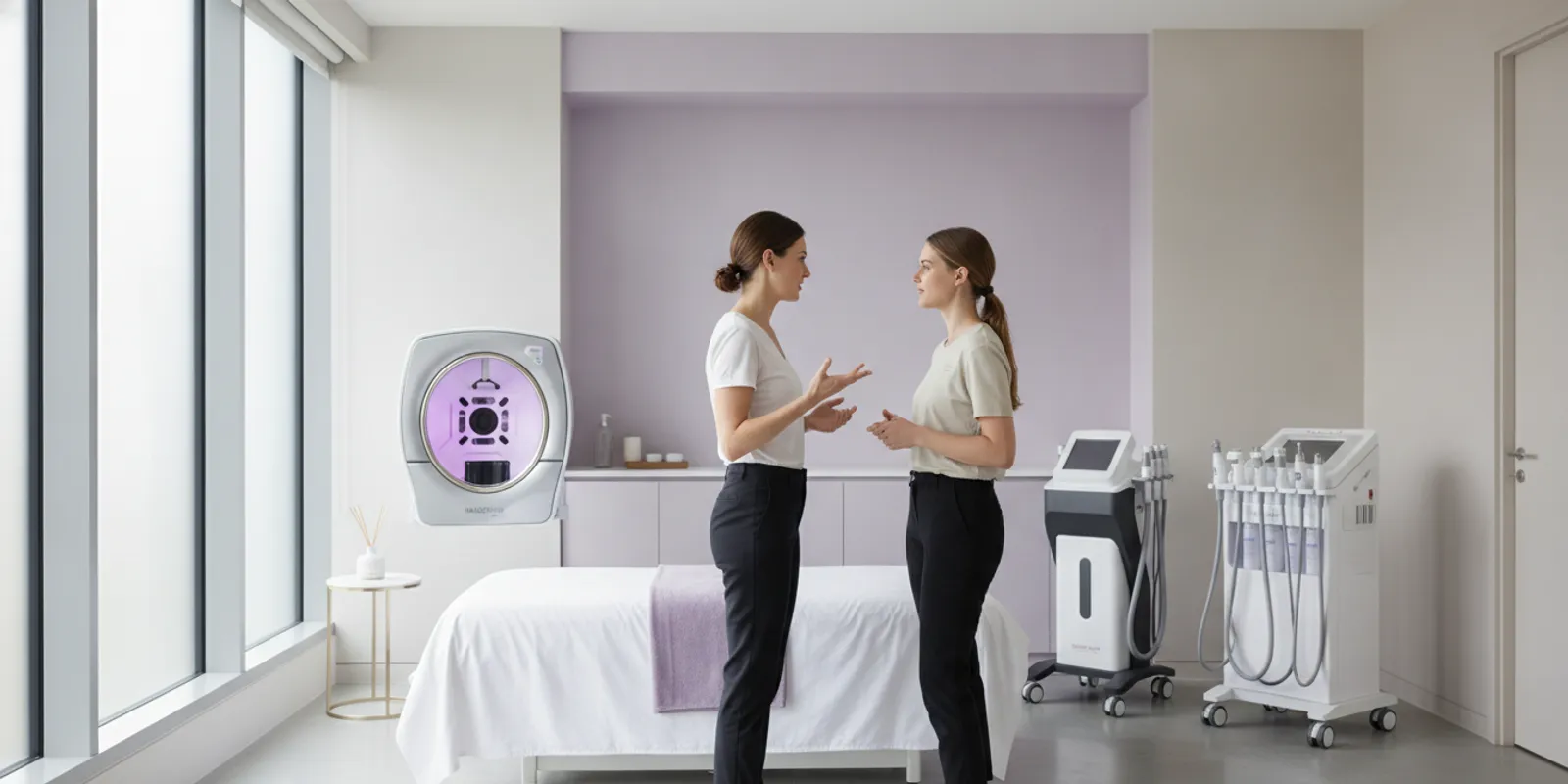
Opening a med spa is a business, clinical, and operational project—not simply a matter of choosing treatments and buying devices. If you are researching how to open a med spa, start by confirming what your state permits, defining the services your practice can responsibly deliver, and building a financial plan around those decisions. This roadmap will help you sequence the work, identify questions for qualified professionals, and avoid committing to a facility or equipment before the fundamentals are clear.
Talk with Emage Medical about equipment planning
What Should You Decide Before Opening a Med Spa?
Begin with a specific concept. A med spa may focus on skin rejuvenation, facials, body services, hair restoration, or a mix of offerings. The right mix depends on your credentials, local rules, target clientele, available capital, and the capabilities of the practice you plan to build. Avoid starting with a long menu of treatments before you know who can provide them and what the operating requirements will be.
Write a short concept brief that answers these questions:
- Who is the practice for? Describe the patients or clients you expect to serve and the needs your services will address.
- What will you offer at launch? Separate the essential initial services from options you may add later.
- Who will own and oversee the practice? Identify the proposed ownership, clinical oversight, and day-to-day management roles for review by counsel.
- How will people find you? Consider referrals, local awareness, educational content, and digital inquiries.
- What does a sustainable opening look like? Estimate the cash needed before launch and the time required to establish routine operations.
This is also the time to compare your idea with local alternatives. Study their public service menus, positioning, and patient experience. The goal is not to copy a competitor. It is to understand the market and identify a clear, credible reason someone might choose your practice.
How Do You Build a Practical Business Plan?
A useful business plan connects services to the people, space, equipment, and cash required to deliver them. Build a conservative forecast instead of relying on an optimistic opening-month schedule. Include one-time expenses, recurring overhead, and the cost of operating below capacity while your practice develops.
Organize the plan into a few working sections:
- Service and client plan: List the initial services, intended audience, planned operating days, and expected appointment flow. Mark assumptions that still need validation.
- Startup budget: Include deposits, construction or fit-out, equipment, furnishings, software, professional fees, insurance, initial supplies, and launch marketing.
- Monthly operating budget: Account for rent, payroll, utilities, maintenance, consumables, payment processing, marketing, and other recurring commitments.
- Capacity and cash-flow model: Estimate appointment duration, room availability, staff coverage, and a realistic ramp-up. Test what happens if bookings take longer to build or expenses are higher than planned.
- Funding plan: Document available cash and investigate financing terms early. Compare the total obligation, payment schedule, fees, and any deferral conditions—not just the monthly figure.
Separate known costs from estimates. Ask vendors for written proposals and ask an accountant or other qualified financial adviser to review your assumptions. A device payment may be only one part of the expense: consider training, supplies, service, warranty coverage, and how the device will fit your schedule. Emage Medical provides information about equipment financing options and leasing considerations that can help frame your questions.
Which Licensing and Legal Questions Need Review?
Licensing and scope-of-practice rules vary by jurisdiction and by service. They may depend on the procedure, the person performing it, supervision arrangements, ownership structure, and the type of facility. Requirements can change, so do not rely on a generic online checklist or another business’s setup as a substitute for current local guidance.
This article is for general planning and educational purposes only. It is not legal, medical, or regulatory advice. Before choosing a business structure, signing a lease, advertising a procedure, or delegating a clinical task, consult an attorney experienced with healthcare and medical-aesthetics regulations in your jurisdiction. Confirm applicable requirements with the relevant licensing boards and authorities. The Federation of State Medical Boards can help you identify your state medical board; verify current requirements directly with the appropriate authority. Also consult qualified clinical leadership about patient selection, protocols, informed consent, documentation, infection prevention, and emergency readiness.
Prepare a written question list for counsel. Ask which ownership and management arrangements are permitted, who may perform each planned service, what supervision is required, which licenses or facility approvals apply, and what rules affect advertising and patient records. Ask how your obligations change if you add a service or hire a different type of professional. Record the sources and dates of any requirements you verify, and establish a process for reviewing them as the practice evolves.
How Should You Choose a Facility?
Choose a location only after you understand your service model and the facility requirements that apply. A visually appealing space may still require substantial work to support the layout, privacy, utilities, sanitation, accessibility, or workflow your services need. Before signing a lease, have qualified professionals assess the premises and confirm that your intended use is allowed.
Evaluate each site against a practical checklist:
- Does the location work for your target clients, staff, and referral relationships?
- Can the layout support private consultations, treatment rooms, storage, reception, and staff work?
- Are power, plumbing, ventilation, and other utilities appropriate for the proposed equipment and services?
- Can clients and staff move through the space comfortably and privately?
- What build-out, permits, signage, maintenance, and restoration obligations would the lease create?
- Does the lease allow the intended business use and provide enough time and flexibility for the build-out?
Ask about contingencies before making a commitment. Have your attorney review the lease and relevant use restrictions. Have a contractor or facilities professional assess renovation costs, and verify that any planned changes can be approved. Keep the first location functional and easy to operate rather than paying for unused rooms or decorative upgrades that do not support your service plan.
How Do You Plan Staffing and Daily Operations?
Staffing decisions should follow the services you intend to offer and the rules that apply to each role. Map the responsibilities for clinical oversight, treatment delivery, scheduling, client communication, billing, inventory, cleaning, and follow-up. A small practice may assign several operational functions to one person, but accountability for each task should still be clear.
Before opening, document the operational basics with qualified clinical and legal input. These may include intake and eligibility review, consent, treatment documentation, privacy practices, sanitation, equipment checks, incident escalation, and instructions for responding to client concerns. Train every team member on their responsibilities and on when a question needs to be escalated rather than answered beyond their role.
Think through the appointment from the client’s perspective. Who responds to an inquiry? How is the first consultation prepared? What information is collected and stored? Who handles questions after a service? A reliable process matters as much as an attractive treatment room. Set expectations for response times, handoffs, and follow-up, then revisit the workflow after the first weeks of operation.
How Do You Select Equipment and Vendors?
Start with the treatment plan, not a device catalogue. Identify which technology is necessary for your launch services, who is qualified to operate it, and what training and support the team will need. Compare equipment by its intended use, available modalities, workflow, footprint, service arrangements, warranty, training, supplies, software terms, and total cost over the period you expect to use it.
Ask vendors for a demonstration and a written description of what is included. Confirm the exact model and configuration, installation responsibilities, delivery timing, training format, warranty terms, service process, and any recurring costs or consumable requirements. Check that claims in sales materials align with the device’s intended use and applicable regulatory status. Have clinical and legal advisers review questions that touch on patient care, scope, or compliance.
For a facial-focused practice, distinguish a single-function system from a multi-modality platform. For example, the Préime DermaFacial combines multiple modalities in one platform; the correct modality names include AquaB for hydrodermabrasion, radio frequency for Collagen Plus, Vibrox for carboxytherapy, Micro T for microcurrent, and UltraB for ultrasound. Match each modality to the services your qualified team plans to provide and verify the details with the vendor. Learn more about hydradermabrasion and compare considerations in this guide to multi-modality facial platforms.
Use a structured comparison instead of making a decision based on one headline feature:
| Decision area | Questions to ask | Why it matters |
|---|---|---|
| Service fit | Which planned services does the device support, and which trained roles may use it? | Prevents purchasing equipment that does not match the launch menu or practice requirements. |
| Total cost | What are the purchase or financing terms, supplies, service, and recurring fees? | Shows the full financial commitment, not just an advertised payment. |
| Training and support | What training is provided, when is it available, and how is technical support handled? | Helps the team prepare for implementation and ongoing questions. |
| Workflow | What room, setup, appointment time, cleaning, and storage does use require? | Tests whether the equipment can fit into the facility and schedule. |
| Vendor terms | What warranty, delivery, installation, software, and service terms are in writing? | Clarifies responsibilities and possible costs before signing. |
Prioritize a short list of equipment that supports the validated business plan. A device should have a defined role in the service menu and a realistic plan for staff readiness, utilization, and maintenance. If you are considering microneedling, use a separate clinical and regulatory review to establish what is appropriate for your practice; this professional microneedling service planning guide can help organize business questions.
How Can You Prepare Marketing and Lead Follow-Up?
Build marketing around services you are prepared and permitted to provide. Use clear, accurate descriptions and avoid promises about outcomes. Ask counsel or a qualified compliance professional to review advertising questions that involve clinical claims, credentials, or local rules. Your public information should make it easy for prospective clients to understand what the practice offers and how to ask about it.
Plan the client journey before paying to promote the opening. Create a simple, mobile-friendly page with service information, location and contact details, and a clear inquiry action. Decide who monitors incoming calls and forms, how quickly the team aims to respond, and where each inquiry is recorded. Use a consistent method to follow up, track the source of inquiries, and identify common questions.
Prepare core materials in advance: a practice introduction, service descriptions, staff biographies that accurately reflect credentials, frequently asked questions, and an opening announcement. Build referral relationships through professional communication and reliable follow-through. Educational content can explain what a consultation involves or how a technology fits into a practice, without guaranteeing results. If skin imaging is part of your plan, explore this overview of professional skin scanners as one way to understand the consultation workflow considerations.
What Should Your Pre-Opening Checklist Include?
Use a staged checklist and do not treat opening day as a deadline that overrides readiness. Some decisions depend on legal or facility review, so leave room for those steps to change your timeline.
- Validate the concept: Define the target client, proposed services, and launch priorities.
- Review regulatory questions: Get jurisdiction-specific guidance on ownership, licensing, supervision, facility rules, and each planned service.
- Build the financial model: Price startup and recurring costs, compare funding options, and test a slower-than-expected ramp-up.
- Confirm the location: Review permitted use, lease terms, build-out feasibility, and facility needs before committing.
- Plan people and workflows: Assign roles, prepare operational procedures, and organize training with appropriate clinical oversight.
- Evaluate vendors: Compare equipment and service terms in writing against the actual treatment plan and budget.
- Prepare client communication: Create accurate service information, inquiry forms, response ownership, and follow-up steps.
- Test before launch: Walk through the client journey, check room readiness and equipment setup, and correct gaps before accepting routine bookings.
After opening, review the plan regularly. Compare actual costs and inquiry patterns with your assumptions. Ask staff where scheduling or handoffs break down, and gather client feedback through appropriate channels. Add services only after confirming the clinical, regulatory, financial, and operational requirements for each addition.
Frequently Asked Questions
Do I need to be a physician to open a med spa?
There is no universal answer. Ownership, clinical oversight, and who may perform particular services can depend on state law and the service itself. Consult a healthcare attorney in your jurisdiction and the relevant licensing authorities before structuring or operating the practice.
How much does it cost to open a med spa?
Startup costs vary with the location, build-out, staffing, service menu, equipment, and working capital needed. Create a line-item budget using written vendor and contractor estimates, then model recurring expenses and a gradual booking ramp rather than relying on a single total from a generic estimate.
Should I buy equipment before signing a lease?
First clarify your proposed services, facility requirements, and budget. Then check whether the equipment will fit the site and whether the lease and permitted use support your plan. Avoid placing a major order until you understand the facility, regulatory, delivery, training, and financing conditions.
How many services should a new med spa offer?
There is no set number. A focused launch menu can be easier to staff, explain, and operate than a broad list of services. Choose offerings that fit your market research, qualified team, approved scope, facility, and financial plan, then evaluate possible additions one at a time.
Contact Emage Medical to discuss professional equipment options
A well-planned med spa opening connects the business model, local requirements, team, facility, equipment, and client experience before the first appointment is scheduled.