

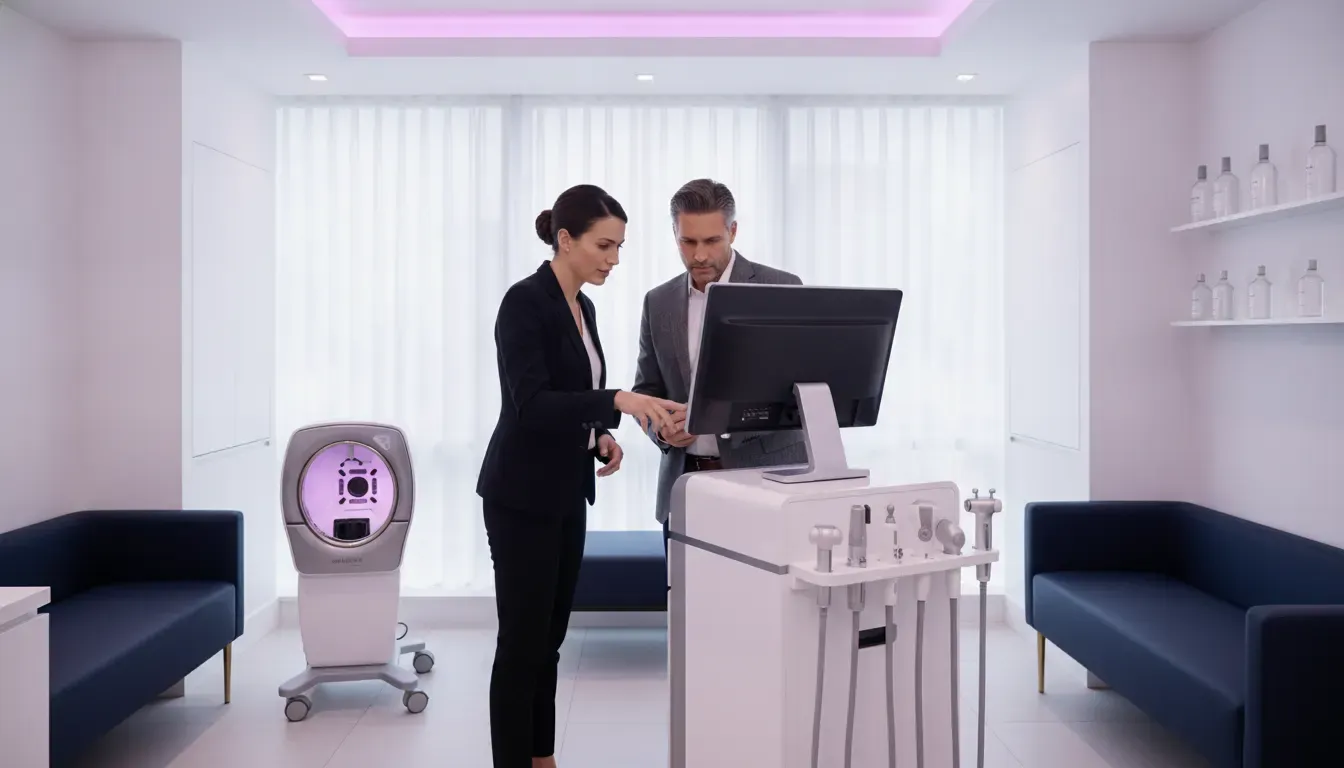
Adding aesthetic services is not just a matter of choosing a device. Practice owners also need to consider which services fit their patients, how equipment will fit existing workflows, and what support the team will need after implementation.
Talk with Emage Medical about your practice goals and request a Product Tour
Med spa consulting can bring those decisions into one practical plan, covering service mix, equipment selection, training, marketing coordination, and workflow support while keeping clinical, legal, staffing, and financial advice with the appropriate professionals.
Emage Medical supports aesthetic practices with equipment, training, marketing support, warranties, and practice-growth guidance, but the right scope depends on the practice and its goals. A useful starting point is to define what support is needed before evaluating specific tools or services. The sections ahead break down the main areas a consultant may address and the questions owners should ask along the way.
What Does Med Spa Consulting Include?
Med spa consulting is practical guidance that helps a practice connect its aesthetic goals with the equipment, services, training, marketing, and workflows needed to put those plans into operation. The scope can vary by consultant. For some practices, it means planning a new service line. For others, it means reviewing an existing setup and identifying better ways to use technology and support the patient experience.
Planning and service mix
The planning stage may examine the practice’s current services, intended patients, available space, team capabilities, and operational priorities. Owners can use this discussion to decide which services fit their practice rather than selecting devices in isolation. Service-mix planning may also help clarify how a new treatment category fits alongside existing medical, skin-care, or wellness offerings. The goal is a workable direction, not a generic menu copied from another practice.
Equipment selection and implementation
Equipment guidance can include comparing intended uses, workflow fit, training needs, support requirements, and the practical steps involved in implementation. A consultant or device partner may help a practice understand how a system is designed to be used and what questions to ask before committing to it. Equipment selection should remain connected to appropriate provider involvement and patient-safety considerations. Emage Medical serves medical spas, dermatology practices, plastic surgery clinics, and other aesthetic professionals, with an offer that includes equipment, training, marketing support, warranties, and practice-growth support.
Training, marketing, and workflow support
Once a practice chooses a direction, support may extend to staff education, adoption of new workflows, consultation processes, and coordination of patient-facing materials. Emage describes support that includes training, warranties, and practice-growth assistance. Its marketing support includes co-branded materials, social media content, and practice-growth consulting. These services can help coordinate implementation, but they should not be treated as a promise of leads, revenue, or a particular business result.
It is also important to define what this type of support does not establish. Emage’s verified information does not describe a comprehensive standalone program for legal, clinical, staffing, or financial consulting. Practices should involve the appropriately qualified professionals for those decisions and treat vendor education as one part of a broader operating plan.
Why Practice Owners Use Med Spa Consulting Before Buying Equipment
Buying an aesthetic device is not only a product decision. It can affect the services a practice offers, the patients it is prepared to serve, the training its team needs, and the way the equipment fits into daily operations. That is why practice owners may seek med spa consulting before committing to a purchase.
Start with discovery, not a device catalog
An initial discovery process can clarify the practice’s current position and intended direction. An owner may review the existing service mix, patient demand, available space, staffing model, workflow, training needs, and the type of experience the practice wants to create. This helps distinguish a genuine operational need from interest in a device that does not yet have a clear role.
Affordability is part of that conversation, but it should be evaluated in context. A responsible review considers the total implementation picture, including training, support, marketing coordination, warranties, and the time required for the team to adopt a new service. It should not rely on an assumed price, projected return, or guaranteed volume.
Use a business-plan mindset
The U.S. Small Business Administration calls a business plan the foundation of a business and describes it as a roadmap for structuring, running, and growing a company. Its guidance also notes that research can support later planning and that a plan may help with funding or bringing on partners. See the SBA guide to writing a business plan for the full framework.
For an aesthetic practice, that mindset can turn equipment research into a set of practical questions: Which services fit the practice’s goals? Is the team ready to deliver them? What education and workflow changes are needed? How will the purchase be evaluated alongside other priorities? The SBA also notes that there is no single required format, so the plan can be detailed or lean according to the owner’s needs.
Plan implementation before the purchase
Consulting can connect selection with implementation. The discussion may cover training timelines, room and workflow requirements, patient education, internal responsibilities, and the support available after delivery. Emage Medical describes its offer as including equipment, training, marketing support, warranties, and practice-growth support. Those services can inform planning, but they do not replace independent legal, clinical, staffing, or financial advice.
How Consulting Shapes Service Mix and Equipment Selection
A useful consulting process connects what a practice wants to offer with how the team will deliver it. Instead of starting with a device catalog, the discussion can begin with intended use, patient or client needs, available space, staff capabilities, training requirements, and the workflow around each service. That sequence helps owners compare technologies in the context of the practice rather than treating equipment as a standalone purchase.
Service mix deserves the same discipline. A PubMed-indexed discussion of medical spas describes opportunities across skin care, body care, and hair care, with treatments delivered by licensed professionals. It also recommends an annual strategic plan and a market-driven approach. Those points support a planning conversation, not a clinical recommendation. Read the source at PubMed.
Questions that connect service planning to equipment selection
| Planning area | Questions to answer | Implementation implication |
|---|---|---|
| Intended use | Which services fit the practice’s goals, space, audience, and existing workflow? | Shortlist technologies that support a defined use case instead of adding unused capability. |
| Team and training | Who will operate the equipment, what preparation is needed, and how will competency be supported? | Plan training, supervision, scheduling, and written workflow steps before launch. |
| Risk and device information | What benefits, limitations, risks, and regulatory considerations need review? | Involve the appropriate health care professionals and review device information before making a final decision. |
| Technology fit | How will the system fit the room, consultation process, documentation, maintenance, and support model? | Evaluate the complete operating experience, not only specifications or appearance. |
The FDA notes that aesthetic-device regulation can depend on intended use and whether a device affects the structure or function of the body. It also emphasizes understanding benefits and risks and considering provider training and experience. These are reasons to include qualified clinical and compliance input in the selection process, rather than relying on a consultant or vendor alone. See the FDA’s aesthetic device guidance for context.
For the equipment research stage, Emage’s RF microneedling equipment guide and guide to choose a skin imaging device can help organize technology questions. The right choice still depends on the practice’s intended use, workflow, training plan, and professional review.
What Training and Workflow Support Should Cover
Training should make a new technology understandable in the context of the practice that will use it. That includes more than learning device controls. A useful onboarding process helps the team clarify who handles each stage, how consultations are structured, when a patient moves from discussion to scheduling, and where questions are documented for follow-up.
Build a repeatable consultation process
Staff should leave training with a consistent process for gathering goals, reviewing relevant patient information, explaining the planned service within their role, and identifying when a clinician needs to be involved. The process should also define what happens after the consultation. For example, the team can agree on how to record questions, assign follow-up, review next steps, and keep the conversation accurate without making promises about results.
This is where workflow support can connect equipment knowledge to day-to-day adoption. Owners can map the patient journey, identify handoff points, and test the process with the people who will actually use it. Reviewing a way to improve consultation conversion can provide an additional perspective on the consultation experience, while the practice remains responsible for adapting any process to its policies, staffing, and professional requirements.
Plan for questions after launch
Implementation follow-through should cover the questions that arise once the technology is part of the schedule. Teams may need clarification on operating procedures, training refreshers, warranty processes, or how the equipment fits into an existing workflow. A support plan should make it clear who answers device-related questions, how issues are escalated, and how new staff receive orientation.
Emage Medical describes its support offer as including equipment, training, warranties, and practice-growth support. More specifically, Emage describes unlimited one-to-one training during the warranty period and 24/7 real-person phone support. Those are Emage’s stated support terms, not a guarantee of business performance or a substitute for the practice’s clinical, legal, staffing, or financial guidance.
Before choosing a vendor, ask what onboarding includes, how follow-up questions are handled, and what implementation support is available after the initial session. Clear answers help owners judge whether the proposed support can fit the practice’s actual workflow.
How Marketing Coordination Fits Into Med Spa Consulting
Marketing coordination can be one part of a broader consulting conversation, especially when a practice is introducing aesthetic technology, refining its service mix, or preparing its team for a new initiative. The goal is not to promise a certain number of leads or a specific revenue result. Instead, coordination helps connect the practice’s positioning, patient-facing materials, staff conversations, and implementation timeline.
For example, a consultant may help a practice clarify which audience a service is intended for, identify the information patients need before scheduling, and organize consistent messaging across the website, social channels, and in-practice materials. That work should remain aligned with the practice’s actual capabilities, training, provider qualifications, and approved claims. It can also help owners identify gaps between what a campaign communicates and what the team is prepared to explain during a consultation.
Emage Medical describes marketing support that includes co-branded materials, social media content, and practice-growth consulting. Those resources may give an aesthetic practice a starting point for communicating about equipment and services while preserving room for the practice to adapt messaging to its own brand and patient population. You can review Emage’s marketing support for aesthetic practices for details about that specific offering.
This educational overview is broader than that service page. Med spa consulting may involve looking at how marketing fits with equipment selection, training, workflow, and implementation planning. Marketing support, by contrast, addresses defined promotional resources and assistance. Neither should be treated as a substitute for professional legal, clinical, compliance, staffing, or financial advice.
For practical ideas about planning content and patient communication, see Emage’s marketing strategies for aesthetic practices. Use those ideas as discussion points, then confirm that any public claims and campaign decisions fit your practice’s policies and professional responsibilities.
How to Evaluate a Med Spa Consultant
The right consultant should help you make clearer decisions, not push a predetermined package. Before you commit, assess the person’s experience, scope, working method, and ability to support implementation. A useful starting point is a baseline review of your current operations, priorities, and readiness. That assessment can show whether a proposed tool or change actually fits your practice.
- Look for relevant aesthetic-practice experience. Ask whether the consultant has worked with medical spas, dermatology practices, plastic surgery clinics, or other aesthetic settings similar to yours. Experience should include more than general business advice. The consultant should understand how equipment, service mix, training, patient consultations, and day-to-day workflow connect. For example, Emage Medical’s knowledge base describes Sally Bevans as having helped more than 2,000 practices integrate aesthetic technologies, with experience from both the device-vendor and facial-practice perspectives. That background is useful context, but it is not a guarantee of any particular result.
- Define the scope in writing. Clarify whether the engagement covers equipment selection, implementation planning, training, workflow, marketing coordination, or practice-growth support. Ask what is excluded. Vendor support should not be presented as a substitute for independent legal, clinical, staffing, compliance, or financial advice. Clear boundaries protect your practice from making decisions based on assumptions.
- Test the implementation approach. Ask what happens after a recommendation is made. A credible process should address intended use, staff readiness, space and workflow considerations, training needs, and how the team will evaluate the change. Be cautious if the conversation centers on a device before anyone has understood your existing services and constraints.
- Verify training and follow-up. Find out who provides training, whether it is one-to-one or group-based, when it occurs, and how follow-up questions are handled. Emage Medical describes unlimited one-to-one training during the warranty period and 24/7 real-person phone support as part of its support offer. Confirm the current terms directly before relying on them.
- Examine claims discipline and fit. Reject guaranteed outcomes, unsupported performance claims, and pressure to decide quickly. A good fit is a consultant who explains tradeoffs plainly, listens to your priorities, and can work within your team’s clinical and operational structure.
Where Vendor Support Ends and Professional Advice Begins
Good vendor support can make equipment adoption more practical, but it should not be confused with every type of advice an aesthetic practice may need. A device company may help you understand a system’s intended use, plan implementation, coordinate training, and prepare questions for the next stage of your evaluation. Those services can support a thoughtful decision without replacing the professionals responsible for other areas of the business.
For example, a vendor may explain device features, warranty terms, training resources, and workflow considerations. Emage Medical describes its offer as including equipment, training, marketing support, warranties, and practice-growth support. Its knowledge base does not establish a comprehensive standalone consulting program for legal, clinical, staffing, or financial advice. Scope matters. Ask what is included, who provides it, and where your practice should seek separate guidance.
Keep clinical decisions with qualified health care professionals
Device education is not the same as patient-specific clinical direction. The FDA notes that aesthetic devices may be regulated based on their intended use and whether they affect the body’s structure or function. It also advises patients to discuss benefits, risks, candidacy, and provider training with a health care provider. Practice owners should therefore involve appropriately qualified clinicians when reviewing treatment protocols, patient selection, contraindications, supervision, and informed-consent processes. The FDA’s guidance on aesthetic and cosmetic devices is a useful starting point, not a substitute for professional advice.
Use the right specialists for business and compliance questions
Some questions involve legal structure, employment decisions, licensing, insurance, taxes, financing, privacy, or advertising compliance. They may require an attorney, accountant, insurance professional, human resources specialist, or compliance adviser. A vendor can help identify implementation questions to bring to those advisers, but should not make those decisions on the practice’s behalf.
This boundary creates a stronger consulting process. Use vendor support for product knowledge, training coordination, and practical implementation questions. Use appropriately qualified professionals for advice that depends on your jurisdiction, credentials, patient population, finances, staffing model, or compliance obligations. Confirming those roles early helps your team move forward with clear expectations and fewer avoidable assumptions.
Want to discuss equipment fit, training, and implementation support? Contact Emage Medical to request a Product Tour.
Frequently Asked Questions
What does a med spa consultant typically help with?
Depending on the consultant, support may include planning a service mix, comparing equipment options, mapping implementation steps, coordinating training, improving workflows, and aligning marketing activities with the practice’s goals. Confirm the exact scope before starting, especially if you need legal, clinical, staffing, or financial guidance.
When should a practice consider consulting support?
Consulting can be useful before purchasing a device, adding a treatment category, expanding into aesthetics, or standardizing operations across locations. Starting with an assessment helps clarify priorities, readiness, workflow needs, and the information required to make a responsible equipment decision.
Does a device consultant replace a medical or legal professional?
No. Vendor or device-related support can help with product education, training, workflow planning, and implementation questions. But it does not replace advice from qualified medical, legal, compliance, accounting, or human-resources professionals. Practices should involve the appropriate licensed or qualified advisors for those decisions.
What should I ask before choosing a consultant?
Ask which practice types and technologies they understand, what deliverables are included, how recommendations are evaluated, what training and follow-up support are available, and which services fall outside their role. Request clear pricing and written assumptions, and be cautious of guaranteed revenue, return on investment, or patient-volume claims.
Contact Emage Medical to Plan Your Next Step
A focused conversation can help connect your practice goals with equipment fit, training needs, marketing coordination, and workflow support. Contact Emage Medical to discuss your priorities or request a Product Tour.