

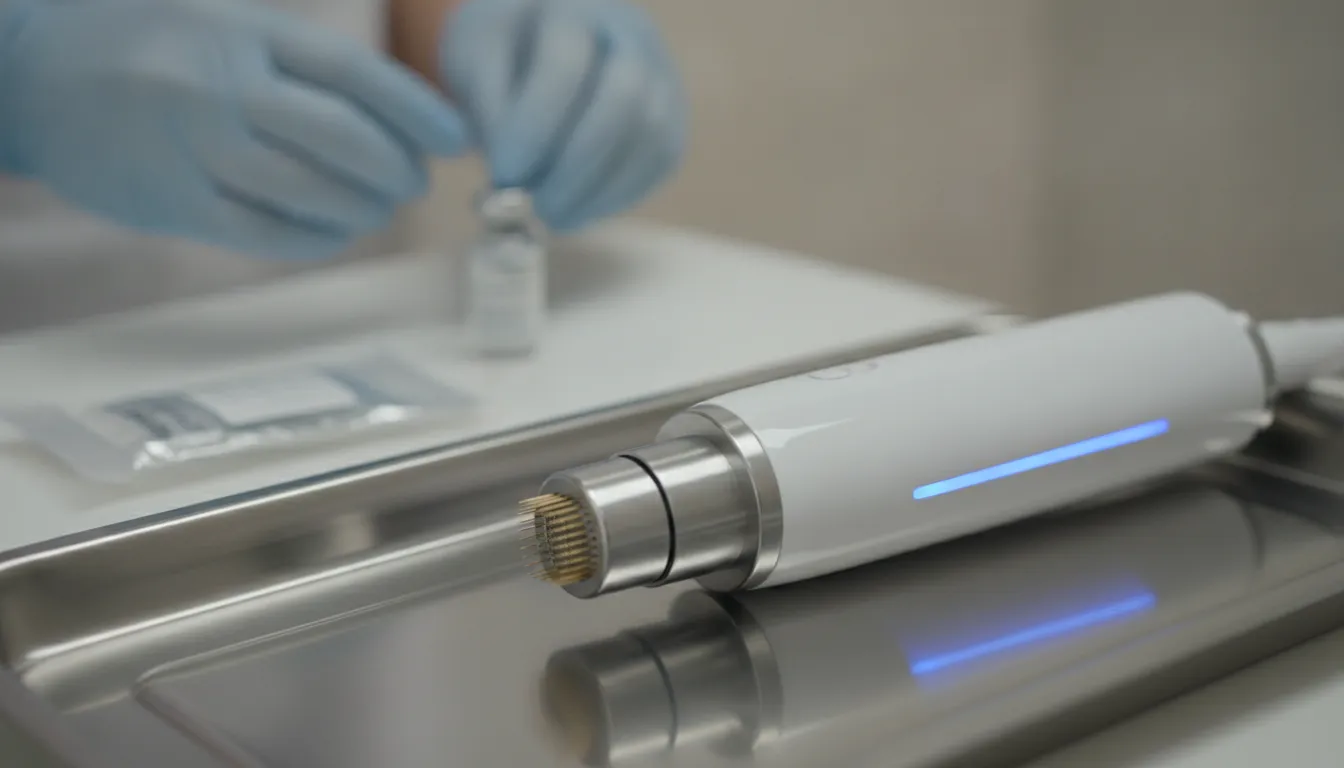
Patients often ask for smoother texture, firmer-looking skin, reduced acne scars, and a more refreshed appearance. A professional radiofrequency microneedling device may give aesthetic practices another option for creating personalized treatment plans around those concerns. Still, purchasing the equipment is only one part of building a successful service. Your team must understand patient screening, treatment settings, informed consent, aftercare, documentation, and follow-up. You also need to know how much each appointment costs to deliver and how many treatments your practice can realistically complete. Here’s what to review before bringing RF microneedling into your practice.
Key Takeaways
- Match the device to your practice: Evaluate needle depth, RF delivery, treatment areas, cartridge design, workflow, and patient demand before choosing a system.
- Confirm clinical and regulatory requirements: Request the exact FDA documentation, labeling, contraindications, safety information, training requirements, and accessory details for the model you plan to purchase.
- Calculate the complete investment: Include cartridges, supplies, maintenance, staff training, financing, warranty coverage, service, and realistic treatment volume when assessing long-term value.
What Is a Professional Radiofrequency Microneedling Device?
A professional radiofrequency microneedling device combines traditional microneedling with radiofrequency (RF) energy. A trained provider uses a handpiece to place fine needles at a selected depth, then delivers RF energy into targeted layers of the skin. This approach creates controlled micro-injuries and heat beneath the skin’s surface, supporting collagen remodeling in the treated area.
Practices may use RF microneedling to address the appearance of fine lines, wrinkles, acne scars, uneven texture, enlarged pores, stretch marks, and mild laxity. The device does not replace careful patient assessment or clinical judgment. Treatment settings should reflect the patient’s skin characteristics, treatment goals, medical history, and tolerance.
Compared with an at-home roller or a basic microneedling pen, a professional system offers greater control over needle depth, energy delivery, treatment zones, and treatment consistency. Providers should review the device’s labeling, training requirements, contraindications, safety information, and regulatory documentation before adding it to a practice’s treatment menu.
Combine Microneedling and Fractional Non-Ablative RF
Traditional microneedling uses sterile needles to create precise micro-injuries in the skin. These controlled punctures stimulate the body’s natural repair response, including collagen and elastin production. RF microneedling adds radiofrequency energy, which delivers heat into selected layers beneath the skin’s surface.
“Fractional” refers to treating targeted columns or zones rather than the entire skin surface at once. “Non-ablative” means the technology heats tissue without intentionally removing the outer layer of skin. This combination can support skin remodeling while leaving untreated areas between the treatment points.
The experience depends on the device, needle configuration, energy settings, treatment area, and provider protocol. Practices can review Emage Medical’s RF microneedling technology to understand how a professional platform combines controlled needling with fractional, non-ablative RF delivery.
Support Skin Remodeling with Controlled Micro-Injuries and RF Heat
Professional RF microneedling works through two coordinated forms of stimulation. The needles create controlled micro-injuries at a selected depth, while RF energy produces heat in the targeted tissue. Together, these actions support the skin’s repair response and collagen remodeling within the dermis.
The objective is controlled treatment, not unnecessary tissue damage. Providers should select settings according to the patient’s skin type, treatment area, concern, and clinical history. Consistent energy delivery, appropriate spacing, and even coverage across the treatment zone also contribute to a well-planned procedure.
Collagen remodeling takes time, so patients may not see the full effect immediately. Redness, warmth, or swelling can occur soon after treatment, while visible changes generally develop gradually. Outcomes vary by patient, condition, settings, and number of sessions. Practices can review Cyto-RF® technology details when comparing treatment platforms and protocols.
Control Needle Depth, Energy, and Treatment Zones
Professional RF microneedling systems give providers more control than consumer devices. Depending on the platform, providers may adjust needle depth, RF intensity, pulse delivery, and treatment pattern. These options allow them to tailor a procedure for concerns such as scars, uneven texture, wrinkles, or laxity.
Needle depth and energy should also reflect the treatment area. Facial skin, the neck, décolletage, hands, and body areas differ in thickness, sensitivity, and treatment needs. A trained provider can select settings for each zone instead of applying one approach to every patient.
Customization depends on more than device controls. Providers should complete the required training, follow the manufacturer’s instructions, screen patients carefully, and document the settings used during each session. Practices comparing professional platforms can review Emage Medical’s microneedling technologies and available support resources.
Compare RF Microneedling with Microneedling, Lasers, and At-Home Devices
Traditional microneedling creates controlled micro-injuries without adding RF heat. RF microneedling combines both techniques, giving providers another option for patients seeking care for texture, scarring, wrinkles, or laxity. The appropriate choice depends on the patient’s goals, skin condition, medical history, and provider assessment.
Lasers use light-based energy and may be ablative or non-ablative, depending on the technology. They can suit specific concerns, but each laser system has its own training requirements, safety protocols, treatment parameters, and patient selection criteria. Practices should compare indications, contraindications, downtime, consumables, and workflow instead of treating lasers and RF microneedling as interchangeable.
At-home rollers and pens usually use shorter needles and offer limited control over depth. They do not provide the same clinical oversight as treatment performed by a qualified professional. Microneedling guidance from New Look Skin Center explains how professional devices differ from at-home options.
Set Expectations for Comfort, Downtime, Results, and Oversight
Patients may feel pressure, warmth, prickling, or brief pulses during RF microneedling. Depending on the device, treatment area, settings, and practice protocol, the provider may apply a topical anesthetic before the procedure. Comfort varies, so providers should check in during treatment and follow the device’s instructions for safe adjustments.
Short-term effects may include redness, warmth, mild swelling, sensitivity, pinpoint bleeding, or temporary grid marks. Recovery often lasts several days, but it may take longer with deeper needle placement, higher energy settings, or larger treatment areas. Aftercare may include gentle cleansing, hydration, sun protection, and temporary limits on heat, strenuous exercise, saunas, and irritating products. RF microneedling recovery guidance offers an example of common post-treatment effects.
Professional oversight continues after the appointment. Providers should screen for contraindications, obtain informed consent, document treatment settings, explain warning signs, and arrange follow-up when appropriate. Consultations should also cover the expected number of sessions, maintenance, alternatives, recovery, and the factors that may affect individual results.
Which Features and Capabilities Matter Most?
The best professional radiofrequency microneedling device is not necessarily the one with the longest feature list. It is the one that gives your team meaningful control, supports consistent treatments, and fits the needs of your patients. When comparing systems, look beyond phrases such as “advanced energy delivery” or “minimal downtime.” Ask how the device delivers RF energy, how deeply the needles reach, which treatment areas it supports, and what controls help providers work safely.
Practical details matter just as much. Cartridge design, handpiece ergonomics, treatment speed, sterile supplies, maintenance, training, and service can affect your workflow and patient experience. The FDA safety communication on RF microneedling is a useful resource when reviewing device risks, controls, and appropriate clinical use.
Choose Adjustable 0.25–3.5 mm Needle Depths
Adjustable needle depth gives providers more flexibility than a fixed-depth system. Shallow settings may suit delicate areas or patients who need a gentler approach, while deeper settings may support treatment plans for acne scars, texture concerns, or laxity when clinically appropriate. A broad range can also help providers adapt treatments for the face, neck, décolletage, hands, and selected body areas.
Cyto-RF® from Emage Medical offers adjustable needle depths from 0.25 mm to 3.5 mm. This range allows practices to tailor treatments based on the area being treated, the patient’s skin concerns, and individual tolerance. Since the system is not light-based, it may be used on tanned skin and during the summer when appropriate screening and treatment protocols are followed. Review the device’s needle depth specifications before assessing its versatility.
Depth selection should always reflect provider training, patient anatomy, treatment goals, and device labeling. Adjustability is valuable only when your team understands how to use each setting appropriately.
Deliver Full-Length RF with Gold-Plated, Non-Insulated Needles
RF microneedling devices differ in how their needles deliver energy. Some use insulated or partially insulated needles that send RF through a specific portion of the needle. Other systems use non-insulated needles to deliver energy along the full selected length. That distinction can affect where controlled heating occurs during treatment.
Cyto-RF® uses gold-plated, non-insulated microneedles to deliver RF energy along the full needle length. The gold-plated design is part of the system’s needle construction, while the non-insulated design supports energy delivery throughout the selected depth. Providers should review the manufacturer’s technical documentation for details about energy settings, pulse delivery, and recommended protocols.
When comparing systems, ask whether the needles are insulated, partially insulated, or non-insulated. Then consider how that design fits the treatment areas and outcomes your practice plans to offer. The Cyto-RF® technology overview provides additional information for comparing needle construction and RF delivery.
Evaluate Fractional RF Settings, Pulse Consistency, and Safety Controls
Fractional RF microneedling creates controlled treatment points instead of heating the entire skin surface at once. Small electrodes deliver RF energy into and beneath the skin, producing localized heating around the needles. This treatment pattern leaves areas between the treatment points, which can support a measured approach to skin remodeling.
Look for controls that allow providers to adjust energy, pulse duration, needle depth, and treatment density when those features are available. Consistent pulse delivery matters because uneven energy can create inconsistent treatment experiences. A clear interface, visual indicators, cartridge recognition, and safeguards against accidental activation may also help reduce user error.
The FDA has identified potential risks associated with certain uses of RF microneedling. For that reason, safety controls, training, labeling, and provider judgment should be central to your evaluation. Ask vendors to explain how the device controls energy delivery and what their training includes. A general claim that a system is “safe” does not provide enough information for a clinical purchasing decision.
Assess Cartridge Sterility, Handpiece Design, Speed, and Maintenance
A device’s everyday usability can influence staff efficiency and patient satisfaction. Begin with the cartridge. Confirm whether cartridges are sterile and single-use, how they are packaged, and how your team should dispose of them. Ask about availability, ordering lead times, storage requirements, and per-treatment costs before committing to a platform.
The handpiece should feel balanced and comfortable during repeated passes. Controls should be easy to read, and the cable should not interfere with positioning. Treatment speed is also worth reviewing, particularly for practices with several appointments each day. A faster device is not automatically better if it makes accurate placement or consistent technique more difficult.
Maintenance requirements deserve equal attention. Ask which parts need routine inspection, how service requests are handled, and whether calibration or software updates are included. Your vendor should clearly explain cleaning requirements and infection prevention procedures. The FDA’s RF microneedling guidance can help your team form questions about handling and clinical safety.
Customize Treatments for Skin Concerns, Areas, and Tolerance
A capable RF microneedling platform should support individualized treatment plans rather than requiring every patient to receive the same settings. Fine lines, acne scars, uneven texture, enlarged pores, laxity, and stretch marks may call for different approaches. Treatment areas also vary. Facial skin, the neck, décolletage, hands, and body areas differ in thickness, sensitivity, and contour.
Customization may involve needle depth, RF energy, pulse duration, treatment density, and the number of passes. Providers should select these settings according to training, device labeling, and the patient assessment. A conservative starting approach may be appropriate for a first treatment, with future sessions adjusted based on the patient’s response and goals.
Patient tolerance is another important consideration. Comfort can vary with the treatment area, needle depth, energy level, and individual sensitivity. Create protocols that give providers a consistent framework while leaving room for clinical judgment. Patients should also receive clear information about the procedure, expected recovery, and aftercare.
Verify Specifications Instead of Relying on Vague Claims
Base your purchasing decision on documentation rather than adjectives. Request the exact needle depth range, RF frequency, energy settings, pulse options, needle configuration, cartridge type, treatment speed, and included accessories. If a vendor describes a system as “fractional,” ask how the energy is delivered and which settings control treatment density.
Verify the device’s regulatory documentation, intended uses, contraindications, warnings, and training requirements. The FDA 510(k) database can help buyers locate records, but always match the information to the exact device model and manufacturer. FDA clearance does not replace provider training, and it does not establish that every advertised use is appropriate.
A live demonstration or remote product tour can make the comparison more practical. Ask the vendor to show how a provider selects depth, adjusts energy, loads a cartridge, activates a pulse, and records treatment settings. Clear answers, accessible documentation, and specific purchase terms are more useful indicators of a reliable partner than broad performance claims.
Which Professional RF Microneedling Device Should You Compare First?
The right RF microneedling device should fit your practice, not just look impressive in a product brochure. Start by reviewing the concerns your patients ask about most, the areas your providers plan to treat, and the level of customization your team needs. Then compare each device’s technology, consumable costs, training, warranty, service, and financing options.
Cyto-RF® from Emage Medical offers a practical starting point for that comparison. It combines RF microneedling with fractional non-ablative RF, giving practices two treatment approaches within one platform. Review the Cyto-RF® technology and specifications alongside your treatment menu, staffing model, patient demand, and financial plan.
A product demonstration can also reveal details that a brochure may not show. Ask providers to handle the handpiece, review the controls, examine the cartridges, and walk through a sample treatment protocol. This hands-on review can help you judge whether the system feels practical for your rooms, schedule, and patient experience.
Consider Cyto-RF® from Emage Medical
Cyto-RF® is designed for aesthetic providers who want to add RF-based skin treatments to their practice. Its dual-modality platform combines RF microneedling with fractional non-ablative RF, which may help practices create different protocols for skin texture, laxity, scars, and visible signs of aging.
This flexibility may suit medical spas, dermatology offices, plastic surgery practices, and other aesthetic providers that want to expand their treatment menu. It also gives your team a platform to evaluate during a product demonstration, consultation, or hands-on training session.
Before requesting a quote, list the services you plan to offer and the areas you expect to treat. Consider your providers’ experience, room availability, appointment length, and patient volume. These details will help you determine whether the device supports your practice model rather than simply adding another piece of equipment.
Verify FDA-Cleared Microneedling and Fractional Non-Ablative RF Technology
Regulatory language deserves close attention when you compare aesthetic devices. “FDA-cleared” and “FDA-approved” describe different regulatory pathways, so do not treat the terms as interchangeable. Ask the manufacturer for the exact device model, clearance documentation, intended uses, warnings, and labeling.
Emage Medical presents Cyto-RF® as an FDA-cleared device that combines RF microneedling and fractional non-ablative RF technology. Review the company’s Cyto-RF® product information and request the supporting documentation before making a purchase decision.
Your providers should also confirm that proposed treatment protocols match the device labeling and their training. FDA clearance does not replace patient screening, informed consent, clinical judgment, or compliance with state and local requirements. Keep those responsibilities separate from product claims when evaluating a new system.
Review Cyto-RF® Depth, Needle Design, and Customization
Cyto-RF® offers adjustable needle depths from 0.25 millimeters to 3.5 millimeters. This range allows providers to modify treatments according to the treatment area, skin concern, protocol, and patient tolerance. The appropriate setting should always follow a clinical assessment and the manufacturer’s instructions.
The device uses gold-plated, non-insulated microneedles that deliver RF energy along the full length of each needle. During a demonstration, ask how providers adjust depth, energy, pulse duration, and treatment patterns. Find out how settings are recorded so your team can deliver protocols consistently.
Also review the available cartridges and their intended uses. Customization is most useful when providers can make controlled adjustments, document them clearly, and follow repeatable protocols for each treatment area.
Treat Fine Lines, Wrinkles, Laxity, Acne Scars, Stretch Marks, and Uneven Texture
RF microneedling can support treatment plans for several common aesthetic concerns, including fine lines, wrinkles, mild laxity, acne scars, stretch marks, and uneven texture. Cyto-RF® is designed for these applications, giving practices an option for patients seeking skin-rejuvenation treatments with controlled energy delivery and microneedling.
Avoid presenting the device as a universal solution. Results vary according to the patient’s skin condition, age, lifestyle, treatment settings, healing response, and aftercare. Providers should determine whether RF microneedling is appropriate and explain realistic outcomes during the consultation.
Use standardized photographs, treatment notes, and follow-up intervals to assess results. Practices can also use Image Pro® skin imaging systems to support consultations and document visible changes over time.
Treat the Face, Neck, Décolletage, Hands, and Selected Body Areas
A professional RF microneedling system can become more useful when it supports more than facial treatments. Cyto-RF® may be used for the face, neck, décolletage, hands, and selected body areas, allowing providers to plan treatments around each patient’s concerns.
Every area requires careful planning. Skin thickness, sensitivity, surface area, contours, and comfort can affect the treatment approach. Your team should understand the appropriate cartridges, settings, contraindications, and aftercare for each area included in your service menu.
Ask the vendor to demonstrate protocols for the areas you expect to treat most often. Confirm that the handpiece is comfortable to use, that providers can reach contoured areas easily, and that your treatment rooms support an efficient appointment without rushing patient care.
Compare Specifications, Consumables, Pricing, and Support
A meaningful comparison includes more than the purchase price. Review needle depth, RF delivery, treatment modes, cartridge options, handpiece design, warranty coverage, training, service response times, and cartridge availability. Ask whether cartridges are sterile and single-use, and calculate the expected consumable cost per treatment.
Emage Medical lists a two-year warranty, a 14-day money-back guarantee, and unlimited one-on-one training during the warranty period for Cyto-RF®. Confirm the current terms, exclusions, eligibility requirements, and service process before signing an agreement.
Also review Emage Medical’s financing programs and marketing support. These resources may help your team prepare for implementation, patient education, and the launch of new treatments.
Use a Professional RF Microneedling Device Scorecard
A scorecard keeps your comparison consistent and focused on your practice’s clinical and business needs. Create categories for technology, treatment flexibility, safety documentation, consumable costs, training, warranty, service, financing, and marketing support.
Rate each device against your requirements, rather than assigning points based on general impressions. A system may score well for treatment depth but less favorably if cartridges are costly or service support is limited. Leave space for unanswered questions so vendors must provide clear details before you proceed.
Include questions such as:
- Does the device support the treatment areas we plan to offer?
- Can providers adjust depth and energy for different protocols?
- Are cartridges sterile, single-use, and consistently available?
- What is the expected consumable cost per treatment?
- What training is included, and who provides it?
- What happens if the device needs service or repair?
- Are financing terms and warranty conditions provided in writing?
A scorecard gives your purchasing team a clear record of how each platform meets your needs and where additional information is required.
How Can Buyers Verify FDA Clearance and Regulatory Status?
Regulatory verification belongs on every professional RF microneedling device buyer’s checklist. A polished website, impressive before-and-after photos, or the phrase “FDA-approved” does not confirm that a specific device is authorized for every procedure your practice may want to offer. Before signing a purchase agreement, request the device’s regulatory records and compare them with its labeling, accessories, and intended uses.
The FDA’s Safety Communication on RF microneedling is a helpful starting point. It highlights the importance of qualified providers, appropriate training, and safety controls. Practices should also review state and local requirements, because FDA status does not replace professional licensing, scope-of-practice rules, facility standards, or informed consent procedures.
Distinguish FDA Clearance, Approval, Registration, and Listing
The terms clearance, approval, registration, and listing describe different FDA processes. FDA clearance generally refers to the 510(k) pathway, in which a manufacturer shows that its device is substantially equivalent to a legally marketed device, known as a predicate device. Clearance applies to the intended use and configuration reviewed by the FDA. It does not mean the agency has approved every treatment claim, setting, body area, or accessory associated with the product.
FDA approval is a separate pathway that typically requires evidence demonstrating a device’s safety and effectiveness for its intended use. Registration and listing are administrative actions. A manufacturer may register its establishment and list a device with the FDA without having 510(k) clearance or FDA approval for that product.
Ask the vendor to identify the exact regulatory designation for the model you are considering. You can also search the FDA’s 510(k) Premarket Notification database rather than relying only on sales materials.
Request the Exact 510(k) Record for the Device and Model
Request the complete 510(k) number and record for the exact device model before purchasing. The record can identify the manufacturer, device name, product code, intended use, technological characteristics, and predicate device used in the substantial equivalence review. It can also help you distinguish between similar-looking models with different regulatory histories.
Check that the manufacturer named in the record matches the company selling the device. If a distributor provides the equipment, ask whether it is authorized to sell and service that specific model. A reputable vendor should be willing to share regulatory documentation and explain how the record applies to the configuration in your quote.
Compare the record with the device nameplate, user manual, labeling, and technical specifications. If the model number, manufacturer, or technology does not match, pause the purchase and ask for clarification. For a system such as Cyto-RF®, ask Emage Medical which records and documents apply to the exact configuration being quoted.
Match Clearance Details to Uses, Indications, Contraindications, and Warnings
FDA clearance applies to the intended use described in the regulatory submission. It does not automatically cover every result a provider or marketer may associate with the device. Read the indications for use carefully, including the treated areas, treatment purpose, patient population, energy type, needle configuration, and any stated limitations.
Then compare those details with the vendor’s training materials, website, brochures, and promotional language. A device may be cleared for a particular use while claims about additional conditions or body areas require separate support. Ask the vendor to identify the source for any claim that is not clearly stated in the official labeling.
Review contraindications, warnings, precautions, and potential adverse events before creating treatment protocols. Your clinical team should understand which patients may need additional screening or may not be appropriate candidates. Keep current labeling in your compliance files, and update protocols when the manufacturer issues revised safety information.
Confirm the Status of Handpieces, Cartridges, and Accessories
Regulatory review should cover the entire treatment system, not just the console. Ask which handpieces, needle cartridges, tips, adapters, and other accessories are included in the cleared configuration. Components that contact the patient or affect energy delivery may have separate documentation, labeling, or use restrictions.
Confirm whether cartridges are single-use and sterile when supplied. Ask how sterility is maintained through packaging, storage, and handling. Your team should also know which cartridge types are approved for each compatible model, along with expiration requirements and disposal procedures. Never assume that a replacement component is suitable simply because it fits the handpiece.
Request written confirmation that the consumables supplied for your system match the manufacturer’s intended configuration. Keep purchase records and lot information when appropriate, particularly if cartridges are used across multiple treatment rooms or practice locations. Clear documentation supports infection prevention, staff training, and accurate patient records.
Check Provider Licensing, Scope of Practice, and Facility Requirements
FDA clearance does not determine who may operate a device in every state. Before adding RF microneedling to your service menu, review state medical board rules, nursing regulations, delegation requirements, and local facility standards. Requirements may differ based on the provider’s license, treatment depth, use of radiofrequency energy, and whether a physician is on site.
Ask the vendor what training it provides, but do not treat vendor training as a replacement for your practice’s clinical governance. Identify who may conduct consultations, assess contraindications, perform treatments, manage complications, and provide follow-up care. Your practice may also need written protocols, supervising physician approval, emergency procedures, and staff competency records.
Facility planning matters, too. Confirm requirements for treatment rooms, electrical service, cleaning, sharps disposal, personal protective equipment, and secure storage. The FDA’s RF microneedling safety information emphasizes trained providers and appropriate controls, while state and local authorities establish the rules your practice must follow.
Review FDA Safety Communications and RF Microneedling Controls
Read current FDA safety communications before purchasing, and revisit them during staff training. These notices may describe reported risks, device-related concerns, and recommended controls. For RF microneedling, the FDA has emphasized proper training, careful patient selection, and appropriate technique.
Use that information to create practical safeguards. Your protocols may address pre-treatment screening, treatment settings, grounding or contact requirements when applicable, sterile cartridge handling, eye protection, documentation, and post-treatment instructions. Staff should know how to identify unexpected reactions and when to stop treatment or contact the supervising clinician.
Ask vendors how their training addresses the risks described by the FDA. A strong program should explain the device’s controls and limitations, not simply demonstrate how to perform a treatment. If vendor instructions conflict with official labeling or current safety communications, request a written explanation and consult your medical director before proceeding.
Question Unsupported “FDA-Approved” Claims
Treat the phrase “FDA-approved” as a reason to ask questions, not as proof of compliance. Many medical aesthetic devices enter the market through the 510(k) clearance process rather than the premarket approval pathway. A company that uses “approved” loosely may also overstate what the device can do or which conditions it is intended to treat.
Ask the vendor to provide specific documentation, including the FDA designation, 510(k) number, manufacturer, model, cleared indications, and applicable accessories. Then compare those details with the FDA’s device records. If the vendor cannot provide an exact record, or the record does not match the quoted equipment, delay the purchase until the discrepancy is resolved.
Review claims across brochures, social media posts, treatment menus, and sales presentations. Statements about permanent results, treating every skin concern, or eliminating risk deserve careful scrutiny. Choose a supplier that communicates regulatory status accurately and provides the documentation your clinical and compliance teams need to evaluate the device responsibly.
How Should Practices Plan Patient Experience, Recovery, and Safety?
A successful RF microneedling treatment involves more than selecting settings and completing the procedure. Patients should understand why the treatment may suit their concerns, what they may feel during the appointment, and how their skin may look while it heals. Clear communication helps patients make informed decisions and gives your team a consistent standard of care.
Before adding RF microneedling to your treatment menu, create written protocols for consultation, treatment planning, aftercare, documentation, and follow-up. Your protocols should reflect the device’s labeling, your clinicians’ training, and applicable state and facility requirements. Emage Medical provides information about Cyto-RF® technology, including its fractional, non-ablative radiofrequency approach and adjustable treatment parameters.
Use the same process for every patient, while allowing room for clinical judgment. A consistent experience can improve communication, support safer treatments, and help your team identify concerns before, during, and after each appointment.
Address Texture, Scars, Laxity, Wrinkles, Pores, and Stretch Marks
RF microneedling may be considered for patients concerned about uneven texture, acne scars, fine lines, wrinkles, enlarged pores, mild laxity, and stretch marks. The treatment combines controlled needle penetration with radiofrequency energy, creating targeted micro-injuries and heat within the skin. These effects may support the skin’s natural remodeling response.
Start with the patient’s primary concern instead of presenting RF microneedling as a solution for every skin issue. Assess the location, severity, duration, and appearance of the concern. Discuss whether the patient wants improvement in texture, firmness, scarring, or overall skin quality. The American Academy of Dermatology’s microneedling overview offers patient-friendly information practices can use during consultations.
Photographs, skin imaging, and consistent documentation can make treatment planning more specific. They also help patients understand that results are usually gradual and may require multiple sessions.
Consider Skin Tone, Tanning, and Seasonal Treatment
Because RF microneedling uses radiofrequency energy rather than light energy, it may offer scheduling flexibility for some patients with darker skin tones or recent tanning. However, this does not eliminate the need for careful assessment. Needle penetration and RF energy can still cause inflammation, pigment changes, burns, or other complications when treatment is poorly selected or performed.
Ask about recent sun exposure, tanning beds, self-tanner, outdoor activities, and any history of post-inflammatory hyperpigmentation. Document the patient’s baseline skin condition and discuss how sun protection can affect recovery. Emage Medical describes Cyto-RF® as a non-light-based treatment, but clinicians should follow the device’s instructions for use and their established clinical protocols.
Seasonal planning should also account for vacations, outdoor events, sports, and work obligations. A patient who spends significant time outdoors may need to postpone treatment or plan additional recovery precautions.
Explain What Patients May Feel During Treatment
Set expectations before the patient enters the treatment room. Depending on the treatment area, needle depth, RF energy, and comfort measures, patients may feel pressure, heat, prickling, or brief stinging as the handpiece passes over the skin. Topical anesthetic, when appropriate and used according to protocol, may improve comfort.
Explain that sensation can vary across the face and body. Areas with thinner skin or more prominent bone may feel different from areas with greater tissue thickness. Check in throughout the appointment and establish a clear way for the patient to communicate discomfort.
Avoid promising a completely painless experience. An accurate explanation helps patients distinguish expected sensations from symptoms that require the clinician to pause and assess. Your team should also explain what happens immediately after treatment, including cleansing, product application, photographs, and aftercare instructions.
Prepare Patients for Redness, Warmth, Swelling, Pinpoint Bleeding, and Grid Marks
Patients may notice redness, warmth, mild swelling, sensitivity, or a sunburn-like sensation immediately after RF microneedling. Depending on the settings and treatment area, pinpoint bleeding or small grid-like marks may also appear. These effects can be part of the short-term response to needle penetration and RF delivery, but their intensity varies between patients.
Show patients examples of typical post-treatment responses when appropriate, and explain how long these effects may last. Written instructions should describe what to do, what to avoid, and whom to contact if the response seems unusual. The Timeless Medspa recovery guide discusses common experiences such as redness, warmth, swelling, and pinpoint bleeding.
Provide clear escalation instructions. Increasing pain, blistering, spreading redness, drainage, signs of infection, or other unexpected symptoms require prompt clinical review. Make sure patients know how to reach your practice after hours.
Adjust Downtime for Needle Depth, RF Energy, Treatment Area, and Skin Response
Do not quote one universal recovery period for every RF microneedling appointment. Downtime may change with needle depth, energy level, pulse duration, number of passes, treatment area, and the patient’s individual response. A conservative facial treatment may produce a different recovery pattern from a deeper treatment for scars or body skin.
During consultation, ask about work, travel, exercise, social events, and sun exposure. Schedule treatment when the patient can follow aftercare instructions and allow the skin time to settle. Explain that redness may resolve quickly for some patients, while others may experience swelling, dryness, peeling, or sensitivity for several days.
Treatment planning should prioritize appropriate settings over minimizing downtime. Patients should understand that stronger treatment does not automatically produce better results. The clinician may also adjust future sessions based on how the patient heals and responds.
Recommend Gentle Cleansing, Hydration, Sun Protection, and Product Restrictions
Give patients simple, written aftercare instructions before treatment begins. In general, practices may recommend gentle cleansing, clean hands when touching the skin, adequate hydration, and products that do not irritate or clog pores. The exact timing for cleansing and product use should follow the device manufacturer’s instructions and the clinician’s protocol.
Patients should understand the importance of sun protection during recovery. Recommend a broad-spectrum sunscreen when appropriate for the patient’s stage of healing, along with physical protection such as hats and shade. Rebecca Fitzgerald MD’s aftercare guidance advises using non-irritating products and applying sunscreen regularly.
Tell patients which products to pause, including exfoliating acids, retinoids, scrubs, fragranced products, and other potentially irritating formulations. Provide a clear timeline for resuming them rather than leaving patients to decide on their own.
Limit Exercise, Saunas, Hot Tubs, and Excess Heat During Early Recovery
Heat and sweating can increase irritation while the skin is recovering. Advise patients to avoid strenuous exercise, saunas, hot tubs, hot yoga, and other sources of excess heat for the period specified in your protocol. The appropriate timeframe may vary according to treatment intensity and the patient’s response.
Explain the reason behind these restrictions so the guidance feels practical rather than arbitrary. Patients should also avoid touching or rubbing treated areas with unclean hands. Fresh linens, towels, and pillowcases can help limit contact with contaminants during early recovery. The Elase aftercare guide recommends avoiding strenuous exercise, saunas, hot yoga, and hot tubs during the first 48 hours.
Include these instructions in take-home materials, appointment reminders, and follow-up messages. Repeating the guidance gives patients an easy reference after they leave the practice.
Screen Candidates and Complete Consent and Follow-Up Procedures
A thorough consultation should cover medical history, medications, allergies, skin conditions, recent procedures, infection risk, healing history, and expectations. Identify patients who may need treatment postponed or who require medical evaluation before proceeding. Active acne, skin infections, open wounds, certain inflammatory skin conditions, poor healing, and other factors may affect candidacy.
New Look Skin Center’s microneedling guidance notes that treatment may not be recommended for people with active acne, skin infections, eczema, rosacea, or other relevant conditions. Use the device’s labeling and your medical director’s protocols to define screening requirements.
Obtain informed consent that covers expected benefits, alternatives, potential risks, likely recovery, and the possibility of limited or uneven results. Document settings, lot numbers, treatment areas, photographs, aftercare instructions, and patient questions. Schedule follow-up according to your protocol, and give patients a direct contact method for concerns.
Set Expectations for Treatment Series, Maintenance, and Individual Results
RF microneedling results develop gradually as the skin responds and remodeling continues. Some patients may notice early changes in texture or firmness, while more substantial improvement may take multiple sessions and additional time. Results depend on the concern being treated, treatment settings, age, skin characteristics, lifestyle, and healing response.
Explain that a treatment series may be recommended instead of a single appointment. The number and spacing of sessions should be based on the device instructions, clinical assessment, and patient response. Avoid guaranteeing a specific degree of improvement or promising permanent results.
Patients may also benefit from maintenance treatments, daily sun protection, and a consistent skincare routine. Use baseline and follow-up photographs under consistent lighting to assess progress. The Timeless Medspa explanation of healing stages can help practices describe the progression from initial redness and swelling to later collagen remodeling. This approach keeps expectations realistic while giving patients a clear plan for evaluating their results.
What Should Buyers Look for in a Professional RF Microneedling Device?
Choosing a professional RF microneedling device involves more than comparing needle depth, energy settings, or purchase price. The right system should fit your practice’s patient base, treatment goals, room setup, staffing model, and budget. It should also support consistent protocols, clear patient education, safe operation, and dependable service after installation.
Start by reviewing the complete treatment experience. A device may offer impressive specifications, but those features only create value when your team can use the system confidently and patients understand what to expect. Examine the clinical documentation, cartridge design, training program, warranty, consumable costs, and vendor support before making a decision. Emage Medical’s professional technologies provide one example of how equipment, education, and practice support can work together.
It also helps to involve the people who will use the device every day. Providers can assess handpiece comfort and treatment controls, while practice managers can review supply ordering, service terms, and operating costs. A thorough evaluation reduces surprises after installation and makes it easier to introduce RF microneedling as a reliable part of your treatment menu.
Match Patient Demand to the Practice’s Treatment Menu
Patient demand should guide the type of RF microneedling device you choose. Review consultation notes, frequently requested services, and the concerns patients already ask your practice to address. Common interests may include fine lines, wrinkles, uneven texture, acne scars, enlarged pores, laxity, and stretch marks.
Then consider how the device would fit into your current menu. RF microneedling may complement injectables, skin imaging, chemical peels, standard microneedling, or other rejuvenation services. A broader menu can give providers more options when building individualized treatment plans.
If you want to treat the neck, décolletage, hands, or selected body areas, confirm that the device’s labeling and provider protocols support those applications. The system should have a clear role in your care pathway, with enough patient demand to justify its cost. A device that does not match your audience, staffing, or treatment philosophy may remain underused, even if its technical specifications look strong.
Evaluate Needle Depth, RF Delivery, Treatment Areas, and Customization
Needle depth and RF delivery affect how providers customize treatments. Look for adjustable settings that allow your team to adapt treatments for thinner facial skin, thicker areas, scars, and selected body concerns. Cyto-RF® lists adjustable depths from 0.25 to 3.5 mm. You can review the Cyto-RF® technology details to examine its stated specifications.
Ask how the system delivers energy at each selected depth. Full-length RF delivery, fractional settings, pulse consistency, and energy adjustment all matter during treatment planning. Confirm which needle types are available, whether they are insulated or non-insulated, and how the system controls energy delivery.
Your providers should be able to adjust settings according to the treatment area, skin concern, patient tolerance, and approved use. Request a technical demonstration rather than relying on broad claims such as “advanced,” “deep,” or “customizable.” Clear specifications make it easier to compare devices and build appropriate protocols.
Assess Room Setup, Controls, Workflow, and Staff Usability
A professional device should support an efficient treatment-room workflow. Consider its footprint, cart design, handpiece weight, cable length, screen placement, and storage requirements. These details affect how easily providers can position the system, move around the patient, and prepare for the next appointment.
Controls should be clear enough for trained staff to use without unnecessary steps. Ask to see cartridge loading, treatment setup, depth adjustment, energy selection, and emergency shutoff procedures. A remote product tour can help your team evaluate usability before scheduling an in-person demonstration.
The best system is not always the one with the longest feature list. It is the one providers can operate consistently while maintaining patient communication, documentation, and infection-control procedures. Invite every team member who will use the device to participate in the evaluation. Their feedback may reveal workflow concerns that are easy to miss during a sales presentation.
Confirm Single-Use Cartridges, Sterile Supplies, and Infection Prevention
Ask whether the device uses single-use treatment cartridges and how those cartridges are packaged, labeled, stored, and discarded. Single-use components can support a consistent approach to cross-contamination prevention, but staff must still handle them according to manufacturer instructions and facility protocols.
Review the complete supply process before buying. Confirm cartridge availability, shipping lead times, expiration information, lot tracking, and per-treatment costs. Your team should also know which handpiece components can be cleaned and disinfected, which parts are disposable, and what personal protective equipment the manufacturer recommends.
The FDA provides infection-control guidance for health care settings that practices can review alongside manufacturer instructions and applicable requirements. A vendor should provide specific cleaning, disinfection, and disposal documentation. Staff should not have to create these procedures without guidance.
Review Protocols, Consent Resources, Aftercare, and Documentation
Training should cover more than turning on the device. Ask whether the vendor provides treatment protocols, patient screening guidance, contraindications, consent templates, pre-treatment instructions, aftercare materials, and documentation recommendations. These resources help providers deliver a consistent experience across shifts and locations.
Patient education should explain treatment sensations, appointment length, possible reactions, recovery, and the number of sessions that may be recommended. It should also make clear that results vary and may develop gradually. Straightforward guidance supports informed decisions and gives staff a practical framework for follow-up discussions.
Look for systems that support before-and-after photography and organized treatment records. Image Pro® skin imaging systems can help practices document visible concerns, support consultations, and track changes over time. Consistent documentation can improve communication among providers and help the team determine whether a treatment plan remains appropriate.
Compare New, Refurbished, and Bundled Device Options
New equipment may provide the latest configuration, direct manufacturer support, and clear warranty terms. Refurbished equipment may reduce the initial purchase price, but buyers should review its service history, replacement parts, software status, cartridge compatibility, and remaining warranty coverage.
Do not compare sticker prices alone. A lower-cost system may require more maintenance, have limited consumable availability, or include less training. Ask who inspected and refurbished the unit, what components were replaced, whether the manufacturer supports it, and how repairs are handled.
Bundled options can make sense when they include equipment your practice will actively use. A package that combines RF microneedling with skin imaging, standard microneedling, or hydradermabrasion may support a broader treatment menu. Review Emage Medical’s financing programs and request an itemized quote. Compare the device, accessories, training, warranty, and recurring supplies included in each option.
Assess Vendor Transparency, Documentation, Availability, and Implementation Support
A reliable vendor should answer specific questions clearly and provide the documents you need to evaluate the system. Request technical specifications, FDA clearance information, user manuals, treatment protocols, contraindications, warranty terms, cartridge pricing, and service procedures. If a representative cannot provide these materials, wait until you can review them before committing.
Ask what happens after delivery. Confirm whether the vendor provides installation, onboarding, live training, remote support, refresher education, and marketing guidance. You should also understand the process for technical issues, including support hours, response times, repair procedures, loaner availability, and access to replacement parts.
Review the company’s broader practice resources as well. Emage Medical describes marketing support for aesthetic practices as part of its support services. Whether you choose Emage Medical or another vendor, look for assistance that helps your team introduce the treatment responsibly, explain it accurately, and incorporate it into the existing workflow. Get every commitment in writing, including training, warranty coverage, service response, included materials, and cartridge availability.
What Training, Warranty, and Support Should Vendors Provide?
Buying a professional radiofrequency microneedling device is only the first step. Your team also needs the training, service, and resources required to use the system confidently and add it to your practice workflow. A vendor’s support program can affect treatment consistency, staff adoption, patient experience, and the device’s long-term value.
Before signing an agreement, ask what happens after installation. Look beyond the sales presentation and review the details of training, warranty coverage, repairs, consumables, and marketing assistance. Emage Medical’s Cyto-RF® support program includes several resources designed to help practices get started and continue developing their treatment offering.
Use Emage Medical’s Unlimited One-on-One Warranty-Period Training
A short product demonstration may not be enough for every provider on your team. Staff members often have different levels of experience, and questions can arise after the device has been used with real patients. One-on-one instruction gives providers time to review device operation, treatment protocols, cartridge selection, and workflow at a comfortable pace.
Emage Medical offers unlimited one-on-one training during the Cyto-RF® warranty period. This gives practices continued access to personalized education rather than limiting training to a single onboarding session. Ask whether training is available for new hires, how sessions are scheduled, and which team members can participate.
Access Live Support and Free Remote Product Tours Under 10 Minutes
When a practice is evaluating a new device, quick access to accurate information can make the buying process easier. A remote product tour can help you understand the system’s controls, handpiece, cartridge design, and treatment workflow before scheduling an in-person demonstration.
Emage Medical provides live customer support and free remote virtual product tours designed to take less than 10 minutes. This format can be useful when you need a focused answer between appointments or want to introduce the technology to additional decision-makers. During a tour, ask the representative to explain setup, cleaning, treatment adjustments, and common troubleshooting steps.
Review Cyto-RF®’s Two-Year Warranty and 14-Day Money-Back Guarantee
A warranty can help protect your practice from unexpected equipment costs, but the length of coverage is only one part of the agreement. Review what the warranty includes, whether labor and replacement parts are covered, and how a service request is handled. Also check whether coverage changes if the device is moved, serviced by a third party, or used outside the manufacturer’s instructions.
According to Emage Medical’s product information, Cyto-RF® includes a two-year warranty and a 14-day money-back guarantee. Before purchasing, request the full terms in writing. Confirm the return process, applicable conditions, shipping responsibilities, and any fees that may apply during the evaluation period.
Confirm Coverage, Exclusions, Repairs, and Service Response Times
A device problem can affect appointments, revenue, and patient scheduling, so service expectations should be clear before installation. Ask how to report a technical issue, who evaluates the problem, and whether support begins with phone or video troubleshooting. Find out when a device must be shipped for repair and whether a loaner unit is available.
Review warranty exclusions carefully. They may include accidental damage, misuse, unauthorized modifications, cosmetic wear, or failure to follow maintenance instructions. Ask the vendor to provide expected response times for urgent and non-urgent requests, along with the steps for escalating an unresolved issue.
Check Cartridge Availability, Parts, Maintenance, and Uptime
Recurring supplies can have a major effect on the cost of each treatment. Ask whether cartridges are single-use, how they are packaged, how far in advance they should be ordered, and whether the vendor maintains consistent inventory. You should also understand the price per cartridge and whether different treatment areas require different options.
Emage Medical states that Cyto-RF® consumable costs are among the lowest in the industry. Even so, request current pricing and calculate costs using your expected treatment volume. Confirm the availability of replacement handpieces, cables, power components, and other service parts. A written maintenance schedule can also help your team protect equipment uptime.
Evaluate Marketing Support, Treatment Education, and Launch Guidance
A new service needs more than a device in a treatment room. Your team may need help explaining radiofrequency microneedling, creating a consultation process, preparing patient education, and introducing the treatment to existing clients. Ask whether the vendor provides approved content, photography guidance, campaign materials, or launch recommendations.
Emage Medical offers marketing support to help practices promote their technology and services. As you compare vendors, find out whether this support is included, customized to your practice, or available at an additional cost. Make sure all marketing claims follow applicable advertising rules and accurately reflect the device’s labeling and intended use.
Ask What Support Continues After the Sale
Support should not end when the equipment is delivered. Your practice may add providers, expand its treatment menu, or need help refining its workflow months after installation. Ask whether ongoing education, protocol discussions, technical assistance, and business guidance remain available after the initial purchase.
Emage Medical provides free provider training during the warranty period, giving practices continued access to instruction after implementation. Ask how long other support services remain available and whether the vendor offers refresher training after the warranty expires. It is also helpful to identify one consistent contact for service, education, and account questions. Clear answers will help you plan with fewer surprises and make better use of the device over time.
How Much Does a Professional RF Microneedling Device Cost?
The cost of a professional RF microneedling device can vary widely. Published listings may range from a few hundred dollars to more than $10,000, while practice-ready systems may require a customized quote. The difference usually reflects more than the console itself. Needle cartridges, treatment settings, training, warranty coverage, technical service, marketing resources, and financing terms can all affect the amount your practice spends.
When comparing systems, look beyond the initial purchase price. A lower-cost device may offer fewer settings, limited training, or higher cartridge expenses. A higher-priced system may include implementation guidance and ongoing support that helps your team add treatments with greater confidence. Review each device’s capabilities, operating costs, expected treatment volume, and fit with your service menu before choosing a system.
Compare Price Ranges and Quote Differences
Professional RF microneedling devices occupy several price tiers. One published collection of professional systems lists 10 in-stock products priced from $230 to $10,900, illustrating how broad the market can be. Systems at opposite ends of that range may differ in RF delivery, needle design, treatment controls, cartridge options, documentation, and vendor support.
Request a written quote for the exact model, handpiece, and accessories your practice would receive. Ask whether the price includes shipping, taxes, setup, training, starter cartridges, and software or documentation updates. You can compare Emage Medical’s Cyto-RF® technology with other options by reviewing needle depth, energy delivery, treatment areas, consumable costs, and support rather than comparing purchase prices alone.
Confirm What the Purchase Price Includes
A device quote may include much more than the equipment. Depending on the vendor, the package could include remote training, in-person instruction, treatment protocols, setup guidance, a completion certificate, technical support, warranty coverage, marketing assistance, and shipping. These services can be especially useful when your team is adding RF microneedling to an established treatment menu.
Ask the vendor to separate the equipment price from every included and optional item. Confirm how many staff members can attend training, whether the instruction is live or recorded, and whether follow-up education is available after launch. Also ask whether the quote includes starter cartridges. Written terms make offers easier to compare and help prevent unexpected costs after delivery.
Budget for Cartridges, Supplies, Maintenance, Service, and Education
Consumables affect your margin on every treatment. Ask for the current price of each cartridge type, how many cartridges a typical appointment uses, and whether cartridges are sterile and single-use. Include topical anesthetic, gloves, gauze, disinfectants, skin preparation products, aftercare materials, and other supplies in your per-treatment estimate.
You should also account for maintenance, repairs, replacement parts, shipping, and staff education. A device with lower cartridge costs may be more economical over time, even if its purchase price is higher. Emage Medical states that Cyto-RF® consumable costs are among the lowest in the industry. Ask for current pricing and an example supply list so your estimate reflects your actual protocols.
Calculate Total Ownership Cost
Total ownership cost includes every expense required to purchase, operate, maintain, and support the device. Start with the equipment price, then add delivery, installation, training, financing charges, consumables, treatment supplies, service, repairs, and replacement components. If the system requires room modifications or additional equipment, include those expenses as well.
Next, estimate your cost per treatment. Add recurring monthly expenses, then divide them by the number of treatments you expect to perform. Add the variable cost of each cartridge and treatment supply to that figure. This calculation gives you a clearer basis for setting prices and reviewing margins. Include financing program details in the same analysis, since monthly payments affect cash flow even when the long-term cost seems reasonable.
Explore Emage Medical Financing and Cash-Flow Planning
Financing may help a practice add RF microneedling without paying the full equipment cost upfront. Emage Medical advertises Cyto-RF® pricing starting at $1,129 per month, with options to buy or rent the device. Your actual payment will depend on the equipment package, term, approval, fees, and contract conditions, so request a personalized quote before making a decision.
Build a monthly cash-flow plan that includes the device payment, cartridge purchases, staff time, room costs, supplies, marketing, and service. Compare those expenses with a conservative estimate of monthly treatment revenue. Review each Emage Medical financing option carefully, including the total amount paid, ownership conditions, early payoff rules, and responsibilities at the end of a rental period.
Estimate Pricing, Utilization, Margins, and Break-Even Points
A break-even estimate can show how many treatments you need before the device begins contributing to practice profit. Start with your average treatment price, subtract the cartridge and supply cost, and calculate the contribution from each appointment. Then divide your monthly equipment and operating expenses by that contribution.
Emage Medical presents an example based on five sessions per week at an average charge of $1,000 per session, or approximately $260,000 in annual revenue. Treat this as an example, not a guarantee. Build your own model using realistic utilization, cancellations, introductory pricing, provider capacity, and local demand. Create conservative, expected, and high-volume scenarios based on your practice’s treatment menu.
Compare Leasing, Financing, and Upfront Payment
Paying upfront may reduce interest and simplify ownership, but it uses capital that could support staffing, marketing, inventory, or other practice needs. Financing spreads payments over time and may preserve cash reserves, although you should review the interest, fees, and total repayment amount. Leasing can reduce the initial commitment, but the agreement may include usage terms, renewal conditions, or an option to purchase later.
Compare each option using the same assumptions: total cost, monthly obligation, ownership status, warranty coverage, service responsibility, and flexibility if treatment volume is lower than expected. Ask whether the device can be returned or exchanged. Cyto-RF® is advertised with a 14-day money-back guarantee, but confirm the written terms, eligibility requirements, return shipping responsibilities, and exclusions before relying on that policy.
Ask Key Questions Before Accepting a Quote
Before signing, ask the vendor to answer these questions in writing:
- What exact model, handpiece, and accessories are included?
- Is the device FDA cleared, FDA registered, or subject to another regulatory classification?
- Which indications and treatment areas are covered by the device documentation?
- Are cartridges sterile and single-use, and what do they cost?
- How many starter cartridges are included?
- What training is included, and who can attend?
- How long does the warranty last, and what does it exclude?
- Who handles repairs, and what service response time can you expect?
- Are parts and cartridges consistently available?
- What is the total cost under upfront, financing, and rental options?
- Are shipping, taxes, setup, and training fees included?
Pay close attention to regulatory language. The FDA explains that device registration and listing are not the same as FDA clearance or approval. Request the exact 510(k) record when applicable, and confirm that it matches the model you are considering. Clear answers help you compare devices on performance, support, compliance, and long-term value, not price alone.
How Can Practices Integrate RF Microneedling and Measure Business Value?
Adding RF microneedling to a practice involves more than purchasing a device and placing it in a treatment room. A successful program connects patient selection, clinical protocols, staff training, consultations, follow-up, and financial tracking.
Start by identifying the concerns patients already ask about, such as laxity, acne scars, uneven texture, fine lines, or stretch marks. Then decide where RF microneedling fits within your current treatment menu. It may work as a standalone service, a series-based treatment, or part of a broader skin rejuvenation plan.
Your implementation plan should also address state scope-of-practice rules, informed consent, documentation, infection prevention, and the manufacturer’s instructions for use. Review Emage Medical’s Cyto-RF® technology alongside your practice’s staffing model, patient demand, and existing capabilities before setting launch goals.
Add Skin Tightening, Scar, Texture, and Rejuvenation Services
RF microneedling can support a versatile treatment menu by combining controlled microneedling with radiofrequency energy. Depending on the device, treatment settings, area, and patient factors, practices may use it to address the appearance of fine lines, wrinkles, mild laxity, acne scars, enlarged pores, uneven texture, and stretch marks.
That range can make the service relevant to several patient groups. A patient seeking smoother cheek texture may need a different consultation from someone focused on neck laxity or post-acne scarring. Avoid presenting one treatment as the answer to every concern. Instead, explain which visible changes may be realistic, whether a series may be recommended, and when patients may begin to notice changes.
Use patient-friendly language in marketing and consultations. Describe RF microneedling as an appearance-focused treatment, not a guarantee of a specific result. Individual outcomes can vary based on skin characteristics, treatment settings, healing response, and adherence to aftercare instructions.
Build Protocols for the Face, Neck, Décolletage, Hands, and Body
Create written protocols for every area you plan to treat. The face, neck, décolletage, hands, and body can differ in skin thickness, sensitivity, contours, treatment goals, and recovery patterns. Each protocol should address patient screening, preparation, device settings, passes, endpoint observations, aftercare, and follow-up.
Keep protocols specific enough to support consistency while allowing qualified providers to make patient-specific adjustments. Record the treatment area, needle depth, RF settings, cartridge details, products used, and patient response. Thorough documentation helps your team repeat effective approaches and recognize patterns when a patient experiences more redness, swelling, discomfort, or delayed healing than expected.
Train staff not to treat every area identically. Providers should follow the device’s instructions for use, the practice’s clinical policies, and applicable licensing and supervision requirements. Emage Medical’s microneedling technology resources can help practices review related capabilities as they develop their protocols.
Pair Cyto-RF® with Image Pro®, CytoPen®, CytoPeel®, and StemFacial®
A broader technology mix can help your practice create treatment pathways instead of offering RF microneedling as an isolated appointment. Cyto-RF® may fit into a plan for patients focused on texture or laxity, while CytoPeel® may suit certain surface-level concerns. CytoPen® and StemFacial® may also complement a practice’s microneedling services when clinically appropriate.
The goal is not to recommend additional treatments automatically. Build each pathway around the patient’s goals, skin condition, budget, schedule, and candidacy. Some patients may need one modality, while others may benefit from staged services separated by appropriate healing time. A qualified provider should determine whether combining or sequencing procedures is suitable.
Present these technologies as connected options within a personalized plan, rather than as a package every patient should purchase. Emage Medical’s full technology portfolio gives practices a starting point for reviewing how skin imaging, microneedling, hydradermabrasion, and hair restoration services may fit together.
Use Image Pro® for Consultations, Documentation, and Treatment Planning
Image Pro® can give providers a structured way to assess the skin, discuss treatment goals, and document changes over time. During a consultation, consistent imaging may help patients understand concerns that are difficult to evaluate under ordinary room lighting, such as texture differences or uneven pigmentation.
Use imaging to support a conversation, not to pressure a patient into treatment. Review findings in neutral language, explain what RF microneedling can and cannot address, and document the patient’s priorities. Capture standardized baseline images with consistent lighting, positioning, facial expression, and camera distance so follow-up comparisons are more useful.
Keep images and related records secure, and obtain appropriate consent for storage and marketing use. Do not use patient photos in advertising, social media, or educational materials without documented permission. Emage Medical’s Image Pro® skin imaging system can be considered as part of a consultation and documentation workflow.
Create Packages, Memberships, and Complementary Service Pathways
Packages can make a series-based service easier for patients to understand and easier for staff to present consistently. A package might include a defined number of RF microneedling sessions, scheduled follow-ups, imaging, and recommended home care. Make the inclusions, expiration terms, cancellation policy, and restrictions clear before purchase.
Memberships can support maintenance visits, but they should not encourage unnecessary treatment frequency. Set reasonable intervals based on provider guidance, healing time, and patient goals. You might also create complementary pathways that include an imaging consultation, an RF microneedling series, and a later maintenance plan.
Train front-desk and clinical teams to describe packages accurately. Staff should not promise a particular result or imply that a discount makes treatment medically necessary. Review package performance by looking at completion rates, rebooking, patient satisfaction, and unused visits, rather than measuring success by sales alone.
Track Utilization, Consumable Margins, Revenue, and Retention
Measure performance at the treatment level and across the full patient relationship. Useful metrics include completed appointments per month, room utilization, average revenue per treatment, cartridge and supply costs, labor time, cancellations, rebooking rates, package completion, and repeat visits.
Calculate contribution margin by subtracting direct costs from treatment revenue. Direct costs may include cartridges, topical products, protective supplies, payment processing, and provider time. Then account for broader expenses such as device financing, training, marketing, rent, maintenance, and administrative labor. This provides a more realistic view than revenue alone.
Review the numbers monthly or quarterly, and separate new patients from established patients. A high booking count may look promising while masking low package completion or weak retention. Track patient feedback as well, including comfort, recovery experience, perceived value, and willingness to recommend the service. These insights can reveal workflow problems that financial reports miss.
Assess Payback Potential Without Overpromising Results
Estimate payback using conservative assumptions. Start with the total investment, including the device, accessories, training, financing costs, initial supplies, room preparation, and launch marketing. Next, estimate how many treatments you can complete each month based on staffing, room availability, patient demand, and realistic scheduling capacity.
Use several scenarios rather than one attractive forecast. A cautious model might assume slower adoption, lower utilization, occasional cancellations, and standard pricing. A stronger scenario can reflect higher demand, but it should not be the only plan presented to owners or investors. Revisit the model after launch using actual treatment volume, consumable costs, and net revenue.
Avoid guaranteeing patient outcomes or a specific return. Business performance depends on clinical quality, provider capacity, pricing, local competition, patient demand, and follow-through. Emage Medical’s financing programs may help practices review payment options, but financing should be evaluated alongside cash flow, total ownership cost, and a written operating forecast.
What Should You Include on Your Purchase Checklist?
A professional radiofrequency microneedling device is a major investment, so compare more than the console and advertised treatment settings. The right system should fit your patient base, clinical protocols, staffing model, budget, and long-term service plans.
Before requesting a quote, create a checklist that covers specifications, regulatory documents, cartridges, training, maintenance, financing, and implementation. Ask vendors for clear answers and supporting documents. A polished demonstration can show what a device may do, but written information will help you determine whether it is practical for your practice.
Your review should also include the patient experience. Consider treatment comfort, recovery expectations, appointment length, aftercare, and the types of skin concerns your team routinely addresses. A device that fits your workflow and patient demand is more useful than one with features your practice will rarely use.
Verify Specifications, Capabilities, and Patient Fit
Begin with the device’s technical specifications. Confirm the available needle depths, RF delivery method, energy levels, pulse settings, treatment speed, and treatment area options. Adjustable settings may give qualified providers more control, but only when the manufacturer clearly documents how those settings should be used.
Professional microneedling may use longer needle depths than consumer devices, depending on the treatment plan and provider training. The deepest setting is not automatically the best choice. Needle depth should reflect the treatment area, skin concern, patient tolerance, and clinical judgment. This professional microneedling guidance explains why specifications should be evaluated alongside patient suitability.
Ask whether the device supports the concerns your practice treats, including acne scars, uneven texture, fine lines, wrinkles, laxity, and stretch marks. Confirm whether it is intended for areas such as the face, neck, décolletage, hands, and selected body areas. Request a specification sheet instead of relying on general claims such as “advanced” or “powerful.”
Confirm FDA Clearance, Labeling, Contraindications, and Safety Documents
Request the exact FDA clearance information before purchasing. This should include the manufacturer, device name, model number, and 510(k) record when applicable. FDA clearance, FDA approval, facility registration, and device listing are different terms. The vendor should explain which designation applies to the system you are considering.
Review the instructions for use, intended use, warnings, contraindications, cleaning requirements, and treatment limitations. Confirm that the device’s cleared indications align with the services you plan to offer. Clearance for one component or application does not necessarily apply to every handpiece, cartridge, body area, or marketing claim.
The FDA’s RF microneedling safety communication emphasizes the importance of appropriate training and device use. Review the information with your medical director or clinical leadership. Then ask the vendor for current safety materials, consent resources, treatment protocols, and guidance for reporting or managing adverse events.
Check Cartridge Design, Sterility, Availability, and Per-Treatment Cost
Cartridges affect patient safety, treatment consistency, and operating costs. Ask whether they are sterile and single-use, how they are packaged, and how staff should check packaging integrity before treatment. Confirm the disposal process and determine whether the handpiece or cartridge connection requires cleaning between patients.
Review every cartridge option available for the device. Find out which needle configurations and depths are offered, whether all cartridges work with the same console, and how quickly the vendor typically fulfills orders. Essential consumables should be easy to order and consistently available. Frequent backorders can disrupt scheduling and create an unreliable patient experience.
Calculate the cost per treatment using the cartridge price, shipping, disposables, topical products, protective supplies, and staff time. Ask about volume pricing and possible price changes. Reviewing RF microneedling recovery considerations can also help you plan the supplies and patient instructions associated with each appointment.
Compare Training, Warranty, Support, Service, and Marketing Assistance
Training should cover more than operating the console. Ask whether the vendor provides instruction on patient screening, treatment protocols, consent, cartridge handling, cleaning, documentation, troubleshooting, and aftercare. Confirm who may attend, whether training is included, and whether new team members can receive instruction later.
Emage Medical offers one-on-one training and practice support to help teams implement its technology. When comparing vendors, ask how training is delivered, how long it lasts, and who handles clinical and technical questions. Find out whether support is available by phone, email, video call, or on-site visit.
Review the warranty term, covered components, exclusions, repair process, shipping responsibilities, and expected response times. Also ask about remote troubleshooting, loaner equipment, preventive maintenance, and regional service availability. If marketing assistance is included, request details about launch materials, patient education, treatment photography, website content, and campaign guidance.
Calculate Upfront Costs, Recurring Expenses, Financing, and Total Ownership
The device price represents only one part of the investment. Build a complete estimate that includes the console, handpieces, starter cartridges, shipping, installation, training, warranty coverage, maintenance, repairs, software, and marketing materials. Add recurring expenses such as cartridges, treatment supplies, staff education, payment processing, and patient acquisition.
Request an itemized quote that separates one-time and ongoing charges. This makes it easier to compare packages with different accessories or service terms. A lower purchase price may not remain lower if the package includes limited training, costly cartridges, or shorter warranty coverage.
Financing may help preserve working capital while you add a new service. Review Emage Medical’s financing programs and compare the deposit, interest rate, term length, monthly payment, fees, and total repayment amount. Estimate how many paid treatments you would need each month to cover the payment and operating costs. Use conservative utilization assumptions while the service is still gaining traction.
Review Workflow, Staffing, Licensing, Facility, and Implementation Needs
Map the treatment process from consultation through follow-up. Decide where the device will be stored, how cartridges will be received and disposed of, which team members will perform treatments, and how providers will document settings and patient responses. Confirm that the treatment room has adequate space, power, privacy, cleaning supplies, and access to necessary equipment.
Review requirements for delegation, supervision, licensing, infection prevention, consent, medical records, and facility operations. These requirements can vary by state, provider credentials, treatment type, and practice location. Ask your medical director, compliance adviser, or applicable licensing authority to confirm what applies before scheduling patients.
Create an implementation plan that includes staff training, patient selection criteria, consent forms, aftercare instructions, emergency procedures, and follow-up timing. Decide how consultations and results documentation will work. Depending on your workflow, Image Pro® skin imaging systems may support consultations, documentation, and treatment planning.
Get Vendor Commitments and Purchase Terms in Writing
Ask for a written agreement that reflects every important part of the sales conversation. The quote should identify the exact device model, included handpieces, cartridge types, accessories, training, warranty, service coverage, shipping terms, and payment schedule. Confirm whether installation, onboarding, and follow-up education are included.
Request written details about cartridge pricing, expected availability, return policies, repair procedures, loaner equipment, and support response times. If the sales team discusses treatment areas, clinical indications, revenue expectations, or marketing deliverables, ask for those details in writing. Confirm that they match the device’s official labeling and your practice’s compliance standards.
Read cancellation, refund, and money-back terms carefully. Check the deadline, eligibility requirements, restocking fees, and condition the device must be in if returned. Keep the quote, contract, user manual, clearance documents, training records, and vendor correspondence in your practice files. Clear purchase terms give your team a reliable reference during implementation and ongoing use.
Frequently Asked Questions
What is a professional radiofrequency microneedling device?
A professional RF microneedling device combines controlled needle penetration with radiofrequency energy. A trained provider can adjust treatment depth and energy to address concerns such as wrinkles, acne scars, uneven texture, enlarged pores, mild laxity, and stretch marks. Treatment plans should always account for the patient’s skin, medical history, goals, and tolerance.
What features should practices compare when choosing an RF microneedling system?
Review needle depth, RF delivery method, treatment modes, cartridge design, sterility, handpiece comfort, treatment speed, and safety controls. Also evaluate the device’s regulatory documents, training requirements, warranty, service process, consumable costs, and financing options. A live demonstration and written specification sheet can make comparisons more useful.
How can practices verify a device’s FDA status?
Request the exact manufacturer, model number, FDA designation, and 510(k) record when applicable. Then compare those details with the device labeling, instructions for use, intended applications, contraindications, warnings, handpieces, and cartridges. FDA clearance does not replace provider training, patient screening, informed consent, or state and local licensing requirements.
What should patients expect during and after RF microneedling?
Patients may feel pressure, warmth, prickling, or brief stinging during treatment. Temporary redness, swelling, sensitivity, pinpoint bleeding, or grid-like marks may occur afterward. Recovery varies according to treatment settings, area, and individual response, so providers should give written aftercare instructions and explain when patients should contact the practice.
How can a practice evaluate the business value of an RF microneedling device?
Estimate total ownership costs, including the device, cartridges, supplies, training, financing, maintenance, repairs, staffing, and marketing. Then compare those expenses with realistic treatment volume, pricing, cancellations, and provider capacity. Track completed appointments, per-treatment margins, package completion, rebooking, patient feedback, and repeat visits after launch.