

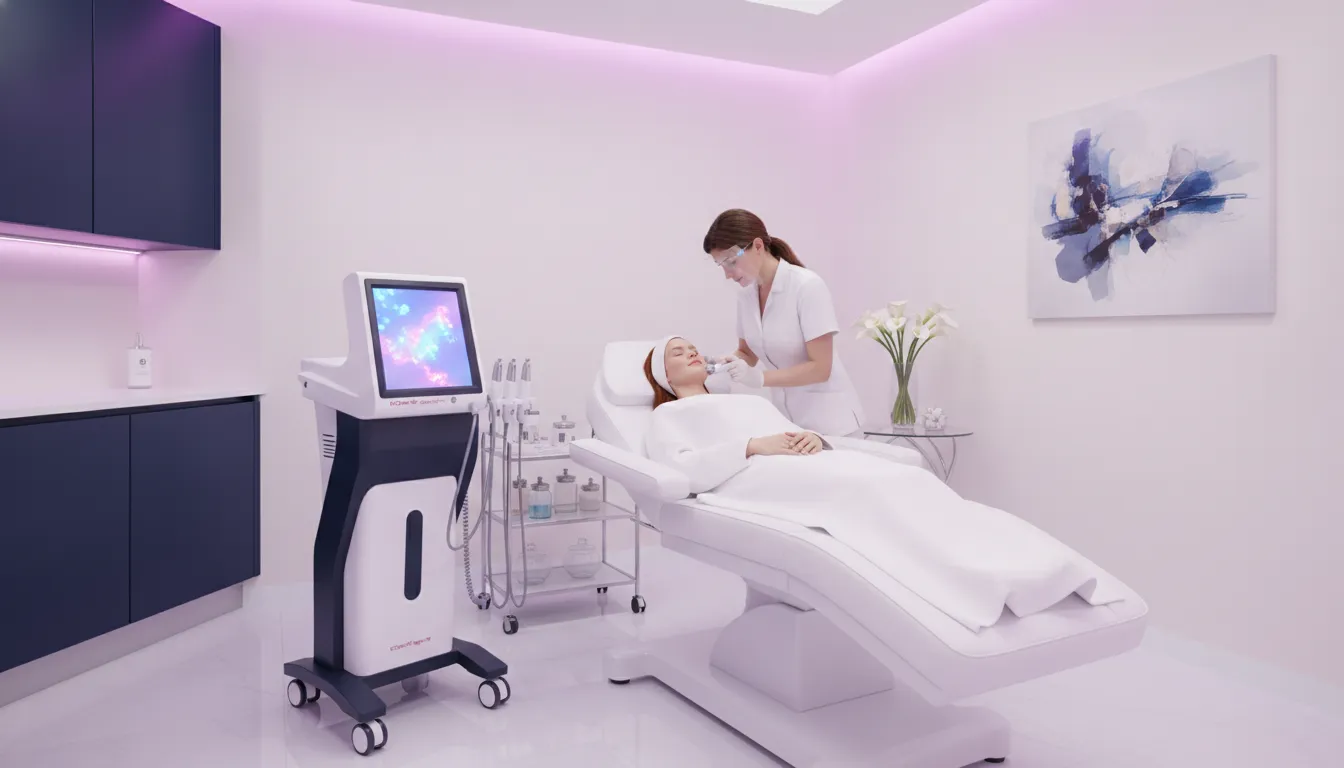
For a medspa owner, understanding a facial modality means looking beyond its name. You need to know what the treatment does, how it differs from more intensive resurfacing procedures, and where it may fit within a professional service menu.
In simple terms, what is hydradermabrasion? It is a cosmetic exfoliation approach that combines crystal-free microdermabrasion with the pneumatic application of a serum. A published study describes this combination using an antioxidant-based serum. Newer research emphasizes that the clinical evidence remains limited, so it should not be treated as a universal promise of results.
The terminology can be confusing because hydradermabrasion, microdermabrasion, and traditional dermabrasion involve different levels of exfoliation, equipment, and clinical oversight. Start by separating those concepts, then consider how the workflow and intended use align with your practice, providers, and patient consultations.
What Is Hydradermabrasion and How Does It Differ from Traditional Dermabrasion?
What is hydradermabrasion? In general, it is a cosmetic exfoliation method that combines crystal-free microdermabrasion with the pneumatic application of a serum or other liquid solution. A published study used this definition when evaluating hydradermabrasion with an antioxidant-based serum. In practical terms, the modality pairs controlled surface refinement with fluid delivery, rather than relying on dry abrasive media alone. A 2024 peer-reviewed paper likewise describes hydradermabrasion as an exfoliative cosmetic procedure involving suction, gentle cleansing with water, and additive serums. Read the published definition of hydradermabrasion and the later microscopic evaluation for important context.
The terminology can be confusing because manufacturers and providers may use hydradermabrasion and hydrodermabrasion differently. Hydrodermabrasion is often used as a broad description for water- or fluid-assisted exfoliation, sometimes with suction and serum application. Hydradermabrasion is commonly used for a more specific professional treatment concept, but the exact steps, solutions, tips, and device configuration vary. For a practice evaluating equipment, the name matters less than the actual mechanism, consumables, controls, training, and intended use described by the manufacturer.
Hydradermabrasion versus microdermabrasion
Microdermabrasion traditionally focuses on mechanically exfoliating the uppermost layer of skin. Cleveland Clinic describes it as a minimally invasive cosmetic procedure in which a provider uses a special instrument to gently exfoliate that surface layer. Depending on the platform, microdermabrasion may use crystals or a diamond surface. Hydradermabrasion retains the exfoliation concept but adds fluid-based cleansing, suction, or solution delivery as part of the treatment workflow. It is not automatically better than microdermabrasion. The appropriate choice depends on the client conversation, skin assessment, protocol, and the capabilities of the platform.
Hydradermabrasion versus traditional dermabrasion
Traditional dermabrasion is a more intensive resurfacing procedure. Mayo Clinic describes dermabrasion as using a fast-spinning device to remove the top layer of skin, with sensitivity possible afterward. That is distinct from the gentler, surface-oriented cosmetic positioning generally associated with hydradermabrasion and microdermabrasion. Providers should not use the terms interchangeably or assume that evidence for one modality applies to another.
Research on hydradermabrasion remains limited, and study findings often involve a specific device, serum, or treatment schedule. Use evidence to inform consultation and protocol development, not to promise a universal cosmetic outcome.
How Does a 5-in-1 Multi-Modal Facial Device Work?
A professional hydradermabrasion service is best understood as a controlled sequence rather than a single step. The general modality combines surface cleansing or exfoliation with suction and the application of water-based or serum solutions. The exact sequence, pressure, solution, and handpiece design depend on the platform, the protocol, and the provider’s assessment. A device described as 5-in-1 may also include additional technologies that are separate from hydradermabrasion itself.
- Assess the client and plan the protocol. The provider reviews the client’s goals, current skin condition, relevant history, recent procedures, product use, and any contraindications or precautions. This conversation helps determine whether a cosmetic exfoliation and hydration-focused service is appropriate, how conservatively to work, and whether referral or medical supervision is needed. Practices should confirm state scope-of-practice and supervision requirements rather than assuming one rule applies nationwide.
- Prepare the skin. The provider removes surface products and environmental debris so the treatment can be performed consistently. Preparation may include gentle cleansing and inspection of the skin. The selected solution and settings should match the protocol and the client’s tolerance, not simply default to the strongest available option.
- Use the fluid and vacuum action. In hydradermabrasion, a treatment tip moves across the skin while fluid and suction support the service. The AquaB modality described for the Preime DermaFacial hydradermabrasion system uses spiral movement with vacuum technology and Preime DermaCeuticals solutions. Emage Medical describes this product configuration in connection with cleansing and hydration. Those are product-description statements, not a guarantee of a particular result for every client.
- Adjust the service as the provider observes the skin. A professional workflow includes ongoing observation of comfort, redness, sensitivity, and the skin’s response. The provider may adjust the pace, coverage, solution, or suction within the platform’s instructions. Cosmetic equipment does not replace clinical judgment, and a multi-modal platform does not mean every technology should be used in every appointment.
- Complete the protocol and document the plan. After the selected passes or modalities are finished, the provider reviews appropriate aftercare and records the settings, solutions, areas treated, and client response according to the practice’s procedures. Follow-up recommendations should remain individualized and cosmetic in scope.
The general idea behind hydradermabrasion is therefore broader than any one branded system. The Preime DermaFacial is one specific platform that presents AquaB alongside other technologies in a multi-modal device. When evaluating a system, practice owners should separate the general modality from the manufacturer’s product description. Then confirm training, documentation, consumables, cleaning requirements, and local professional-use rules before adding it to a menu.
Which Skin Types and Concerns May Suit Hydradermabrasion?
Suitability starts with the person in front of the provider, not a universal skin-type chart. In a consultation, discuss the patient’s current skin condition, sensitivity, recent procedures, products, expectations, and appearance-focused goals. Depending on the assessment and the device protocol, a provider may consider hydradermabrasion for concerns such as surface roughness. Dull-looking skin, uneven appearance, visible pores, fine lines, or dehydration. These are cosmetic considerations, not diagnoses or promises of treatment.
Published evidence is encouraging but limited. A small study reported decreases in fine lines, pore size, and hyperpigmentation after a series of hydradermabrasion sessions. A later peer-reviewed paper noted that clinical studies validating the modality’s efficacy remain scarce. The study-specific serum, settings, treatment frequency, and patient characteristics matter, so results from one protocol should not be generalized to every device or client. See the published hydradermabrasion study and the later peer-reviewed review of microscopic skin changes for context.
Screen before selecting a protocol
Screening should identify factors that may call for postponement, modification, medical review, or referral. Ask about active irritation, open or compromised skin, a history of sensitivity, recent exfoliation or procedures, and conditions such as eczema or psoriasis. Cleveland Clinic recommends discussing microdermabrasion with a healthcare provider when these conditions are present, and similar caution is appropriate when evaluating any exfoliating facial modality. Review product ingredients and allergies, explain possible temporary reactions, and document consent and aftercare guidance.
- Confirm the skin is appropriate for the planned cosmetic procedure.
- Review recent treatments, medications, active products, and sensitivity history.
- Use conservative settings and a tailored protocol when proceeding is appropriate.
- Follow applicable state scope-of-practice, supervision, training, and sanitation requirements.
For practices, the safest positioning is individualized consultation rather than a blanket claim that hydradermabrasion suits every skin type or concern.
How Hydradermabrasion Fits Into a Multi-Treatment Practice Menu
Adding hydradermabrasion to a practice menu should begin with patient fit and clinical workflow, not with a desire to duplicate another clinic’s service list. Consider where the modality supports your existing facial treatments, who is qualified to perform it. And how a provider will decide whether it is appropriate for a particular patient.
Start with the consultation
A consultation gives the provider an opportunity to understand the patient’s goals, review relevant skin history, and set realistic expectations about a cosmetic treatment. The discussion should cover recent procedures, active irritation, relevant conditions, product use, and any factors that could affect treatment tolerance. Hydradermabrasion is not a substitute for diagnosis or medical care. When a concern falls outside the intended cosmetic scope, the provider should defer treatment or refer the patient according to the practice’s clinical protocols.
Build protocols around the patient
Menu placement should leave room for individualized protocol selection. A practice may use a hydradermabrasion service as a standalone facial or coordinate it with other modalities when clinically appropriate. Sequencing should be based on skin status, treatment goals, and recovery considerations. The general modality may combine exfoliation, suction, water, and topical solutions, while a specific platform may offer its own configuration and manufacturer directions. For example, the Preime DermaFacial describes its AquaB modality as using spiral movement and vacuum technology with Preime DermaCeuticals solutions for cleansing and hydration. Those are product-description claims, not universal outcomes, so providers should follow the applicable instructions for use rather than treating every hydradermabrasion system as interchangeable.
Define competency and supervision
Before launch, document who may perform the service, what training and hands-on competency are required. How settings and solutions are selected, and when a medical director or other supervisor must be involved. Scope-of-practice and supervision rules vary by jurisdiction, so confirm current state requirements with qualified counsel or the appropriate licensing authority. A clear escalation process also helps staff recognize when to pause treatment and seek clinical guidance.
For practices comparing professional platforms, Emage Medical’s company background can provide context about the supplier, but equipment selection should still be evaluated against your own protocols, staffing model, space, infection-control process, and patient population.
What Should You Look for in a Professional Hydradermabrasion Platform?
Choosing a professional platform is less about counting features and more about understanding how the system will function in your practice. Start by separating general hydradermabrasion principles from product-specific descriptions. Then evaluate whether the platform supports consistent protocols, trained staff, appropriate oversight, and a workflow your team can maintain.
| Area to evaluate | Questions for your team | Why it matters |
|---|---|---|
| Modality clarity | Does the supplier clearly explain exfoliation, fluid delivery, suction, and any additional technologies? | Clear terminology helps providers explain the service accurately and avoid overstating cosmetic outcomes. |
| Adjustability | Can qualified providers tailor the applicable settings, handpieces, solutions, and sequence to the client and protocol? | A configurable workflow is more useful than a one-size-fits-all approach, but changes should remain within training and supervision requirements. |
| Consumables | What solutions, tips, filters, or other supplies does the system require, and how are they sourced? | Consumable compatibility affects preparation, inventory planning, documentation, and day-to-day consistency. |
| Workflow fit | Can the platform be cleaned, set up, operated, and reset efficiently in your treatment environment? | Observe the complete workflow, not only a demonstration treatment. Space, plumbing, storage, and turnover all matter. |
| Training and competency | What initial training is provided, and what must the practice document before staff perform treatments? | Product orientation does not replace clinical judgment, competency assessment, or required medical supervision. |
| Service and support | How are technical questions, maintenance needs, replacement parts, and troubleshooting handled? | Responsive support can reduce avoidable workflow interruptions. Ask for the actual process and response expectations. |
| Compliance | What does the supplier say about intended use, documentation, state scope-of-practice rules, and supervision? | Requirements vary by jurisdiction. Confirm applicable rules with your medical director and relevant authorities before launch. |
| Operating fit | Does the platform align with your providers, treatment menu, space, protocols, client communication, and quality controls? | The best fit is the system your practice can use responsibly and consistently, not simply the one with the longest feature list. |
The Preime DermaFacial hydradermabrasion system describes its AquaB modality as using spiral movement and vacuum technology with Preime DermaCeuticals solutions for cleansing and hydration. Treat those statements as product-description facts, not universal claims about every hydradermabrasion platform or guaranteed results. Review the current specifications, training pathway, consumables, and support process directly with the supplier before deciding whether the system fits your practice.
Frequently Asked Questions
What is hydradermabrasion?
Hydradermabrasion is a cosmetic exfoliation procedure that combines crystal-free microdermabrasion with pneumatic application of a serum, according to a published study in PubMed. Professional systems may use fluid, suction, and treatment solutions in different configurations, so the exact workflow depends on the platform and protocol.
Is hydradermabrasion better than microdermabrasion?
Neither is universally better. Microdermabrasion primarily exfoliates the uppermost skin layer, while hydradermabrasion adds fluid or serum delivery to an exfoliation workflow. The appropriate choice depends on the client’s goals, skin assessment, provider training, and the equipment and solutions available in the practice.
What are the side effects of hydradermabrasion?
Clients may experience temporary redness, sensitivity, tightness, or irritation after exfoliation, although individual responses vary. Screen the client, follow the device and solution instructions, and adjust suction and intensity conservatively. The provider should defer treatment when the client’s skin condition or history raises a safety concern. A small published study reported no complications, but that finding does not guarantee the same result for every client or protocol.
How should a practice evaluate the cost of hydradermabrasion?
Look beyond the purchase price. Review consumables, maintenance, training, treatment time, room workflow, service support, and whether the platform fits your existing menu and staffing model. Ask the manufacturer for current ownership and operating details, then evaluate the service using your own utilization assumptions rather than relying on a generic revenue or return-on-investment promise.
Does hydradermabrasion actually work?
Research suggests cosmetic improvements can occur, but the evidence is limited and results depend on the specific device, solutions, protocol, and client. A 2024 review notes that clinical studies validating hydradermabrasion’s effects remain scarce (PMC). Set appearance-focused expectations and use clinical judgment when selecting candidates.
Schedule a Product Tour for Your Practice
A product tour can help you evaluate how the Préime DermaFacial may fit your practice’s treatment goals, workflow, and provider needs. To discuss the platform with the Emage Medical team, request a product tour.