

Adding or refining a service in your practice is always a business decision. When evaluating microneedling, the conversation goes beyond clinical outcomes and into ROI, efficiency, and marketability. The choice between automated microneedling vs manual methods is at the heart of this business strategy. While manual rollers have a low initial cost, automated systems are powerful assets that can command premium pricing and improve your workflow efficiency, allowing you to see more clients. This guide breaks down the financial and operational implications of each approach, helping you analyze the investment, calculate your revenue potential, and determine which method will best support your practice’s growth and profitability in the long run.
Key Takeaways
- Automated pens provide unmatched precision and control: Unlike manual rollers that rely on hand pressure, automated devices offer adjustable needle depth and speed. This consistency leads to more predictable results, greater client comfort, and a lower risk of skin trauma.
- View your device as a strategic business investment: While professional automated systems have a higher initial cost, they deliver a stronger return on investment through treatment efficiency, premium pricing potential, and the versatility to address a wide range of client concerns.
- Guide the entire client journey for optimal outcomes: Success extends beyond the procedure itself; it involves choosing the right method for each client’s goals and providing clear aftercare instructions to protect their results and build lasting trust in your practice.
What Is Microneedling and How Does It Work?
Microneedling has become a cornerstone treatment in modern aesthetics, and for good reason. It’s a versatile and effective procedure for addressing a wide range of client concerns, including fine lines, wrinkles, acne scars, uneven skin tone, and texture irregularities. Unlike more aggressive treatments, microneedling works by partnering with the body’s natural regenerative processes. It’s a minimally invasive technique that offers significant results with minimal downtime, making it a popular choice for clients seeking real improvement without a lengthy recovery period.
The fundamental principle is simple yet powerful: create tiny, controlled injuries in the skin to prompt a healing response that results in a fresher, healthier, and more youthful appearance. This process, known as collagen induction therapy, is the key to its success. By creating thousands of micro-channels, the treatment not only stimulates new collagen and elastin but also enhances the absorption of topical serums, allowing for deeper penetration of active ingredients. As a provider, understanding the science behind microneedling is essential for educating your clients and delivering exceptional outcomes. It allows you to explain exactly how the treatment works to build their confidence and set clear expectations for the beautiful results to come.
The Science of Micro-Injuries
At its core, microneedling is about harnessing the skin’s incredible ability to heal itself. The procedure works by deliberately stimulating the skin through controlled micro-injuries created by very fine, sterile needles. Rather than causing random damage, this targeted approach activates a cascade of biological responses associated with regeneration and tissue remodeling. Think of it as a signal to the skin that it’s time to initiate a repair process.
This controlled intervention is what separates professional microneedling from at-home methods. Each micro-channel is precise, uniform, and created at a specific depth to trigger the desired physiological response without causing scarring or unnecessary trauma. This precision ensures the healing process is productive, leading directly to the formation of new, healthy tissue that improves the skin’s overall structure and appearance.
Stimulating Collagen and Remodeling Skin
So, what happens on a cellular level once those micro-injuries are created? The magic is in the body’s response. The local injury from the microneedles causes the release of essential growth factors, including transforming growth factor (TGF)-α, TGF-β, and platelet-derived growth factor (PDGF). These powerful proteins act as messengers, signaling fibroblasts to get to work.
This stimulation leads to the production of new collagen and elastin fibers, the essential building blocks of firm, supple skin. It also encourages the formation of new capillaries, which improves blood supply and brings more oxygen and nutrients to the tissue. This entire process ultimately results in tissue remodeling, where the skin rebuilds itself to become smoother, firmer, and more resilient. Combining this with advanced topicals, like those in the StemFacial® system, can further support this regenerative cycle.
Automated vs. Manual Microneedling: What’s the Difference?
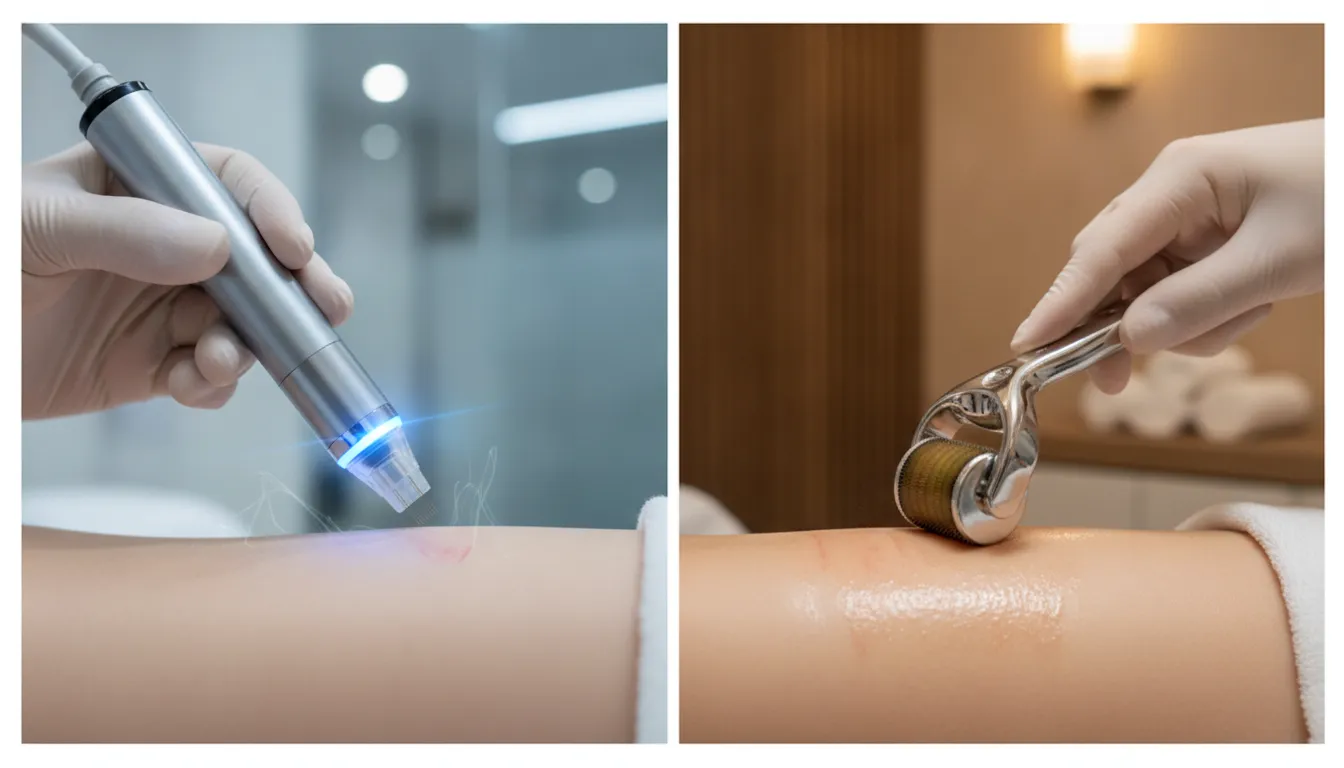
When you’re deciding which microneedling service to offer in your practice, you’ll find two main methods: automated and manual. While both techniques are designed to trigger the skin’s natural healing process and stimulate collagen production, the tools and techniques involved are quite different. Understanding these distinctions is key to choosing the right approach for your clients and your business goals. Manual microneedling relies on handheld rollers, while automated microneedling uses advanced pen-like devices.
The core difference comes down to control. With manual methods, the practitioner’s hand dictates the pressure and depth, which can vary. Automated devices, however, offer a level of precision and consistency that is difficult to replicate by hand. This impacts everything from the client’s comfort and safety to the final clinical outcome. For a professional practice, choosing between a manual roller and an automated pen isn’t just about the tool itself. It’s about the quality of the treatment you can consistently provide, the efficiency of your workflow, and the trust you build with your clients. Let’s look at how they compare in terms of the tools, the technique, and the overall efficiency for a professional practice.
Comparing the Tools: Pens vs. Rollers
The most obvious difference lies in the tools themselves. Manual microneedling uses a dermaroller, which is a small, handheld wheel covered in fixed-length needles. As you roll it across the skin, the needles create micro-injuries. While affordable, rollers require significant skill to use correctly and can create a risk of uneven pressure or dragging tears in the skin.
In contrast, automated microneedling systems use a motorized pen with a disposable needle cartridge at the tip. These devices, like the CytoPen®, allow you to adjust the needle depth and speed with precision. The needles move up and down at a rapid, controlled pace, creating clean, vertical micro-channels in the skin for a more consistent and professional treatment.
Achieving Consistent Depth and Pressure
Consistent results start with consistent technique. With a manual roller, the depth of needle penetration depends entirely on the amount of pressure you apply by hand. It’s challenging to maintain the exact same pressure over the entire treatment area, especially around the delicate contours of the face. This inconsistency can lead to uneven results or, worse, unnecessary skin trauma.
Automated pens solve this problem. The device’s motor ensures every single micro-channel is created at the precise depth you select. This removes the guesswork and guarantees a uniform treatment across the board. This level of control not only leads to more predictable and effective outcomes but also enhances client safety by minimizing the risk of epidermal damage.
Comparing Speed, Coverage, and Efficiency
In a busy practice, efficiency is everything. While a manual roller can cover large, flat areas, the rolling motion can be awkward and less effective on curved or small areas like the nose, upper lip, and around the eyes. The process can feel slow and cumbersome for both the practitioner and the client.
Automated pens are built for speed and precision. The high-speed motor creates thousands of micro-channels per minute, allowing you to complete a full-face treatment quickly and comfortably. The small, pen-like tip glides easily over every facial contour, ensuring no spot is missed. This efficiency makes it easier to pair microneedling with other treatments, like the advanced growth factors and cytokines found in the StemFacial® system, for even better results.
A Closer Look at Automated Microneedling
Automated microneedling has truly transformed how we approach skin rejuvenation. Instead of relying on manual rollers, we now have sophisticated pens that offer unparalleled precision and control. These devices use fine, sterile needles to create micro-injuries at a consistent depth and speed, triggering the skin’s natural healing process without the guesswork of manual tools. This level of accuracy not only leads to more predictable and impressive results for your clients but also enhances the safety and efficiency of the treatment. It removes the variables of hand pressure and angle, ensuring every pass is as effective as the last.
For your practice, this means you can confidently address a wider range of skin concerns with a single, versatile tool. Automated devices like the CytoPen® are designed with the practitioner in mind, combining ergonomic handling with advanced technology. By integrating an automated system, you can streamline your workflow, reduce treatment time, and deliver the consistent outcomes that build client trust and loyalty. It’s about working smarter, not harder, to achieve beautiful, healthy skin for your clients while also improving your practice’s bottom line through efficient, in-demand services.
Adjusting Needle Depth and Speed
One of the biggest advantages of automated microneedling pens is the ability to customize every single treatment. These devices allow you to precisely adjust both the needle depth and oscillation speed with the simple push of a button. This means you can use a shallower depth for delicate areas like under the eyes and a deeper setting for thicker skin on the cheeks or for treating deep acne scars. This control is completely independent of how much pressure you apply, ensuring a uniform treatment across different facial contours. This adaptability makes it easy to effectively treat even small or hard-to-reach areas with total confidence.
Advanced Features and Technology
Modern automated microneedling devices are built with safety and efficacy as top priorities. Professional systems use single-use, sterile needle cartridges that are discarded after every client, which completely eliminates the risk of cross-contamination. This is a non-negotiable standard for any reputable practice. Beyond hygiene, the technology inside these pens ensures a smooth, consistent performance. A powerful motor drives the needles vertically into the skin at a high speed, creating clean micro-channels without the tearing or dragging that can occur with manual rollers. This advanced engineering is why a professional, automated microneedling device is the most reliable way to achieve the results your clients are looking for.
Ideal Use Cases for Automated Microneedling
The versatility of automated microneedling is what makes it such a valuable asset for any aesthetic practice. It’s far more than just a treatment for fine lines and wrinkles. You can use it to address a whole host of common skin concerns that bring clients through your door. It’s incredibly effective for smoothing the appearance of acne scars, refining the look of large pores, and improving overall skin tone and texture. Over a series of treatments, clients will also see a noticeable firming and tightening effect as new collagen is produced. This broad range of applications allows you to create comprehensive treatment plans for nearly any client.
Efficiently Treating Large Areas
Automated pens are designed for efficiency. The standard technique involves gliding the device across the skin, which allows you to cover large areas like the forehead, cheeks, and neck quickly and evenly. This makes for a much faster treatment compared to manual methods, letting you see more clients throughout the day. While gliding is perfect for general rejuvenation, the pen design also allows for more targeted work. For specific concerns like an isolated acne scar or fine lines around the nose, you can use a “stamping” motion to concentrate the treatment exactly where it’s needed most. This dual capability makes automated microneedling systems both fast and precise.
A Closer Look at Manual Microneedling
While automated pens have become incredibly popular, manual microneedling still holds a valuable place in modern aesthetics. This classic technique, typically performed with a dermal roller, relies entirely on your skill as a practitioner. It’s a method that offers a different kind of precision, giving you direct, tactile feedback from the client’s skin. For certain conditions and treatment areas, the control you gain with a manual tool is simply unmatched. Understanding when and why to choose a manual approach can help you deliver more nuanced and effective treatments for your clients.
The Advantage of Practitioner Control
With manual microneedling, the results are truly in your hands. Unlike automated devices that offer consistent speed and depth, manual rollers allow you to adjust pressure and technique in real time based on the specific area you’re treating. This hands-on approach requires a high level of skill, as there’s a “risk of uneven pressure” if not performed correctly. However, for an experienced provider, this control is a significant advantage. You can intuitively adapt to the contours of the face, applying lighter pressure on delicate areas like under the eyes and firmer pressure on thicker skin, ensuring a completely customized microneedling treatment for every client.
Ideal Use Cases for Manual Microneedling
Manual microneedling is particularly effective for treating delicate and specific conditions where precision is paramount. Take melasma, for example. Research suggests that for this condition, a manual approach can be better because it is “more precise and causes less harm to the skin.” Because melasma can be triggered by inflammation, the gentle and targeted application possible with a manual tool helps minimize irritation. This makes it a go-to choice for clients with sensitive or reactive skin who might not be ideal candidates for a more aggressive, automated treatment, allowing you to safely address their specific skin concerns.
When Manual Technique Is the Better Choice
The manual technique really shines when you need to treat a single area at varying depths. While automated pens are designed to treat all areas at a uniform depth, some conditions require a more varied approach. As one study notes, “melasma needs different depths of treatment,” which is difficult to achieve with a standardized device setting. With a manual roller, you can change how deep the needles penetrate and where you focus the treatment for each tiny spot. This flexibility allows you to tailor the procedure with incredible detail, ensuring the client receives the most effective and appropriate treatment for their unique skin needs and goals.
Weighing the Pros and Cons
When you’re deciding which microneedling method to offer, it helps to lay out the advantages and disadvantages of each. The right choice for your practice depends on your goals for client outcomes, efficiency, and your brand’s reputation. Let’s break down what you can expect from both automated and manual tools.
Automated Microneedling: Pros and Cons
Automated devices, like motorized pens, are the gold standard in professional aesthetics for a reason. They give you incredible precision and control. With adjustable needle depths, you can tailor the treatment perfectly to each client’s specific skin concerns and the area being treated. This ensures you achieve consistent, repeatable results every time, which is key for client satisfaction. While the initial investment for an automated microneedling system is higher, the return comes from superior outcomes and efficiency. Yes, they require proper training, but that expertise is what sets a professional practice apart and ensures the safest, most effective treatments for your clients.
Manual Microneedling: Pros and Cons
Manual rollers are certainly more affordable and widely available, which makes them an accessible entry point. In the hands of a very skilled practitioner, they can be effective. However, their primary drawback is the lack of consistency. It’s incredibly difficult to maintain even pressure and uniform needle penetration across the entire treatment area by hand. This can lead to uneven results and a higher risk of user error. Because of these variables, manual rollers are often associated with at-home use rather than professional clinical settings where predictable outcomes are paramount. For a practice, the potential for inconsistent results often outweighs the initial cost savings.
What Results Can Clients Expect?
Setting clear expectations is a cornerstone of client satisfaction. While microneedling offers transformative results, it’s important to communicate that the process is a gradual one that relies on the body’s natural healing cycle. The improvements don’t happen overnight, but with a consistent treatment plan, clients can achieve significant and lasting changes in their skin’s health and appearance. Explaining the science behind the treatment helps clients understand the journey and feel confident in the process.
Improving Skin Texture, Scars, and Tone
Microneedling is a powerful procedure because it prompts the skin to repair itself from the inside out. The treatment creates controlled micro-injuries, which activates a biological response associated with new collagen production and tissue remodeling. This process is incredibly effective for addressing concerns that topical creams alone can’t fix. As the skin regenerates, clients will notice a visible improvement in fine lines, a reduction in the appearance of acne scars, and a more even, radiant skin tone. With a professional microneedling system, you can consistently deliver the kind of results that build client loyalty and trust.
Comparing Treatment Timelines and Sessions
The effects of microneedling unfold over time, long after the client leaves your office. While some may see an initial glow, the most significant results appear in the weeks and months following treatment as new collagen is built. For optimal outcomes, most clients benefit from a series of three to six sessions, spaced about four to six weeks apart. It’s helpful to let them know what to expect during the procedure; many describe the sensation as a light vibration or a mild scratching feeling. By creating a clear treatment plan, you can guide your clients toward their goals and ensure they understand the timeline for achieving smoother, firmer skin.
Is One Method Safer Than the Other?
When it comes to any aesthetic procedure, safety is always the top priority. Both automated and manual microneedling can be performed safely and effectively, but the level of risk often comes down to the practitioner’s skill and the quality of the tools. While a trained hand can achieve great results with a manual roller, automated devices often provide an added layer of safety through precision and control.
An automated pen’s ability to create consistent micro-channels at a precise depth helps minimize the chance of user error. This consistency not only leads to more predictable results but also reduces the risk of causing unnecessary trauma to the skin. For practices looking to offer reliable and safe treatments, investing in professional-grade microneedling systems is a critical first step. Understanding the specific risks and how to mitigate them will help you protect your clients and your practice.
Understanding the Common Risks
Microneedling is a minimally invasive procedure, but it’s not without potential side effects. As the FDA notes, it’s normal for clients to experience some temporary reactions as their skin begins the healing process. The most common risks include redness, mild swelling, itching, dryness, and peeling. These effects are generally short-lived and resolve within a few days.
Setting clear expectations during the consultation is key. Explaining that these reactions are a sign that the skin is actively repairing and regenerating can help put clients at ease. Proper aftercare, which you’ll guide them on, plays a huge role in minimizing discomfort and ensuring a smooth recovery. By educating your clients, you empower them to be active partners in their treatment journey.
Considering Skin Type and Sensitivity
Not everyone is an ideal candidate for microneedling, and a thorough client consultation is non-negotiable. Certain pre-existing conditions can increase the risk of adverse reactions. For example, microneedling may not be safe for individuals with active skin infections, conditions like eczema or psoriasis, or a history of keloid scarring. It’s also important to proceed with caution for clients with compromised immune systems or uncontrolled diabetes.
Practitioners should also be mindful of skin tone. While microneedling is suitable for a wide range of skin types, there is a risk of post-inflammatory hyperpigmentation, particularly in darker skin tones. Using a conservative approach with appropriate needle depth and providing a proper pre- and post-treatment skincare regimen can help manage this risk. Your expertise in assessing each client’s unique skin is what ensures a safe and effective outcome.
Device Regulation and Hygiene Standards
The market is flooded with microneedling devices, but not all are created equal. Using a device that is not properly regulated can expose your clients and your practice to significant risks. The FDA advises practitioners to only use microneedling devices that are legally authorized for sale. Professional systems like the CytoPen® are designed to meet high safety and performance standards.
Hygiene is another critical component of safety. Automated pens use sterile, single-use needle cartridges for each client, which virtually eliminates the risk of cross-contamination. This is a major advantage over manual rollers, which can be difficult to sterilize properly. Adhering to strict hygiene protocols isn’t just good practice; it’s essential for protecting your clients from infection and building a reputation for professionalism and care.
Avoiding Overtreatment and Technique Errors
One of the biggest safety advantages of automated microneedling lies in its ability to prevent technique errors. Manual rollers rely entirely on the practitioner to apply even, consistent pressure, which can be challenging to maintain across the entire treatment area. Uneven pressure can lead to inconsistent results and even cause micro-tears or scarring.
Automated devices, on the other hand, offer adjustable needle depth and speed, allowing for controlled, uniform penetration. This precision minimizes the risk of going too deep or applying too much pressure, which reduces tissue damage and ensures a more comfortable experience for the client. By taking the guesswork out of the equation, automated pens help you deliver safer, more predictable, and ultimately more effective treatments every time.
Comparing Cost and ROI for Your Practice
When you’re adding a new service, the numbers have to make sense. The initial investment in a device is just one part of the equation; you also have to consider the revenue it can generate and how it fits into your practice’s financial picture. Automated microneedling devices represent a more significant upfront cost than manual rollers, but they also open up a higher potential for return on investment through premium pricing, treatment efficiency, and superior client results.
Thinking about this decision from a business perspective is key. An advanced device isn’t just a tool, it’s an asset that can help you attract new clients, retain existing ones, and grow your practice’s reputation for offering modern, effective treatments. It’s about looking at the total value, not just the initial price tag. This includes factoring in the cost of consumables, potential for upselling with complementary treatments, and the long-term client loyalty you can build by delivering consistent, impressive outcomes. Let’s break down the costs and potential returns to help you see which path aligns best with your business goals.
Device Investment vs. Treatment Pricing
The upfront cost is one of the most significant differences between manual and automated microneedling. Manual dermal rollers are inexpensive, often costing less than a hundred dollars. In contrast, professional automated microneedling pens are a bigger investment, with prices for quality devices typically running into the thousands. This initial cost reflects the advanced technology, precision, and safety features built into automated systems.
This price difference naturally influences how you price your treatments. Services using a sophisticated device command a higher price point because they offer more consistent, comfortable, and effective results. Clients are often willing to pay more for a treatment they perceive as more advanced and reliable. While a manual treatment might be a lower-cost entry point, an automated service can be positioned as a premium offering, directly impacting your revenue per appointment.
Calculating Your Revenue Potential
Your return on investment goes far beyond the cost of the device. Automated microneedling allows you to treat a wide variety of skin concerns, from fine lines and acne scars to uneven texture, making it a versatile service for a broad client base. Because automated pens are faster and more efficient, especially on larger areas, you can fit more appointments into your day without sacrificing the quality of the treatment. This efficiency is a direct path to increased daily revenue.
Furthermore, offering state-of-the-art services helps build your practice’s brand. When you invest in modern technology, you signal to clients that you are committed to providing the best possible care. This can be a powerful marketing tool that attracts discerning clients who are looking for top-tier results. With the right strategy and comprehensive marketing support, your new device can quickly become a profitable cornerstone of your service menu.
Financing Your New Device
The higher price tag of an automated microneedling pen can feel like a hurdle, but it doesn’t have to be a barrier. Many practices take advantage of financing options to make the investment manageable. Think of it as a strategic business move that allows you to acquire a revenue-generating asset without a substantial upfront capital expense. This approach lets the device start paying for itself through client treatments from day one.
By spreading the cost over time, you can maintain healthy cash flow while still expanding your service offerings. Many device suppliers offer flexible financing programs designed specifically for aesthetic practices. This makes it possible for businesses of all sizes to access the same high-quality technology, level the playing field, and focus on what truly matters: delivering incredible results for your clients and growing your practice.
How to Choose the Right Method for Your Clients
Selecting the right microneedling method isn’t about finding a single “best” option; it’s about making a thoughtful, informed decision for each person who walks into your practice. The choice between an automated pen and a manual roller depends on a combination of factors, from the specific skin concern you’re addressing to your client’s lifestyle and your own professional confidence with the tool.
A successful treatment plan starts with a thorough consultation. By carefully evaluating your client’s skin, understanding their goals, and considering your own training, you can confidently recommend the approach that will deliver the safest and most effective results. Let’s walk through the key considerations that will guide you in making the perfect choice every time, ensuring your clients leave happy and your practice continues to build its reputation for excellence.
Match the Method to the Skin Concern
Microneedling is incredibly versatile, capable of addressing everything from fine lines and acne scars to uneven tone and texture. The precision of an automated pen, like the CytoPen®, allows you to customize the needle depth and speed for specific issues. For deep-set acne scars or wrinkles in delicate areas, this level of control is essential for stimulating collagen exactly where it’s needed. While manual rollers can improve overall texture, they lack the ability to target localized concerns with the same accuracy. For a practice aiming to treat a wide variety of conditions effectively, an automated device provides the flexibility to create truly bespoke treatment plans for each client.
Consider Skin Type, Recovery, and Client Goals
Every client’s skin is unique, and their goals and lifestyle play a huge role in determining the best treatment path. An automated pen offers consistent, vertical needle entry, which minimizes epidermal tearing and can be more comfortable for clients with sensitive or reactive skin. This controlled approach often leads to a more predictable and manageable recovery period. Discussing downtime with your client is key. If they need to return to their routine quickly, the efficiency and reduced trauma of an automated session can be a major selling point. Aligning the treatment’s intensity with their ultimate goal, whether it’s a subtle refresh or significant textural correction, ensures their expectations are met.
Evaluate Your Training and Support Needs
Advanced tools deliver advanced results, but only in the right hands. Automated microneedling pens are powerful instruments, and mastering their use is critical for safety and efficacy. Before investing in a device, consider the quality of the education that comes with it. A weekend workshop isn’t enough. Look for a partner who provides in-depth, ongoing training and support to help you and your staff feel completely confident. This partnership ensures you can handle any client scenario and maximize the device’s potential. While the initial investment may be higher, comprehensive support and flexible financing programs make it an accessible and intelligent step for growing your practice.
Guiding Clients Through Aftercare
The microneedling treatment itself is just the beginning. As you know, the real magic happens in the days and weeks that follow as the skin begins its natural healing and remodeling process. Your role in guiding clients through this period is just as important as your technique during the procedure. Clear, confident aftercare instructions not only ensure your clients get the beautiful results they’re looking for but also build trust and position you as a true expert. When clients understand what to expect and how to care for their skin, they feel more comfortable and are more likely to return for their next session.
Proper aftercare minimizes risks, speeds up recovery, and supports the collagen production you worked so hard to stimulate. Setting these expectations from the start prevents frantic phone calls and helps your clients feel empowered in their skin journey. By providing a simple, effective post-treatment plan, you help protect their investment and your hard work. Let’s walk through the essential aftercare instructions every client needs to hear.
The Essentials: Sun Protection and Gentle Cleansing
The two non-negotiables after a microneedling session are sun protection and gentle cleansing. Post-treatment skin is incredibly sensitive and vulnerable, so you’ll want to stress this from the get-go. Advise your clients to wear a mineral-based, broad-spectrum SPF of 30 or higher every single day. They should also avoid direct sun exposure for at least a week to prevent hyperpigmentation and sun damage while the micro-channels are healing.
For cleansing, tell them to use a mild, non-exfoliating cleanser with lukewarm water for the first 72 hours. They should gently pat their skin dry with a clean towel, never rubbing or pulling. The goal is to keep the area clean without stripping the skin’s natural moisture barrier or causing further irritation. A simple, gentle routine is the best way to support the skin’s healing process.
What to Avoid After Treatment
Just as important as what clients should do is what they should avoid. Give them a clear list of “don’ts” for the first few days post-treatment to prevent irritation and ensure a smooth recovery. For the first 24 to 72 hours, clients should avoid any active skincare ingredients. This means no retinoids, vitamin C serums, exfoliating acids (like AHAs or BHAs), or scrubs. These products can be far too harsh for freshly treated skin and can cause a significant inflammatory reaction.
Additionally, advise them to skip strenuous workouts, saunas, steam rooms, and swimming pools for at least 48 hours. Sweating can introduce bacteria into the micro-channels, and excessive heat can worsen inflammation and redness. Following your specific post-procedure care instructions is crucial for their safety and results, so be sure to provide them with a printed or digital handout they can reference at home.
Supporting the Healing Process Between Sessions
Helping clients understand the healing timeline is key to managing their expectations. Explain that it’s normal to experience redness, similar to a mild sunburn, for one to three days. Some may also see minor swelling or even pinpoint scabbing, which typically resolves within a week. Reassure them that these are positive signs that the skin is actively repairing itself and building new collagen. This is the very response that your CytoPen® microneedling treatment is designed to create.
To aid the healing process, recommend they focus on hydration and nourishment. Products with hyaluronic acid can help replenish moisture, while gentle, calming ingredients can soothe redness and sensitivity. Encourage them to be patient, as the full effects of microneedling unfold over time. By supporting their skin between sessions, they’ll be setting the stage for even better results with each subsequent treatment in their series.
Frequently Asked Questions
I’ve been using manual rollers for years. Is investing in an automated pen really worth it for my practice? I completely understand this question. Think of it less as replacing a tool and more as upgrading your entire service. While a skilled hand can get results with a roller, an automated pen provides a level of consistency that is nearly impossible to replicate manually. This means more predictable outcomes, which builds client trust. It also improves efficiency, allowing you to perform treatments faster and more comfortably for the client. This lets you fit more appointments into your day and ultimately generates more revenue, so the device pays for itself over time.
Are automated pens actually safer, or is it just about the practitioner’s skill? While your skill is always the most important factor, an automated device provides a significant safety advantage. The main reason is control. Automated pens use sterile, single-use needle cartridges and create clean, vertical channels at a precise, adjustable depth. This removes the risk of inconsistent hand pressure, which can cause micro-tears or uneven treatment with a manual roller. This precision minimizes trauma to the skin, reduces the risk of post-inflammatory hyperpigmentation, and ensures a more uniform healing response for every client.
Can I use an automated device for delicate or specific concerns like melasma, or is manual still better for that? This is a great question because it highlights the importance of a customized approach. While some believe manual methods offer more control for sensitive conditions, modern automated pens are incredibly versatile. You can adjust the needle depth and speed to be extremely gentle, making them suitable for delicate areas around the eyes and lips. For a specific spot, you can use a “stamping” motion rather than gliding. This gives you targeted, precise treatment without the potential for uneven pressure that can come with a roller, making automated pens a highly effective and adaptable tool for almost any concern.
How can I justify the higher price of an automated microneedling treatment to my clients? You can confidently explain that the price reflects a more advanced and effective treatment. Frame it around the benefits to them: consistency, comfort, and superior results. You can explain that the automated device ensures every part of their skin receives the exact same level of treatment, leading to a more even and predictable outcome. The procedure is also typically faster and more comfortable. Clients who are investing in their skin are often willing to pay for a premium service that uses professional-grade technology to deliver the best possible results safely.
Besides the device itself, what should I look for when investing in an automated system to ensure a good return? This is such a smart question because the device is only part of the picture. To get the best return, look for a partner, not just a product. Your investment should come with comprehensive training for you and your staff, ensuring everyone feels confident delivering top-tier treatments. You should also look for ongoing clinical support for when you have questions about specific client cases. Finally, consider companies that offer marketing assistance and flexible financing, as these resources help you attract clients and make the investment financially manageable from day one.