

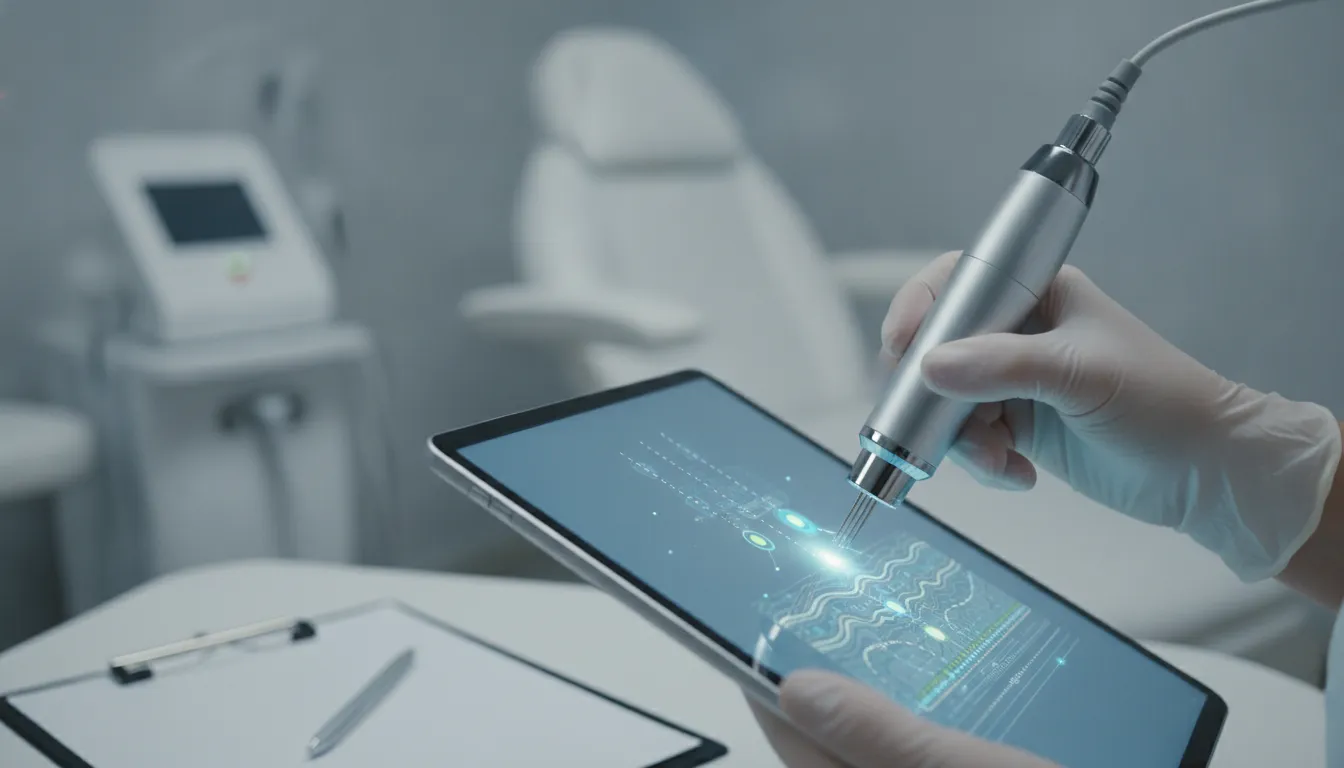
Patients often want smoother texture, softer-looking scars, and healthier-looking skin without extensive recovery. Automated microneedling may offer a practical option for selected concerns, but the device alone does not determine the outcome. Provider training, patient selection, treatment settings, sterile cartridges, aftercare, and follow-up all shape the experience. For practice owners, this service can also create operational value. The benefits of automated microneedling for clinics may include repeatable treatment workflows, adjustable protocols, efficient appointment planning, and opportunities to connect microneedling with imaging, hydradermabrasion, or hair-restoration services. This guide explains how clinics can evaluate the treatment, prepare their teams, and build a responsible service line.
Key Takeaways
- Personalized treatment planning matters: Screen every patient, review skin health and medical history, and adjust device settings based on the treatment area, concern, and individual tolerance.
- Training and safety protocols protect care quality: Use qualified providers, sterile single-use cartridges, manufacturer guidance, thorough documentation, and clear procedures for aftercare and unexpected reactions.
- A well-managed service supports practice growth: Combine realistic patient education, consistent workflows, ethical marketing, financing analysis, and performance tracking to build a sustainable microneedling program.
What Is Automated Microneedling?
Automated microneedling is a minimally invasive aesthetic treatment that uses a motorized pen to create controlled microchannels in the skin. These tiny channels activate the skin’s natural repair response, which may support collagen and elastin production over time. Providers commonly use microneedling for concerns such as fine lines, uneven texture, acne scars, and selected stretch marks.
The treatment is not one-size-fits-all. A qualified provider selects the needle depth, speed, movement pattern, and treatment area based on the patient’s skin, goals, medical history, and tolerance. A thorough consultation should also explain what the treatment can and cannot address, how many sessions may be appropriate, and what recovery may involve.
For clinics, automated systems can offer more control and repeatability than basic manual tools. Emage Medical’s CytoPen® microneedling systems are designed for professional treatment workflows. Still, no device replaces clinical judgment, proper training, infection-control procedures, or clear patient education. Technology works best when it supports a well-defined standard of care.
How motorized needles create controlled microchannels
A motorized microneedling pen moves a sterile cartridge of fine needles up and down at a controlled speed. As the provider guides the pen across the treatment area, the needles create vertical microchannels in the skin. These controlled micro-injuries encourage the body’s wound-healing response, including the production of collagen and elastin.
Before treatment, the provider may apply a topical anesthetic and prepare the skin according to the clinic’s protocol. During the procedure, the provider works methodically across the area with an appropriate glide product. Needle movement, pressure, speed, and coverage all influence the treatment experience. The goal is controlled stimulation, not unnecessary trauma.
The Med Spa’s overview of automated microneedling describes how tiny needles create micro-injuries that encourage collagen and elastin production. Patients should understand that visible changes generally develop gradually as the skin remodels, rather than appearing immediately after treatment.
How automated and manual microneedling differ
Manual microneedling tools, including rollers and some stamps, depend more heavily on the provider’s hand pressure, angle, and movement. That can make depth and coverage less consistent, particularly across curved, delicate, or uneven areas. A motorized pen delivers repeated needle movement at a selected setting, giving the provider greater control over the treatment pattern.
A comprehensive review of microneedling applications reports that automated pens can create thousands of controlled microchannels and may reach greater depths than some manual techniques. This can make them useful for selected concerns that benefit from structured skin remodeling.
The difference is not simply about choosing the stronger option. Deeper treatment is not automatically better, and manual tools may still have a role in certain protocols. Providers should choose the approach based on the patient’s skin, the concern being treated, the location, and the desired outcome. Automated systems may offer a more repeatable method for professional services.
How providers adjust depth, speed, and patterns
Automated microneedling devices typically allow providers to adjust needle depth and operating speed. These controls help clinicians create protocols for different areas of the face and body. The skin around the eyes, forehead, cheeks, neck, and décolletage can vary in thickness and sensitivity, so one setting may not suit every area.
Depth should reflect the treatment concern, skin thickness, anatomy, and patient tolerance. Speed and movement pattern also affect how evenly the provider covers the area. A trained clinician may use shorter passes in delicate zones and a systematic pattern across broader areas, while avoiding excessive pressure or repeated passes.
Adjustable settings support personalized care, but they also make training and documentation essential. The provider should record the settings used, areas treated, products applied, and the patient’s response. These records help the team repeat appropriate protocols, identify patterns in outcomes, and make informed adjustments at future appointments. The device’s manufacturer instructions should guide permissible settings and operation.
How providers apply clinical judgment
A device can deliver controlled needle movement, but it cannot determine whether a patient is an appropriate candidate. Providers should review the patient’s goals, skin condition, medical history, medications, healing history, and expectations before treatment. Active infection, open wounds, significant inflammation, or other concerns may require postponement, medical evaluation, or a different treatment approach.
The consultation should also address the patient’s skin tone, history of abnormal scarring, tendency toward pigmentation changes, and tolerance for downtime. Providers should explain expected redness and sensitivity, possible side effects, aftercare requirements, and signs that call for follow-up. Clear instructions help patients participate in their own recovery.
The microneedling review available through PubMed Central emphasizes patient education and communication about expected outcomes and side effects. Setting practical expectations is especially important because collagen remodeling takes time, and patients may need a series of treatments rather than one appointment.
How professional systems differ from at-home devices
Professional automated pens are intended for trained providers working in a controlled clinical environment. Depending on the system, they may offer adjustable settings, sterile single-use cartridges, structured protocols, and a vertical stamping motion. These features can provide more controlled treatment than an at-home roller used without professional assessment.
At-home devices create additional concerns around pressure, depth, sanitation, and treatment frequency. Improper use may lead to excessive irritation, uneven results, infection, or skin injury. Patients may also use a device over active acne, inflamed skin, open lesions, or another condition that should first be evaluated by a qualified professional.
AboutSkin Dermatology discusses risks associated with at-home microneedling, including inconsistent pressure and improper sterilization. Clinics can use this distinction to educate patients without overstating the benefits of professional treatment. Outcomes still depend on provider qualifications, appropriate settings, sterile technique, patient selection, and thorough aftercare.
What Benefits Does Automated Microneedling Offer Clinics?
Automated microneedling gives clinics a structured way to deliver a collagen-induction treatment across different patient needs. Unlike a manual roller, a motorized pen moves its needles vertically at a controlled speed. This motion can help providers cover treatment areas more evenly while adjusting the technique for skin type, treatment goals, and comfort.
The operational benefits matter, too. A consistent device workflow can simplify staff training, support repeatable treatment plans, and make appointment times easier to estimate. Clinics may also use microneedling for several concerns, including uneven texture, acne scars, selected body concerns, and scalp treatments. Emage Medical’s professional microneedling systems are designed to support practices with equipment, training, and ongoing guidance.
Automated equipment does not replace clinical judgment. Providers still need to screen patients, obtain informed consent, select appropriate settings, follow sterile procedures, and provide aftercare instructions. When used within a well-managed protocol, automated microneedling can support the following benefits.
Improve treatment consistency and coverage
A motorized pen can help providers maintain consistent needle movement and coverage compared with a manual roller. Its vertical motion may also reduce dragging across the skin, making it easier to control the treatment pattern across each area.
This consistency can be especially helpful when a patient returns for several appointments or when multiple providers deliver treatments at the same clinic. Staff can divide the face or body into sections, follow an organized pattern, and record the settings used for each area. Research in this review of microneedling applications and techniques notes that automated pen devices may provide more precise treatment and can be useful for deeper scars and skin remodeling.
Consistent technique does not mean using identical settings for every patient. Skin thickness, sensitivity, treatment area, and the concern being addressed should all inform the protocol. The device provides control, but the provider remains responsible for making appropriate treatment decisions.
Shorten sessions and improve room turnover
Automated microneedling can support a more efficient treatment workflow. After the patient has been screened, consented, and prepared, a motorized pen allows the provider to move through treatment areas systematically. This may reduce the need for repeated passes or corrections caused by uneven coverage.
A typical microneedling appointment takes about 30 minutes, although the actual duration depends on the treatment area, preparation, numbing process, and selected protocol. The clinical review of microneedling also notes that session length varies by the area being treated.
More predictable appointments can help a clinic plan its schedule and prepare rooms between patients. However, efficiency should never mean rushing screening, sanitation, documentation, or aftercare education. The goal is a smoother workflow that protects both patient safety and the quality of the treatment experience.
Customize protocols for different concerns
One advantage of an automated pen is adjustable needle depth and speed. Providers can select settings based on the treatment area and the patient’s goals rather than applying one technique to every concern. Facial skin, the neck, décolletage, hands, scalp, and body areas may each require a different approach.
A clinic might use a conservative protocol for a sensitive area and another setting for selected atrophic scars or body concerns. Providers can also modify the approach as a patient progresses through a treatment series. Research on adjustable microneedling protocols describes depth control as a way to support more personalized treatment across different conditions and body areas.
Customization still requires clear boundaries. Providers should work within their qualifications, follow manufacturer instructions, and avoid treating beyond what the patient’s skin can safely tolerate. Written protocols can help staff understand when to adjust settings, pause treatment, or refer a patient for additional evaluation.
Repeat treatments across providers and locations
Clinics with multiple providers or locations need processes that are easy to understand and reproduce. Automated microneedling can support that goal by allowing teams to record device settings, treatment zones, product use, and patient response in a consistent format.
Standardized protocols can reduce unnecessary variation between appointments. They also give providers a shared starting point when a patient sees different members of the team. This is helpful for treatment series, where progress depends on appropriate spacing, consistent technique, and follow-up.
Microneedling works by creating controlled micro-injuries that stimulate the skin’s repair response and support collagen remodeling. The published review of microneedling describes it as a flexible, minimally invasive treatment with several clinical applications. Even with a shared protocol, providers should assess the patient at every visit because skin response, healing, medications, and new contraindications can change the plan.
Offer minimal downtime and service flexibility
Many patients consider microneedling because it is minimally invasive and generally involves limited downtime. Depending on the treatment settings and area, patients may experience temporary redness, sensitivity, tightness, or mild swelling. These effects may fit more easily into a patient’s schedule than recovery from a more aggressive resurfacing procedure.
For clinics, this creates flexibility in how they structure the service. Microneedling may be offered as a standalone treatment, part of a series, or one element of a broader skin-care plan. Providers can also treat different areas when the patient is an appropriate candidate and the protocol matches the anatomy and concern.
Recovery is not identical for every patient. More intensive settings may produce a stronger short-term response, and individual healing varies. Clinics should explain what downtime may look like rather than promising that every patient will return to normal immediately. A clinical review of microneedling supports its minimally invasive profile while noting that results and recovery depend on technique and patient factors.
Treat diverse skin tones without thermal energy
Microneedling uses mechanical needles rather than thermal energy, which can make it a useful option for some patients who have concerns about heat-based resurfacing. People with darker skin tones may face a higher risk of post-inflammatory pigmentation changes after certain laser treatments, so a nonthermal approach may be appropriate in selected cases.
Microneedling is not risk-free for skin of color. Any procedure that creates controlled skin injury can cause inflammation or pigmentation changes in some patients. Providers should review a patient’s history of hyperpigmentation, current inflammation, recent sun exposure, active skin conditions, and healing patterns before treatment.
The consultation should also cover sun protection and the possibility of temporary discoloration. The clinical literature on microneedling notes that it may be safer than some laser treatments for people with darker skin, but treatment decisions still require an individualized assessment. Clinics should avoid presenting microneedling as suitable for every skin tone or pigmentation concern.
Support topical product application through microchannels
Microneedling creates temporary microchannels in the skin. These channels may help certain topical products, including vitamin-based serums and growth factors, reach deeper layers than they would through surface application alone. This can give providers another way to structure a treatment plan around a patient’s goals.
Product selection is important. Clinics should use only products that are appropriate for professional microneedling and compatible with the device and treatment protocol. A serum intended for everyday topical use is not automatically suitable for application during a procedure. Providers should also consider ingredients that may cause irritation or an allergic response, along with contamination and regulatory concerns.
The microneedling research review discusses the role of temporary microchannels in topical product penetration. Clinics should follow manufacturer instructions and internal policies rather than making broad claims about absorption or results. Documenting the product used, relevant lot information, and the patient’s response can support safer, more consistent care.
Improve patient comfort and satisfaction
Patient comfort influences the entire treatment experience, from the initial consultation through follow-up. Automated pens may provide a more controlled sensation than manual rollers because the needles move vertically and the provider can adjust speed and depth. Patients often describe microneedling as mild prickling or light sandpaper-like pressure, although sensation varies by treatment area and settings.
Topical anesthetic, adequate preparation, an appropriate glide product, and clear communication can make treatment easier to tolerate. Providers should explain what the patient may feel, check in throughout the appointment, and pause or adjust the protocol when necessary. Comfort should never come from using settings that are unsuitable for the patient’s condition.
Most side effects are mild and temporary, but patients still need clear aftercare guidance. The available clinical review notes that patients commonly experience temporary effects following treatment. When a clinic combines careful technique with realistic expectations and responsive follow-up, patients are more likely to feel informed and confident about their care.
Which Patients and Concerns Can Automated Microneedling Treat?
Automated microneedling can address several skin and scalp concerns by creating controlled microchannels that support the body’s natural repair response. Providers may use it to improve the appearance of fine lines, uneven texture, acne scars, stretch marks, and selected hair-restoration concerns. Because the device uses motorized needle movement, clinicians can adjust treatment depth, speed, and coverage based on the treatment area and the patient’s goals.
Candidacy depends on more than the concern a patient wants to improve. During the consultation, providers should review skin condition, medical history, medications, healing history, pigmentation risk, previous procedures, and expectations. The patient’s skin should be healthy and intact at the time of treatment, without active infection or significant inflammation.
Automated microneedling is not appropriate for every patient or concern. A thorough assessment helps providers identify suitable candidates, select a safe protocol, and determine when another treatment or medical referral may be more appropriate. The following concerns are commonly considered for professional microneedling, but results and treatment plans should always be individualized.
Fine lines, wrinkles, and uneven texture
Automated microneedling may help soften the appearance of fine lines and mild wrinkles by supporting collagen production and gradual skin remodeling. Patients may also notice smoother texture, improved firmness, and a more even-looking complexion as the skin renews.
The face is a common treatment area, but providers should assess skin thickness, sensitivity, and the location of lines before choosing needle depth and treatment speed. Results usually develop over a series of treatments rather than appearing immediately. The American Academy of Dermatology Association explains that providers may recommend multiple sessions for concerns such as wrinkles, scars, and uneven skin tone.
Acne scars and selected atrophic scars
Acne scars are one of the best-established uses for microneedling. Controlled micro-injuries can encourage collagen remodeling within shallow, depressed scars, which may reduce their depth and create a more even-looking skin texture.
Microneedling is generally better suited to selected atrophic scars than raised or thickened scars. Providers should also distinguish active acne from residual scarring. Treating inflamed breakouts, pustules, or infected lesions may worsen irritation or spread infection. Depending on the scar type and the patient’s skin health, acne management, subcision, laser treatment, chemical peels, or another approach may be more appropriate. This peer-reviewed microneedling review summarizes current clinical applications and outcomes.
Stretch marks and selected body concerns
Microneedling may improve the visibility and texture of stretch marks, also called striae. By supporting collagen and elastin remodeling, treatment may soften the contrast between the affected area and the surrounding skin. Patients should understand that stretch marks are a form of dermal scarring, so complete removal is not a realistic treatment goal.
Providers may consider treating the abdomen, thighs, hips, breasts, or upper arms when the skin is intact and the patient is an appropriate candidate. Protocols should account for the size of the treatment area, skin laxity, sensitivity, and the age and color of the stretch marks. Larger areas may require additional appointment time, and patients may need a series of treatments with enough time between sessions for recovery.
The neck, décolletage, hands, and other areas
Although facial treatments are common, automated microneedling may also be considered for the neck, décolletage, hands, and selected body areas. These regions can show changes in texture, sun exposure, fine lines, or loss of firmness, but their skin varies in thickness and sensitivity.
Providers should use anatomy-specific settings instead of applying the same protocol everywhere. The neck and décolletage may require a conservative approach, while the hands have limited soft tissue and prominent structures that call for careful technique. A professional microneedling system can support adjustments in depth and speed, but clinical judgment remains essential for every treatment area.
Scalp and hair-restoration concerns
Microneedling may serve as an adjunct treatment for certain hair-restoration plans, including some cases of androgenetic alopecia. Controlled stimulation may support scalp circulation and the release of growth factors. It is not a standalone solution for every type of hair loss, so an accurate diagnosis should guide treatment planning.
Before treating the scalp, providers should assess whether hair loss is patterned, sudden, inflammatory, scarring, medication-related, or associated with another medical condition. Some patients may benefit from a coordinated plan that includes medical evaluation, topical or oral therapies, or other procedures. Clinics adding this service can review Emage Medical’s hair-restoration technologies when evaluating equipment and workflow needs.
Manage pigmentation risks for skin of color
Microneedling does not rely on thermal energy, which may make it an option for some patients concerned about post-inflammatory hyperpigmentation. It may also help improve uneven tone and support the delivery of selected topical products when those products are appropriate for use with the procedure.
Pigmentation risk is not absent, however. Patients with deeper skin tones may still develop temporary or persistent color changes after inflammation or injury. Providers should ask about previous hyperpigmentation, active irritation, melasma, recent tanning, and skin-care products that may increase sensitivity. Conservative settings, careful aftercare, and consistent sun protection can help reduce avoidable complications. Treatment decisions should reflect the individual patient’s history and skin response, not skin tone alone.
Identify ideal candidates and alternatives
An ideal candidate generally has a specific, realistic concern, healthy intact skin, and enough time to follow pre-treatment and aftercare instructions. The provider should confirm that the patient understands results develop gradually and may require a series of treatments.
Microneedling may be unsuitable for patients with active skin infections, open wounds, uncontrolled inflammatory conditions, certain blood-clotting concerns, poor wound healing, or a personal history of problematic keloid scarring. Recent isotretinoin use, immune disorders, pregnancy, and medications that affect healing may also require additional review. When risk is elevated, the provider may recommend delaying treatment, obtaining medical clearance, or considering a peel, laser, medication, or specialist referral. The FDA’s microneedling device guidance provides helpful safety context for clinics evaluating these procedures.
Set realistic expectations during consultations
A strong consultation connects the patient’s concern with a measurable, achievable goal. Instead of promising perfect skin or complete scar removal, providers can discuss likely improvements in texture, softness, tone, or scar visibility. Before-and-after photos should use comparable lighting, angles, treatment plans, and follow-up periods so patients can evaluate changes fairly.
Patients should know what they may experience during and after treatment, including redness, sensitivity, mild swelling, dryness, or temporary tightness. They should also understand that collagen remodeling takes time and that outcomes vary based on age, skin condition, lifestyle, treatment settings, and aftercare. Documenting the patient’s goals, medical history, consent, baseline photos, and recommended plan supports clear communication and a consistent experience across the clinic.
How Do Results, Comfort, and Recovery Compare?
Automated microneedling can improve the appearance of texture, fine lines, scars, and other concerns while requiring less downtime than some more intensive resurfacing treatments. Still, patients should understand that the visible response develops gradually. The treatment creates controlled microchannels that prompt the skin’s natural repair process, and the final outcome depends on factors such as the patient’s concern, skin condition, treatment settings, provider technique, and aftercare.
A thorough consultation gives patients a realistic comparison between microneedling, lasers, chemical peels, and other resurfacing options. It also gives providers an opportunity to discuss treatment goals, comfort preferences, recovery time, and the likely number of sessions. One appointment may produce a fresh-looking glow, but a planned series is often more appropriate for concerns such as acne scars, stretch marks, or established wrinkles.
Providers should avoid promising a specific result or timeline. Instead, they can use standardized photographs, consistent lighting, and scheduled follow-ups to help patients assess gradual changes. This approach supports informed decisions and creates a clearer record of progress.
Explain what patients may notice after one treatment
Patients may notice an immediate glow after treatment, along with mild redness, warmth, or sensitivity. As the initial response settles, the skin may feel smoother and look more refreshed over the next several days and weeks. These early changes are not the final result, but they can help patients understand that the treatment process has begun.
One session may soften mild texture concerns, fine lines, or enlarged pores. More established wrinkles, acne scars, and stretch marks often require multiple treatments spaced according to the provider’s protocol and the patient’s healing response. The Cleveland Clinic’s microneedling overview explains why visible improvement may take time.
During the consultation, explain what the patient may notice immediately, what may change during recovery, and when progress will be reviewed. Clear expectations reduce the chance that a patient will judge the outcome too soon.
Show how collagen remodeling develops over time
Microneedling stimulates the skin’s repair response, which includes the production and reorganization of collagen and elastin. These proteins help support the skin’s structure, firmness, and resilience. Because this process happens gradually, patients may continue to notice changes after redness and sensitivity have resolved.
Some improvements may appear within days or weeks, while collagen remodeling can continue for several months. The pace varies with age, skin health, the concern being treated, treatment depth, and the spacing between appointments. A review of microneedling applications and outcomes emphasizes the importance of individualized treatment planning.
A simple timeline can make this easier to explain: immediate post-treatment response, early recovery, gradual texture changes, and longer-term remodeling. Providers should also explain that maintenance treatments may be appropriate for some patients, depending on their goals and clinical assessment.
Prepare patients for redness, sensitivity, and recovery
Redness similar to a mild sunburn is common for the first one to three days. Patients may also experience warmth, tightness, sensitivity, mild swelling, dryness, or flaking. Some patients develop pinpoint scabbing, which may take several days to resolve. The intensity and duration of these effects depend on the treatment area, settings, skin condition, and individual healing response.
Give patients written aftercare instructions before they leave. Explain when they can resume exercise, makeup, heat exposure, and their usual skin care routine. Gentle cleansing, avoiding rubbing or picking, and protecting the treated area from sun exposure are commonly included in recovery guidance. All product recommendations should follow the device manufacturer’s instructions and the provider’s clinical judgment.
Patients should know which changes are expected and which require a call to the clinic. Increasing pain, spreading redness, drainage, blistering, or other concerning symptoms should be assessed promptly. A follow-up message can reinforce instructions and provide an opportunity to identify concerns early.
Improve comfort with topical anesthetic and glide
Many patients describe automated microneedling as mild prickling, vibration, or light sandpaper-like pressure. Comfort varies by treatment area, needle depth, skin sensitivity, and individual tolerance. Areas with thinner skin may feel more sensitive than the cheeks or forehead, so providers should check in throughout the appointment.
A topical anesthetic may help improve comfort when used according to applicable regulations, product directions, and clinic protocols. Review allergies, sensitivities, and relevant medical history before application. Staff should follow the product’s instructions for application and removal, then monitor the patient during treatment.
The device’s movement, cartridge condition, treatment speed, and approved glide product can also affect comfort. A steady technique helps limit dragging and unnecessary passes. Providers can adjust settings when clinically appropriate and should stop to reassess if the patient reports unexpected or worsening discomfort. Lazaderm’s patient education describes the mild sensations many patients report.
Compare microneedling with lasers, peels, and resurfacing
Microneedling uses mechanical stimulation rather than the thermal energy used by many laser and light-based treatments. For some patients, this distinction may make it an appealing option, particularly when pigment changes are a concern. It does not mean microneedling is risk-free or suitable for every patient. Careful screening and appropriate settings remain essential.
Chemical peels vary in strength and can target surface-level renewal, uneven tone, or other concerns. Laser resurfacing may address selected texture, pigment, and scar concerns with greater intensity, but it can involve more recovery and different risks. Providers should compare these options based on skin tone, sensitivity, medical history, treatment area, clinical goals, and tolerance for downtime.
A balanced consultation presents microneedling as one option rather than a universal solution. The American Academy of Dermatology’s microneedling guidance can help providers discuss expected benefits, risks, and the value of professional treatment.
Address pain, bleeding, and immediate-result concerns
Patients often worry that microneedling will be painful or cause significant bleeding. With appropriate preparation and technique, many patients experience manageable discomfort and minimal, if any, pinpoint bleeding. Sensation and bleeding can vary with treatment depth, the location being treated, and individual factors, so providers should avoid making absolute promises.
Explain that the skin may look red or mildly swollen before it appears smoother. This temporary response is not the final result. Patients who expect instant scar removal or dramatic wrinkle reduction may feel disappointed if the consultation does not cover the expected timeline and likely number of sessions.
A straightforward explanation can help: the device creates controlled channels, the skin begins its repair response, and visible changes develop progressively. Providers should modify or stop treatment if the patient reports unexpected pain and document any unusual response. New Look Skin Center’s discussion of microneedling misconceptions provides additional context for patient conversations.
Identify factors that shape outcomes and satisfaction
The device is only one part of the treatment experience. Patient selection, diagnosis, provider training, treatment settings, skin preparation, cartridge quality, aftercare, sun exposure, and the number of completed sessions can all affect results. Expectations also play an important role. A patient seeking subtle texture refinement may feel satisfied with changes that another patient considers too modest.
Clinics can support satisfaction with a consistent consultation process. Document the patient’s concerns, skin condition, treatment goals, relevant history, and baseline photographs. Review the likely number of sessions, expected recovery, possible side effects, and the point at which progress will be assessed.
After treatment, ask about comfort, downtime, communication, and perceived changes. This feedback can help the team refine patient education and workflow, but it should complement clinical assessment rather than replace it. Ongoing training, careful documentation, and guidance from an experienced device partner can help practices deliver consistent care with Emage Medical’s microneedling technologies.
What Safety Standards Should Clinics Follow?
Automated microneedling can be a controlled, well-tolerated treatment when a qualified professional uses the appropriate device, settings, and infection-control procedures. Safety begins before the handpiece reaches the patient’s skin. Clinics should create written protocols for screening, treatment, documentation, aftercare, and escalation, then review them regularly.
Requirements vary by state, provider license, device, and clinical setting. Practices should confirm local regulations, maintain appropriate medical oversight, and follow the manufacturer’s instructions for use. Emage Medical’s microneedling technologies can support a structured service, but each practice remains responsible for patient selection, treatment decisions, and follow-up care.
Confirm provider qualifications, scope, and supervision
Only properly trained and authorized professionals should perform automated microneedling. Before launching the service, confirm who may provide the treatment under your state’s rules, what level of supervision is required, and which duties may be delegated. A medical director or supervising clinician should help establish protocols, review contraindications, and remain available when clinical oversight is required.
Training should include device operation, skin anatomy, infection prevention, topical anesthetic use, patient selection, documentation, and emergency response. Providers should demonstrate competency through supervised practice rather than completing a product demonstration alone. Ongoing education can help staff maintain consistent technique as protocols, devices, and regulations change. Working with qualified microneedling practitioners helps reduce preventable errors and supports appropriate referrals when microneedling is not suitable.
Screen for acne, infection, inflammation, and open wounds
Complete a skin assessment before every treatment. Postpone microneedling over active acne lesions, cold sores, rashes, cellulitis, open wounds, sunburn, or areas with significant irritation. Creating microchannels through compromised skin may increase discomfort and contribute to infection or delayed healing.
Ask about recent procedures, injectable treatments, waxing, exfoliation, and irritating topical products. Record your findings and explain why postponing treatment may protect the patient’s recovery. A clean appearance does not replace a clinical assessment, so use a consistent screening checklist instead of relying on a quick visual impression. Professional clinics should maintain a sanitary treatment environment and apply the same standards at every appointment.
Review medications, healing history, and keloid risk
Include a medication and medical history review in the intake process. Ask about prescription medications and supplements that may affect bleeding, immune response, wound healing, or skin sensitivity. Patients should also disclose recent isotretinoin use, uncontrolled medical conditions, active skin disease, and any previous problems with healing.
A history of raised scars or keloids deserves particular attention. It does not automatically determine candidacy, but it may affect the risk assessment or require a referral to a qualified medical professional. Document the patient’s answers, your screening decision, and any instructions provided. A clinical review of microneedling can help providers evaluate potential complications and make more informed patient-selection decisions.
Assess pigmentation concerns and sensitive skin
Microneedling does not use the heat associated with many laser treatments, but the resulting inflammation can still contribute to temporary or persistent pigment changes in some patients. Assess baseline pigmentation, a history of post-inflammatory hyperpigmentation, a tendency to flush, and previous reactions to cosmetic or aesthetic procedures. Patients with skin of color may benefit from conservative planning and detailed recovery instructions.
Sensitive or reactive skin also requires careful evaluation. Look for active dermatitis, recent over-exfoliation, irritation, or signs of a weakened skin barrier. When appropriate, use a less aggressive protocol or recommend another option. Discuss the possibility of redness and temporary color changes during the consultation. The microneedling safety literature emphasizes the importance of considering side effects and complications during treatment planning.
Use sterile, single-use cartridges for every patient
Use a new, sterile cartridge for every patient and every treatment. Never clean, disinfect, or reuse a cartridge intended for one-time use. A fresh cartridge helps limit cross-contamination and supports a consistent treatment process. When practical, open the package in front of the patient, check that it is intact and within its expiration date, and discard it immediately after use.
Keep the device handpiece away from unprotected surfaces during treatment. If contact occurs, follow the manufacturer’s cleaning and disinfection instructions before continuing. Dispose of used cartridges in an approved sharps container, not in regular waste. Clinics can also track cartridge use to identify supply issues and confirm that staff follow single-use procedures consistently.
Follow room-cleaning and infection-control procedures
Prepare the treatment room before the patient arrives. Disinfect treatment surfaces with a product appropriate for the surface and intended organisms, allow the required contact time, and remove unnecessary items from the workspace. Providers should perform hand hygiene before and after treatment and use gloves and other protective equipment according to the clinic’s infection-control policy.
Keep clean supplies separate from used materials, and avoid placing sterile items on unprepared surfaces. Clean the device according to the manufacturer’s instructions, paying close attention to areas that may collect serum, blood, or topical products. Written procedures and routine audits make these steps easier to follow. The CDC’s infection-control guidance offers a useful framework for environmental cleaning in healthcare settings.
Choose settings based on anatomy, condition, and goals
Device settings should reflect the treatment area, skin thickness, condition being addressed, and patient’s goals. The face, neck, décolletage, hands, and body may require different approaches. Providers should not treat every patient with the same depth or speed simply because a preset worked well for someone else.
Begin with the manufacturer’s approved guidance and the clinic’s established protocols. Adjust settings only within the device’s intended range and the provider’s scope of practice. Treatment should be controlled, not aggressive for its own sake. Document the selected settings and the clinical reasoning behind them. A defined protocol gives providers a framework for selecting appropriate treatment approaches while keeping consultations, treatments, and aftercare consistent.
Handle numbing agents and topical products responsibly
If the clinic uses a topical anesthetic, follow the product label, prescribing instructions, and applicable regulations. Confirm allergies, review the patient’s history, use the appropriate amount and contact time, and remove the product completely before needling. Do not apply anesthetic to broken or irritated skin unless a qualified clinician has specifically directed its use.
Topical products applied after microneedling also require careful consideration. Newly treated skin may be more permeable and reactive, so use only products approved by the manufacturer or included in the clinic’s protocol. Avoid applying unverified actives, fragrances, or irritating ingredients through freshly created microchannels. Explain what the patient may feel during the procedure, since microneedling is commonly described as mild prickling or light pressure, as dermatology guidance explains.
Give clear aftercare and sun-protection instructions
Patients should leave with written aftercare instructions, not just verbal reminders. Explain when to cleanse the skin, which products to pause, how to manage warmth or redness, and when the patient can resume their normal skincare routine. Tell patients not to pick, scrub, or apply unapproved products while the skin recovers.
Sun protection is especially important after treatment. Recommend avoiding direct sun exposure and following the clinic’s instructions for applying a suitable broad-spectrum sunscreen once the skin can tolerate it. Patients should also know when to contact the clinic, including signs such as worsening pain, spreading redness, drainage, blistering, fever, or other unexpected symptoms. Clear instructions help patients distinguish normal recovery from a potential complication, and aftercare education can support better adherence.
Document consent, settings, photos, and follow-up
Use a consent process that explains the proposed treatment, expected benefits, limitations, common side effects, possible complications, alternatives, and aftercare. Give patients time to ask questions before signing. Consent is an ongoing conversation, so confirm the plan again if the treatment area, settings, or products change.
Record the date, provider, device, cartridge, treatment area, settings, topical products, patient response, and aftercare instructions. Standardized photographs can help track progress when taken with consistent lighting, positioning, and camera settings. Schedule follow-up according to the treatment plan and record the patient’s response. Consistent follow-up and patient education also give the practice useful information about outcomes and patient satisfaction.
Recognize adverse responses and follow escalation procedures
Providers should know which responses are expected and which require prompt attention. Mild redness, sensitivity, swelling, and pinpoint bleeding may occur after treatment and often improve within a few days. Symptoms that intensify, last beyond the expected recovery period, or occur with drainage, significant swelling, severe pain, fever, or vision changes require clinical review.
Create a written escalation pathway before launching the service. It should identify whom the treating provider contacts, when the medical director is notified, when the patient is referred for urgent evaluation, and how the event is documented. Staff should also know how to respond to allergic reactions, fainting, bleeding, and other urgent events within their training. Reviewing microneedling complications can help clinics refine screening, response, and follow-up procedures.
What Equipment and Training Does a Clinic Need?
Launching an automated microneedling service involves more than purchasing a pen. Your clinic needs a complete treatment system that supports patient screening, consistent technique, efficient room turnover, and clear follow-up. Before scheduling the first appointment, review the device, single-use cartridges, compatible products, cleaning requirements, treatment protocols, and staff responsibilities.
The setup should also fit your existing services and patient experience. An imaging system can help providers explain skin concerns and document progress, while complementary treatments may support a more coordinated care plan. Emage Medical offers microneedling systems, training, financing, and practice support for clinics that want guidance beyond the initial equipment purchase.
Before adding the service, confirm your state’s rules for who may perform microneedling, what supervision is required, and which topical agents your team may use. Your medical director or compliance advisor should review these details and approve the clinic’s protocols.
Explore Emage Medical’s CytoPen® and StemFacial® systems
Emage Medical’s CytoPen® and StemFacial® systems are designed for practices adding professional microneedling to their aesthetic services. When comparing systems, look beyond the device itself. Consider how each platform fits your treatment goals, provider workflow, patient population, and plans for future services.
Ask whether the equipment partner provides clear instructions, staff education, and support after installation. Request a demonstration so providers can assess handling, cartridge changes, controls, and cleaning steps in a realistic treatment-room setting. It is also worth asking about warranty coverage, replacement parts, consumable availability, and protocol updates.
The best system is not necessarily the one with the longest feature list. It is the one your team can use consistently, document accurately, and maintain according to manufacturer guidance.
Evaluate depth control, speed, ergonomics, and usability
Depth and speed controls should be easy to understand and adjust during treatment. Automated devices create controlled microchannels, and some professional systems offer a range of needle depths for different areas and concerns. Providers should select settings based on anatomy, skin condition, treatment goals, and the patient’s response, rather than automatically choosing the deepest setting.
Ergonomics matter, too. A balanced pen can make longer treatment days easier on the provider’s hand and wrist. Look for simple controls, a readable display, secure cartridge attachment, and a design that lets the provider maintain steady contact with the skin.
Ask for hands-on training before purchasing. A demonstration can show whether the system supports the pace, precision, and treatment patterns your clinic expects. This peer-reviewed microneedling review provides additional information about technique, applications, and treatment considerations.
Choose compatible cartridges, supplies, and products
Build a supply list before launch. It may include sterile, single-use cartridges, approved handpieces or tips, gloves, gauze, skin cleanser, surface disinfectant, sharps containers, protective eyewear, and post-treatment products. Confirm that every cartridge and accessory is compatible with the selected device and intended treatment.
Take care when pairing microneedling with topical products. Some practices use products such as hyaluronic acid or other physician-approved formulations, but sterility, ingredients, compatibility, and intended use all matter. Never assume a product is appropriate simply because it is marketed for cosmetic use.
Your clinical leadership should approve a product list and define what may be used during treatment and what belongs in aftercare. The Cleveland Clinic’s microneedling guidance can help your team explain preparation, recovery, and general treatment considerations to patients.
Prepare the treatment room and patient workflow
Organize the room so clean supplies, used items, and waste have clearly separated paths. Keep sterile cartridges sealed until needed, disinfect treatment surfaces, and place sharps disposal within easy reach. A consistent layout reduces unnecessary movement and helps providers follow the same process at every appointment.
Your workflow should include consultation, medical history, medication and allergy review, consent, photography when appropriate, skin preparation, treatment, aftercare instructions, and follow-up. The provider should examine the skin before beginning and postpone treatment when contraindications or active concerns require attention.
Many patients receive a topical anesthetic before microneedling, when appropriate and permitted by clinic policy. Follow the product instructions for application and removal, and document what was used. The Cleveland Clinic explains typical preparation, including skin cleansing and numbing cream before treatment.
Train staff and verify competency
Training should cover more than turning on the device. Providers need instruction in patient screening, contraindications, infection control, treatment planning, device handling, cartridge disposal, topical product use, aftercare, and adverse-response escalation. Training should also cover expectation-setting, treatment series, and when a patient needs medical review.
Use a competency checklist instead of relying on attendance alone. Each provider should demonstrate the workflow, explain setting decisions, complete required documentation, and perform treatments under appropriate supervision before working independently. Keep records of training dates, assessments, and any additional education.
The medical director should define who may perform the service and when supervision is required. Emage Medical provides training and practice support to help teams build confidence with their equipment and protocols. Pair manufacturer education with your own written policies and applicable state requirements.
Maintain, calibrate, and document the device
Assign responsibility for daily checks, cleaning, storage, and maintenance. Before each treatment day, inspect the handpiece, cord, display, controls, and cartridge connection. Do not use equipment that appears damaged or behaves unexpectedly. Remove it from service and follow the manufacturer’s service instructions.
Because cartridges are single-use, staff should open them in front of the patient when practical, use them for one treatment only, and dispose of them in an approved sharps container. Never reuse or reprocess a cartridge unless the manufacturer and applicable regulations specifically allow it.
Document device inspections, maintenance, repairs, calibration requirements, and service calls. Treatment records should include the device used, cartridge information, settings, treatment area, products applied, patient response, and aftercare instructions. Thorough records support continuity of care and help identify patterns when results or reactions differ.
Follow manufacturer protocols and ongoing support
Manufacturer protocols give your team a starting point for operating the device, selecting compatible supplies, cleaning equipment, and responding to technical issues. Providers still need to apply clinical judgment and follow the supervising medical professional’s direction. A protocol should guide decisions, not replace patient assessment.
Ask your equipment partner how updates are communicated and where staff can find current manuals, training materials, troubleshooting instructions, and service contacts. Schedule refresher training when new employees join, protocols change, or internal audits identify inconsistent technique.
Ongoing guidance can help when your clinic expands treatment areas, adds complementary services, or opens another location. Emage Medical provides marketing support and practice resources alongside its technology offerings, helping teams connect clinical education with a consistent patient experience.
Consider financing for equipment acquisition
Equipment financing can help your clinic add microneedling without using all its available cash at once. Review the full cost of ownership, including the device, training, cartridges, supplies, maintenance, room preparation, software, marketing, and staff time. A lower purchase price may not offer the best value if consumables or support are difficult to access.
Before signing an agreement, compare the interest rate, term, deposit, payment schedule, fees, warranty coverage, and early-payoff conditions. Estimate how many treatments you would need to cover monthly equipment costs, then compare that figure with realistic appointment volume, pricing, cancellations, labor, and supply expenses.
Emage Medical offers financing programs for eligible practices. Ask for a clear breakdown of payments and inclusions, and have your accountant review the numbers. Financing should support a service plan your clinic can deliver safely and consistently, not a purchase based on optimistic projections.
How Can Automated Microneedling Create Operational and Revenue Value?
Automated microneedling can create value beyond the treatment itself. For a clinic, the right system can make care more consistent, simplify staff training, and support a clearer path from consultation to follow-up. It can also help you build a service line that is easier to price, measure, and improve over time.
The financial opportunity depends on patient demand, staffing, treatment pricing, consumable costs, and equipment investment. A thoughtful plan should account for all of these factors rather than relying on appointment volume alone. When clinical protocols and business systems work together, your practice can deliver a more predictable patient experience while making better use of treatment rooms and staff time.
Before launch, define what success looks like. Your goals may include filling unused room capacity, adding a treatment option for existing patients, increasing repeat visits, or creating a pathway to complementary services. Clear goals will help you choose relevant metrics and make practical adjustments after the service is underway.
Increase treatment capacity without sacrificing consistency
Automated microneedling uses a motorized handpiece and controlled needle movement to create precise microchannels in the skin. Compared with a manual roller, an automated system can provide more consistent coverage and treatment depth when used according to manufacturer instructions and clinic protocols. This consistency may help providers complete treatments efficiently without rushing through essential clinical steps.
A predictable process also makes it easier to schedule appointments, prepare supplies, and estimate room time. Before adding visits to the calendar, review the complete workflow, including consultation, consent, skin preparation, numbing, treatment, cleanup, and aftercare education. The goal is not simply to fit more patients into a day. It is to improve capacity while preserving safety, comfort, documentation, and treatment quality.
Emage Medical’s microneedling technologies can help practices evaluate professional systems designed for consistent clinical workflows.
Standardize consultations, protocols, and patient experiences
A standardized consultation gives every patient the same essential information while leaving room for individualized clinical judgment. Create a repeatable process for reviewing skin concerns, medical history, candidacy, expected results, recovery, contraindications, and alternatives. Providers should also document the treatment area, selected settings, products used, and aftercare instructions.
Written protocols can support consistency across providers, especially when more than one team member performs the service. Use clear decision points rather than treating every patient identically. For example, a protocol may guide when to adjust treatment intensity, postpone treatment, refer to a physician, or recommend another service.
Patient-facing materials should reflect the same process. Use consistent explanations, consent forms, aftercare instructions, and follow-up messages so patients receive accurate information at every stage. Consistent education and follow-up can strengthen trust, which is central to effective microneedling service marketing.
Build ethical treatment series and maintenance plans
Many patients need more than one session to address concerns such as acne scarring, uneven texture, or fine lines. Instead of presenting a series as a guaranteed outcome, explain why multiple treatments may be recommended, how spacing supports recovery, and what progress may realistically look like. Give patients clear information about cost, timing, alternatives, and possible risks before they decide.
Maintenance plans should reflect the patient’s goals and response to treatment, not an automatic sales script. Schedule a progress review before recommending additional sessions. At that visit, compare photographs when appropriate, discuss satisfaction, and decide whether continuing, modifying, or stopping treatment makes sense.
You can also explain how microneedling compares with other services offered by your practice. Educational comparison content helps patients make informed choices and may lead them to consider another suitable treatment, as illustrated by these microneedling marketing ideas.
Calculate pricing, costs, labor, and break-even volume
Set pricing by reviewing the complete cost of delivering the service. Include equipment payments or depreciation, disposable cartridges, topical anesthetic, skincare products, laundry, room use, provider labor, administrative time, marketing, and required training. If a treatment series includes multiple visits, calculate the cost and expected revenue for the full plan.
Next, estimate your break-even volume. Start with fixed monthly costs related to the service, then consider the contribution from each treatment after variable costs. This calculation can show how many appointments you need before the service covers its expenses. Use conservative assumptions for cancellations, rebooking rates, introductory pricing, and seasonal demand.
Review your estimates regularly as real data becomes available. Patient demographics, treatment history, and appointment behavior can help you identify demand patterns and make more informed med spa marketing decisions.
Track utilization, retention, satisfaction, and referrals
Revenue is only one measure of service-line performance. Track how often the device is used, how many appointments are completed, how frequently patients rebook, and how many consultations convert into treatments. Also monitor cancellations, no-shows, treatment-series adherence, patient satisfaction, and referrals.
Create a simple monthly review that compares these metrics with your goals. If utilization is low, the issue may involve demand, scheduling, pricing, or staff confidence. If patients book once but do not return, review the consultation, results communication, recovery guidance, and follow-up process.
Automated follow-up can support timely check-ins, but messages should remain permission-based and useful. Ask patients whether they have questions, remind them about aftercare, and invite feedback at an appropriate time. Thoughtful follow-up and reputation management can help turn inquiries into consultations, as outlined in these clinic marketing strategies.
Pair treatment planning with Image Pro® Skin Imaging Systems
Objective imaging can make consultations more visual and easier for patients to understand. The Image Pro® Skin Imaging System can help providers document visible skin concerns and use those observations to guide treatment planning. It may also give patients a clearer way to discuss texture, pigmentation, pores, or other concerns that are difficult to assess through casual observation alone.
Use imaging as part of a broader clinical conversation, not as a tool for creating pressure. Take consistent images when appropriate, explain what the images can and cannot show, and obtain the necessary consent before using photographs for education or marketing.
Follow-up images may help providers and patients review changes over time, but results should be interpreted carefully. Consider the patient’s goals, skin condition, treatment history, lighting, and image consistency before drawing conclusions. A documented imaging process can also help providers communicate treatment plans more clearly across consultations and follow-up visits.
Complement microneedling with CytoPeel® hydradermabrasion
Microneedling and hydradermabrasion can serve different roles within a broader skin health plan. Microneedling is often used to support collagen remodeling and improve the appearance of selected texture concerns. Hydradermabrasion can provide cleansing, exfoliation, and hydration as part of a gentler treatment option or a planned service pathway.
Review the patient’s skin condition and recovery needs before combining or sequencing services. Treatments should not be bundled simply to increase the value of an appointment. Providers should explain the purpose of each service, the expected timeline, and whether the treatments should be performed separately or avoided based on the patient’s condition.
Emage Medical’s CytoPeel® hydradermabrasion system may help clinics create additional options for patients who are not ready for microneedling or need a different approach between treatments. Present each service accurately, without suggesting that one option is right for every patient.
Measure service-line performance and equipment return
After launch, review whether the service is meeting both clinical and business goals. Track monthly treatment revenue, gross margin, consumable spending, provider hours, room utilization, rebooking, and patient satisfaction. Compare actual performance with your original assumptions about appointment volume, pricing, and operating costs.
You can also estimate equipment return by comparing the contribution from completed treatments with the total investment in the device, training, supplies, and marketing. Avoid evaluating the purchase through top-line revenue alone. A service that generates appointments but requires excessive labor, has high cancellation rates, or produces low patient retention may need workflow changes.
A well-run service may create value through repeat visits, referrals, and related treatments in addition to direct revenue. Review these results over a reasonable period rather than making decisions based on one month of activity. This approach gives your team time to account for training, introductory offers, and normal fluctuations in demand.
Scale workflows across staff and locations
Once your clinic has a reliable process, document it so the service does not depend on one provider’s personal habits. Create shared materials for consultations, screening, room setup, device settings, aftercare, photography, follow-up, and escalation. Define which tasks can be delegated and which require a qualified provider or physician oversight under applicable rules.
For multiple locations, keep core standards consistent while allowing each site to account for staffing, patient demographics, and scheduling patterns. Review outcomes and patient feedback across providers, but do not use performance data as a substitute for competency assessment or clinical supervision.
Ongoing education can help staff maintain technique and confidence as protocols evolve. Emage Medical offers marketing support for aesthetic practices along with product guidance, helping clinics build a more consistent process around equipment adoption, patient education, and service-line growth.
How Should Clinics Market Automated Microneedling Responsibly?
Responsible marketing helps prospective patients understand what automated microneedling can and cannot do. It should explain the treatment clearly, set realistic expectations, and make it easy for patients to decide whether a consultation is appropriate. Avoid promises of flawless skin, instant results, or identical outcomes. Instead, show how a qualified provider evaluates each patient, selects a protocol, and monitors progress over time.
A thoughtful campaign should reflect the complete patient experience, from the first website visit through aftercare and follow-up. Use educational content, accurate treatment descriptions, realistic imagery, and clear calls to action. Clinics can also use professional systems such as Emage Medical’s microneedling technologies while making sure every claim aligns with the device’s intended use, applicable regulations, and provider judgment.
Explain benefits, candidacy, and realistic timelines
Describe automated microneedling in practical language. Explain that a professional device creates controlled microchannels in the skin, which may support the skin’s natural remodeling process. Depending on the patient’s concerns and the provider’s assessment, treatment may be considered for uneven texture, fine lines, acne scars, or selected stretch marks.
Your content should also explain who may need additional screening or another treatment option. During a consultation, the provider can review medical history, medications, skin condition, healing patterns, and treatment goals. Make it clear that results develop gradually and that some patients may be advised to complete a series of treatments. A clear microneedling treatment pathway gives patients useful information without suggesting that every person will achieve the same result.
Address comfort, downtime, recovery, and aftercare
Patients commonly ask whether microneedling hurts and how long redness may last. Answer these questions directly on your website, in consultation materials, and on social media. Explain that a topical anesthetic may be used when appropriate, and that sensation can vary based on the treatment area, device settings, skin sensitivity, and individual tolerance. Many patients report mild prickling or light pressure, but clinics should not guarantee a pain-free experience.
Describe recovery in general terms while acknowledging individual differences. Temporary redness, warmth, sensitivity, dryness, or mild swelling may occur. Provide written guidance about cleansing, sun protection, exercise, makeup, and skin-care products. Patients should also know which symptoms require a call to the practice. Clear information about microneedling comfort and recovery helps patients prepare for care.
Create local SEO pages for microneedling services
A single microneedling page may not answer every question local patients have. Create focused pages for concerns and treatment areas your clinic actually evaluates, such as acne scar microneedling, microneedling for uneven texture, or treatments for the neck and décolletage. Include your service area, provider qualifications, consultation details, candidacy considerations, expected recovery, and frequently asked questions.
Avoid publishing thin pages that repeat the same copy with a different city name. Each page should provide specific, useful information and a clear next step. Include accurate business details, contact information, accessibility information, and a map where appropriate. Use high-quality images that load quickly and present the practice professionally. A focused local SEO strategy for microneedling can help patients find information related to their actual concerns.
Publish clinician-led videos and social content
Short, clinician-led videos can make an unfamiliar treatment easier to understand. Ask a qualified provider to explain how the device works, what happens during a consultation, how settings are selected, and what patients may experience during recovery. A brief treatment-room walkthrough can also reduce uncertainty. Keep each video educational, and remind viewers that treatment plans depend on an individual assessment.
Social content can address common questions, aftercare reminders, provider introductions, and general skin-care topics. Before-and-after posts may help illustrate possible outcomes, but they should not replace a discussion of candidacy and variability. Explain the treatment interval, lighting conditions, and whether the images represent one session or a complete series. Platforms such as Instagram and TikTok can support patient education in medical aesthetics when content follows professional and advertising standards.
Use consent-based photos and compliant claims
Obtain written authorization before taking or publishing patient images. The authorization should explain where the photos may appear, including the practice website, social media, printed materials, and paid advertising. Keep the documentation with the patient record, and make sure your team knows how to respond if a patient later asks for an image to be removed.
Use consistent photography practices so viewers can compare images fairly. Keep the camera angle, lighting, distance, expression, and background as consistent as possible. Do not use filters or retouching that changes the appearance of the skin. Label images accurately, and avoid presenting one patient’s outcome as typical. Claims such as “permanent,” “guaranteed,” or “no downtime” may mislead prospective patients. Compliant before-and-after marketing should represent a real clinical process, not just a collection of promotions.
Build permission-based email and SMS follow-up
Follow-up messages can answer questions, support aftercare, and help interested patients stay connected with your practice. Create separate communication paths for new inquiries, completed consultations, active treatment plans, and patients who have not returned. Useful content may include preparation instructions, recovery guidance, sun-protection reminders, and information about when to contact the clinic.
Send marketing emails and text messages only to people who have provided the required permission. Explain what they are signing up for, identify your practice, and provide a simple unsubscribe option. Keep health information secure, and avoid including sensitive clinical details in ordinary marketing messages. Automated reminders can include a post-treatment check-in or a consultation invitation after an appropriate interval. Reactivation messages at six weeks, three months, or six months may be suitable when they match the patient’s care plan and communication preferences.
Promote treatment series without overstating results
Some patients may need more than one treatment to address a concern, but your marketing should explain the clinical reasoning behind a series. Describe how the recommended number and spacing of sessions may depend on skin condition, treatment depth, healing response, and the provider’s assessment. Explain that collagen remodeling takes time, so patients may not see the full effect immediately after a session.
Frame a series around continuity of care rather than pressure. Tell patients what each visit includes, how progress will be reviewed, and when the provider may adjust the plan. If your clinic offers package pricing, state the terms clearly and avoid countdowns that rush people into a medical decision. Educational follow-up can explain the expected remodeling timeline and why a later appointment may be recommended. This gives patients a clear reason to remain engaged without implying that a specific outcome is guaranteed.
Apply Emage Medical’s marketing support
Launching a new treatment involves more than purchasing equipment. Your team may also need patient education, campaign messaging, consultation materials, and a consistent follow-up process. Emage Medical provides marketing support for aesthetic practices to help clinics organize these elements and communicate more clearly with prospective patients.
Use that support to define your audience, prepare educational materials, and create a consistent path from inquiry to consultation and follow-up. Marketing assistance should complement your clinical standards, not replace them. Licensed providers remain responsible for patient evaluation, treatment recommendations, documentation, and claims about outcomes. Review every published asset against your protocols, state requirements, device instructions, and applicable advertising rules. Emage Medical’s practice support and training can help your team explain treatment expectations with greater consistency while keeping patient care at the center.
How Can Clinics Launch and Improve an Automated Microneedling Service?
Launching an automated microneedling service takes more than purchasing a device and adding a booking option to your website. A reliable program needs a defined clinical framework, trained providers, consistent documentation, and a patient experience that feels organized from the first inquiry through follow-up.
Start by deciding what your practice wants the service to accomplish. You may plan to address acne scars, uneven texture, fine lines, stretch marks, or hair-restoration concerns. Each indication requires appropriate screening, patient education, treatment parameters, and follow-up. Use your state requirements, professional standards, medical oversight, and manufacturer instructions to shape the program. Reviewing Emage Medical’s microneedling systems can also help your team evaluate equipment, training, and support needs before launch.
The strongest programs develop in stages. Begin with a manageable group of protocols, test the workflow with trained staff, review early feedback, and make careful adjustments. This approach helps your practice create a consistent service while preserving the clinical judgment and personal care patients expect.
Define eligibility, protocols, staff roles, and escalation paths
Before accepting appointments, create written criteria for who may be appropriate for automated microneedling and who should be deferred or referred. Screening may include active acne, infection, inflammation, open skin, medication use, healing history, sensitive skin, and a personal or family history of abnormal scarring. A qualified medical professional should determine how these factors affect eligibility.
Next, document protocols for each approved treatment area and concern. Include treatment goals, preparation steps, device settings, cartridge requirements, topical products, aftercare, and follow-up timing. Assign responsibilities clearly. Specify who conducts consultations, reviews consent, performs treatments, answers clinical questions, and contacts the supervising clinician when needed.
Your escalation plan should also explain how staff respond to unexpected symptoms, healing concerns, or questions outside their role. Ongoing microneedling education can support consistent service delivery, but your practice should maintain its own policies and follow applicable regulations.
Map the consultation-to-treatment-to-follow-up workflow
A patient should experience one connected process rather than a series of disconnected appointments. Map each step, from the initial inquiry and eligibility screening to consultation, consent, treatment, aftercare, and follow-up. Identify where staff collect medical history, take photographs, discuss goals, review alternatives, and schedule the next visit.
During the consultation, explain what automated microneedling can and cannot do, how results may develop, and whether multiple treatments may be appropriate. Avoid presenting a treatment series as a guarantee. Instead, explain that the plan may change based on healing, response, and clinical assessment.
Schedule follow-up communication before the patient leaves. An early message can reinforce aftercare instructions, while a later check-in can assess recovery and answer questions. This workflow gives your team opportunities to clarify expectations and address concerns promptly. It should create structure without replacing professional judgment.
Create standardized consent, treatment, and aftercare materials
Standardized materials help providers deliver the same essential information while leaving room for individualized care. Consent documents should describe the procedure, expected benefits, possible risks, alternatives, aftercare requirements, and reasons treatment may need to be postponed. Give patients enough time to ask questions before treatment begins.
Create a treatment record that captures the date, treated area, cartridge information, device settings, topical products, patient response, photographs, and provider notes. Consistent documentation makes it easier to review progress and understand what occurred if a patient later reports a concern.
Aftercare instructions should use plain language. Cover cleansing, products to avoid, sun protection, exercise or heat guidance, and signs that warrant a call to the practice. Provide written and verbal instructions, then invite questions. When marketing reflects a real clinical process, it becomes more credible. Microneedling service guidance can help your team organize patient education materials.
Audit technique, consistency, safety, and patient experience
Schedule regular audits instead of waiting for a problem to reveal a gap. A clinical lead can review treatment records, observe technique, confirm cartridge handling, and check whether providers follow approved protocols. Audits should focus on improvement, not blame. Their purpose is to identify where additional training, clearer instructions, or a better room setup may help.
Review the patient experience as carefully as the technical process. Are consultations starting on time? Do patients understand recovery instructions? Does the team explain discomfort clearly? Are follow-up messages sent as promised? Small inconsistencies can affect trust, referrals, and adherence.
Use a checklist for room preparation, patient verification, consent, photography, device setup, treatment, disposal, and aftercare. You can also monitor reviews and respond professionally to concerns. Thoughtful follow-up and reputation management give your team useful insight into the patient journey while helping prospective patients feel informed.
Track utilization, revenue, consumable costs, and outcomes
Measure the service from both a clinical and operational perspective. Track device utilization, requested treatment areas, appointment length, room turnover, and schedule gaps. Record cartridge and supply costs for each treatment, along with labor, preparation time, follow-up, financing expenses, and marketing costs.
These figures show the service’s actual financial contribution. A treatment price may appear profitable until you account for consumables, provider time, consultation hours, follow-up, and unused appointment capacity. Use the results to set pricing, scheduling, and capacity policies based on real costs.
Patient-centered measures matter, too. Depending on your documentation standards, you may track treatment completion, patient-reported satisfaction, follow-up attendance, referrals, and changes shown in standardized photographs. Reviewing patient demographics and treatment history can help identify which patients are most likely to seek appropriate follow-up care.
Review patient feedback and treatment adherence
Ask for feedback at useful points in the experience. After the first visit, ask whether the consultation answered the patient’s questions and whether aftercare was clear. During follow-up, ask about comfort, recovery, communication, and any barriers that affected adherence.
Look for patterns rather than reacting to one comment. Several patients reporting confusion about cleansing may indicate that the handout needs revision. Repeated questions about downtime may suggest that consultations or website content need more detail. Low follow-up attendance may point to scheduling friction, unclear expectations, cost concerns, or an overly complicated treatment plan.
Review adherence without judgment. Patients may miss appointments or change their aftercare because of work, travel, cost, discomfort, or misunderstanding. Use these insights to improve reminders, scheduling, education, and support. Patient feedback research can also inform protocol reviews while keeping safety and satisfaction central to service development.
Refresh training and refine protocols with ongoing guidance
Training should continue after the initial device demonstration. New staff members need structured onboarding, while experienced providers benefit from periodic reviews of technique, documentation, safety procedures, and patient communication. Revisit training whenever you add a treatment area, topical product, cartridge, or protocol.
Create a process for reviewing cases and discussing what worked well, what caused confusion, and what the team would change. Keep protocol updates version-controlled so staff know which instructions are current. Document competency checks, and make sure providers understand when to pause treatment or involve the supervising clinician.
Manufacturer guidance can support device use, maintenance, and service development. Emage Medical offers training and practice support for practices using its aesthetic technologies. Ongoing guidance should complement, not replace, your clinical policies, regulatory responsibilities, and professional judgment.
Frequently Asked Questions
What is automated microneedling used for?
Automated microneedling may help improve the appearance of fine lines, uneven texture, acne scars, selected stretch marks, and some scalp concerns. A qualified provider should assess each patient before recommending treatment, since the appropriate approach depends on skin condition, medical history, treatment goals, and healing response.
How does automated microneedling differ from manual microneedling?
An automated pen uses a motorized cartridge to create controlled vertical microchannels, while manual tools rely more on hand pressure and movement. Professional automated systems may offer more consistent coverage and adjustable depth and speed, but device control does not replace provider training or clinical judgment.
How much downtime should patients expect after treatment?
Patients may experience redness, warmth, sensitivity, tightness, mild swelling, dryness, or flaking after treatment. Recovery varies according to the treatment area, settings, skin type, and individual healing. Clinics should provide written aftercare instructions and explain which symptoms require prompt follow-up.
What does a clinic need before adding automated microneedling?
A practice should have a professional device, sterile single-use cartridges, appropriate cleaning and disposal supplies, trained and authorized providers, written protocols, consent materials, and a follow-up process. Clinics should also confirm state requirements, medical oversight obligations, manufacturer instructions, maintenance needs, and the full cost of operating the service.
Can automated microneedling support practice growth?
It can add a flexible treatment option and support more organized workflows, repeat visits, and complementary services. Practices should evaluate demand, pricing, provider labor, consumables, equipment costs, room use, rebooking, patient satisfaction, and treatment outcomes. Ethical education and realistic claims should guide marketing rather than guaranteed results or pressure-based sales.