

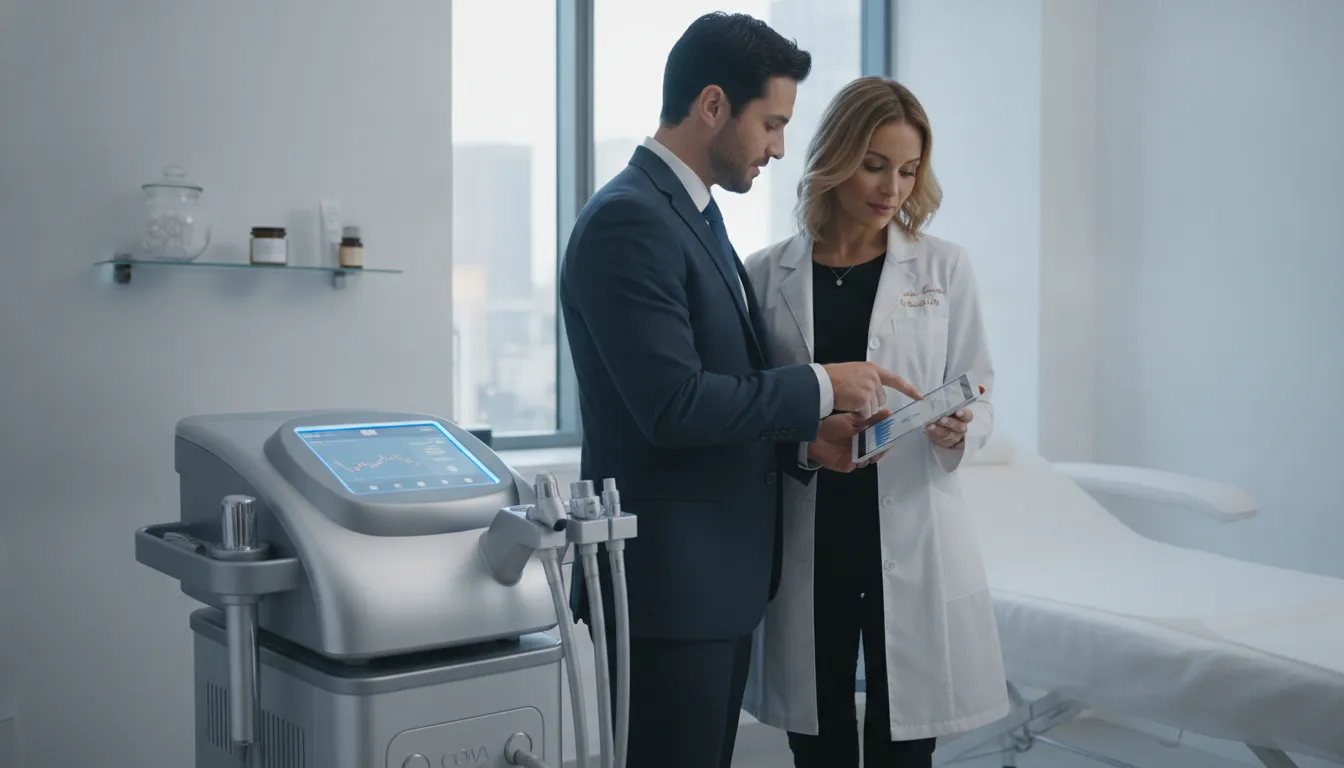
A new hydradermabrasion service can support recurring appointments, complement existing treatments, and give clients another reason to return to your practice. However, the equipment must make financial sense before you sign an agreement. The right decision depends on your treatment pricing, expected appointment volume, supply costs, provider time, available cash, and financing terms. A low monthly payment may look appealing, but a longer repayment period or large final buyout could increase your total cost. This guide walks through hydradermabrasion equipment financing from a practical business perspective, including how to compare systems, review lender requirements, plan operating expenses, and estimate potential revenue.
Key Takeaways
- Match the system to your business plan: Consider your treatment menu, client demand, room layout, staffing capacity, consumable requirements, and daily workflow before choosing equipment.
- Evaluate the complete financing agreement: Compare total repayment, fees, rates, payment terms, ownership conditions, maintenance obligations, warranty coverage, and support services across lenders and vendors.
- Use realistic numbers to assess profitability: Forecast treatment volume, pricing, supply costs, labor, marketing, downtime, and monthly payments, then measure actual bookings, rebooking, utilization, and net cash flow after launch.
Which Hydradermabrasion Equipment Should You Finance?
Choosing hydradermabrasion equipment involves more than comparing purchase prices. The right system should fit your treatment menu, client demand, available space, staffing model, and monthly budget. A machine that looks affordable at first may cost more over time if it requires expensive consumables, takes too long to prepare, or lacks the protocols your team needs.
Start by defining the role the equipment will play in your practice. You may want to add express facials, create a premium skincare service, or give existing clients another reason to schedule regular visits. Your goals will help you decide which features matter most, how much capacity you need, and what level of training and support to expect.
Emage Medical’s hydradermabrasion technology is designed for professional skincare providers, including estheticians, medical spas, and other aesthetic practices. As you compare systems, review treatment options, operating costs, training, warranty coverage, and service terms together. The best equipment purchase should support consistent treatments, efficient daily operations, and a financially practical growth plan.
Start With Emage Medical’s CytoPeel® System
Emage Medical’s CytoPeel® system combines hydradermabrasion and microdermabrasion for professional skincare providers. It may suit practices that want to add or expand noninvasive facial treatments without purchasing several separate devices.
Compare the system with your current service menu and the concerns your clients mention most often. Consider whether it can support the treatments you plan to offer and complement services such as injectables, laser procedures, or microneedling. A well-planned skincare service can also encourage clients to return for routine maintenance appointments.
Before applying for financing, request a demonstration and a detailed quote. Confirm whether the price includes handpieces, accessories, starter supplies, software, delivery, training, and warranty coverage. You can also review Emage Medical’s full range of technologies to determine how CytoPeel® fits with your planned equipment purchases.
Compare Treatments, Handpieces, Suction, and Protocols
Hydradermabrasion systems can differ significantly, even when their product descriptions sound similar. Compare the available handpieces, suction controls, treatment solutions, and protocols. These details affect how easily providers can adjust treatments, how long appointments take, and how consistently your team can serve different client needs.
Ask the manufacturer to explain how the system is used for concerns such as congestion, dryness, dullness, uneven texture, and sensitivity. Your team should receive clear guidance on appropriate settings, solutions, and techniques. A long feature list is less important than equipment your providers can operate safely and confidently.
Also ask how much time staff need to clean the system, replace solutions, and prepare handpieces between appointments. Emage Medical states that CytoPeel® can be customized for different client skin concerns. Request examples of those protocols during a demonstration, and confirm which supplies and training are included with the purchase.
Match Capacity, Footprint, and Workflow to Demand
Choose equipment that matches your expected treatment volume rather than the busiest schedule you hope to have someday. A high-capacity system may suit a med spa with multiple providers, while a compact design may work better for a solo practitioner or a practice with limited treatment-room space.
Measure the room before signing a financing agreement. Account for the device, provider movement, storage, cleaning supplies, and client access. Confirm electrical, plumbing, and ventilation requirements as well. These details can create unexpected installation costs if you discover them after delivery.
Use existing appointment data to estimate demand. If you expect five to 10 treatments each week, assess whether the system supports that schedule without excessive setup time. Emage Medical promotes CytoPeel® as having low consumable costs, but your actual expense will depend on the solutions, tips, filters, and supplies used for each service. Request a written estimate based on your projected volume.
Compare Support, Model Fit, and Financing Eligibility
The device is only one part of the purchase. Training, technical assistance, warranty coverage, and product guidance can affect how quickly your team starts offering treatments and how consistently providers use the system. Compare these services alongside the equipment’s features and price.
Ask whether training takes place before launch, after installation, and when new employees join the practice. Emage Medical states that customers receive free automatic software upgrades, unlimited training during the warranty period, and ongoing product and consultation guidance. Confirm the terms in writing, including warranty length, support response times, service procedures, and charges that are not covered.
Financing eligibility may depend on the equipment model, time in business, credit profile, and lender requirements. Ask for the application criteria before paying a deposit. Emage Medical provides financing programs for qualified practices. Ask whether an offer can cover shipping, training, installation, or initial supplies in addition to the device.
Budget for Supplies, Maintenance, Training, Warranty, and Service
Calculate the full cost of ownership rather than focusing only on the monthly payment. Include the equipment price, shipping, installation, treatment solutions, disposable tips, cleaning products, insurance, repairs, and staff training. If you plan to promote the service, budget for website updates, photography, patient education materials, and introductory marketing.
Ask what maintenance your team must complete after every treatment, at the end of each day, and at scheduled service intervals. Find out whether routine care requires special tools or an outside technician. You should also ask how replacement parts are supplied and what happens if the system is temporarily unavailable.
Read the warranty exclusions before comparing offers. Coverage may exclude consumables, accidental damage, misuse, or routine maintenance. Emage Medical emphasizes comprehensive customer support, including unlimited training during the warranty period. Confirm how that support works, then compare it with the service coverage and response times offered by other manufacturers and financing providers.
Which Hydradermabrasion Equipment Financing Options Fit Your Practice?
The right hydradermabrasion equipment financing option depends on your practice’s cash position, expected treatment volume, growth plans, and preference for ownership. An established med spa with predictable revenue may choose to purchase a system, while a newer practice may prefer leasing or a structured payment plan that requires less cash upfront.
Before comparing offers, estimate how often you expect to perform treatments and how quickly the equipment could generate revenue. Include treatment pricing, supplies, provider time, room usage, payment processing, marketing, maintenance, and insurance. This gives you a more realistic view of the payment your practice can manage each month.
Look beyond the advertised monthly amount. Compare the total repayment, interest or factor rate, origination fees, down payment, ownership terms, and responsibilities for repairs and supplies. A lower payment may simply reflect a longer term and a higher total cost.
The financing arrangement should also fit your service menu and workflow. Consider whether your team has enough capacity to use the system, whether the treatment complements your existing offerings, and what training and support the vendor provides. The best option keeps payments manageable while helping your practice introduce the service with a clear plan.
Use a Medical Equipment Loan
A medical equipment loan allows your practice to purchase a hydradermabrasion system and repay the lender over an agreed term. The equipment may serve as collateral, depending on the agreement. After the loan is paid, your practice generally owns the system outright, making this option appealing when you expect to use the equipment for several years.
Buying can offer long-term cost advantages for established practices with steady demand and sufficient capital. You build equity in the equipment rather than returning it at the end of a lease, and you can decide when to sell, replace, or continue using it. Crestmont Capital’s equipment financing guide explains why ownership may suit practices with consistent, long-term equipment needs.
Compare the payment with projected treatment profit, not gross sales alone. Ask whether the rate is fixed, whether prepayment carries a penalty, and whether the loan covers shipping, setup, training, or initial supplies.
Compare Leasing and Lease-to-Own Agreements
Leasing can reduce the cash required to add hydradermabrasion services. Your practice makes scheduled payments for a defined period while the finance company or vendor retains ownership. This may allow you to reserve cash for staffing, marketing, renovations, inventory, or other clinical equipment.
Some leases include upgrade options, which can help if equipment or client preferences change. However, a low monthly payment does not always mean a low total cost. Review renewal charges, end-of-term fees, insurance requirements, and the purchase price before signing.
Lease-to-own agreements may transfer ownership after the final payment, but the details vary. Some require a small final buyout, while others include a larger balloon payment. Ask for the complete payment schedule and confirm when ownership transfers. PDI Arm’s comparison of leasing and financing medical equipment explains why leasing may suit facilities with limited capital or frequent upgrade needs.
Consider Rental or Short-Term Equipment
Rental or short-term arrangements can help you test demand before making a long-term commitment. This may suit a practice adding hydradermabrasion to its menu, opening a new location, or planning a limited promotion. You pay for access over a shorter period without taking on a long-term loan or lease.
The tradeoff is that rental costs may be higher over time, and availability may be limited. Ask whether the rental includes delivery, installation, training, consumables, repairs, and insurance. Confirm who pays for damage, maintenance, or downtime.
Use the rental period to track consultations, completed treatments, rebooking rates, appointment revenue, and supply costs. If demand is strong, these figures can support a later purchase or lease-to-own application. If demand is weaker than expected, a short-term arrangement can help you avoid owning equipment that does not fit your practice.
Review Vendor Financing and Payment Plans
Vendor financing and payment plans can simplify the purchase process. The equipment provider may coordinate the application, delivery, installation, and training, allowing you to discuss the system and payment structure with one team. This can save time when the vendor works with several financing partners.
Ask whether the plan comes directly from the vendor or through an outside lender. Then compare it with bank and independent equipment finance quotes. Review the annual percentage rate, factor rate, total repayment, payment frequency, down payment, documentation fees, and early payoff rules.
Evaluate the vendor’s support alongside the payment terms. Training, warranty coverage, service response, and implementation guidance can affect how quickly your team begins using the system. PDI Arm recommends choosing a trustworthy vendor, since vendor reliability can affect the equipment’s value after purchase. Request all promises about training, marketing, repairs, and supplies in writing.
Compare Financing With Paying Upfront
Paying upfront may be the simplest option when your practice has enough cash without weakening its operating reserves. You avoid interest, financing fees, credit requirements, and monthly payments. Your practice also owns the equipment immediately, which can make budgeting more straightforward.
The downside is the opportunity cost. Those funds may be needed for payroll, rent, inventory, facility improvements, advertising, or unexpected repairs. A cash purchase can create pressure if it leaves your practice without enough working capital.
Compare the cash price with the total financing cost, then consider what your retained cash could accomplish. Financing may be reasonable if it protects your reserve while the equipment generates reliable treatment revenue. Paying upfront may make more sense if you have ample reserves and the purchase discount is significant. Time Finance’s equipment comparison notes that buying can be simpler when cash is available, but liquidity should remain part of the decision.
Check Credit, Revenue, and Time-in-Business Requirements
Lenders commonly review business credit, personal credit, annual revenue, and time in business before approving medical equipment financing. They may also consider existing debt, payment history, industry experience, and cash flow. Requirements vary, so a denial from one lender does not mean every option is unavailable.
Before applying, ask about minimum credit scores, revenue thresholds, time-in-business requirements, down payments, and personal guarantees. This helps you focus on realistic offers and may reduce unnecessary credit inquiries. Ameris Bank’s dermatology equipment financing information identifies time in business, annual revenue, and credit score as common qualification factors.
Startups and newer practices may face additional underwriting because they have less operating history. A lender may request a business plan, projected revenue, owner experience, personal financial information, or a larger down payment. Be ready to explain how you will attract patients, price treatments, staff the service, and support the payment.
Prepare Financial Statements, Tax Returns, Bank Statements, and Business Details
A complete application can make the financing process more efficient. Gather recent profit and loss statements, balance sheets, business and personal tax returns, bank statements, formation documents, and information about existing obligations. You may also need your legal business name, tax identification number, ownership details, practice address, and contact information.
Lenders use these documents to assess income and cash flow. Make sure the figures match across your application and financial statements. If revenue changes by season, explain the pattern and show how your practice handles slower months.
Prepare a short equipment plan, too. Include the system you want to purchase, quoted price, expected treatment volume, proposed pricing, staffing plan, and estimated monthly revenue. Ameris Bank outlines common equipment financing documentation used to evaluate applications. Your accountant can help you present the practice’s finances accurately and identify missing documents.
Ask About Startup Financing, Personal Guarantees, and Application-Only Programs
If your practice is new or has limited business credit, ask which startup programs are available. Some lenders may consider your personal credit, professional background, cash contribution, business plan, and projected revenue. Approval terms may differ from those available to an established practice, so request a clear explanation of the requirements.
A personal guarantee means the owner may be responsible for the debt if the business cannot repay it. This can help with approval, but it creates personal financial exposure. Confirm whether the guarantee is limited or unlimited and whether it continues if you sell the equipment or refinance the loan.
You can also ask about application-only programs. These may require less documentation for equipment below a specified amount, although approval still depends on the lender’s criteria. Ameris Bank describes application-only financing for hard collateral up to $500,000. Confirm the maximum amount, eligible equipment, rate, term, guarantee rules, and fees.
Explore Emage Medical’s Financing and Practice Support
Emage Medical offers financing options for qualified practices purchasing aesthetic technology. This may help spread the cost of a hydradermabrasion system across scheduled payments. The company’s hydradermabrasion equipment information notes that financing may be available for as little as $480 per month. Treat that figure as a starting point, since your payment may vary based on approval, equipment configuration, term, credit profile, down payment, and fees.
Request a written breakdown of the equipment price, financed amount, payment schedule, term, total repayment, and ownership structure. Confirm whether the offer includes delivery, setup, training, warranty coverage, supplies, and service. Ask whether eligible practice needs, such as initial consumables or related technology, can be included.
Financing is only one part of the purchase decision. Emage Medical also provides marketing support and training to help practices introduce services, educate clients, and establish treatment workflows. Discuss staff education, treatment protocols, promotional guidance, and post-installation assistance before signing. These details can help your team start using the equipment confidently and assess its financial performance.
How Much Does Hydradermabrasion Equipment Financing Cost?
Financing hydradermabrasion equipment involves more than comparing monthly payments. Your total cost may include the device, interest or lease charges, shipping, setup, training, treatment supplies, maintenance, insurance, and marketing. A payment that appears manageable at first can become a much larger commitment after you add the costs of launching and operating the service.
Before selecting an offer, estimate your first-year expenses and expected treatment revenue. This helps you understand cash flow, compare financing with an upfront purchase, and determine how many appointments you need to cover the equipment and its related costs. Ask each lender or vendor for a written, itemized quote so you can compare offers based on the same equipment package, term, and services.
Separate Equipment Price From the Financed Amount
Begin with two figures: the equipment’s cash price and the total amount you would finance. They may differ if the agreement includes shipping, setup, training, taxes, documentation fees, or initial supplies. An itemized quote shows exactly what will be added to the balance.
The total amount repaid may exceed the equipment’s cash price because of interest or lease charges. Equipment financing guidance explains that leasing can result in a higher overall cost, while purchasing generally offers a more direct cost structure.
Ask whether the quote covers one device or a package. A package may include handpieces, accessories, software, starter supplies, or training. These additions can support a smoother launch, but you should understand which items are essential and how they affect the amount financed.
Add Shipping, Setup, Installation, and Initial Supplies
Shipping and installation can affect the cash required to begin offering treatments. Ask whether delivery, assembly, electrical preparation, setup, and staff training are included in the quoted price or charged separately. Some vendors add these expenses to the first invoice, while others include them in the financed balance.
Budget for initial supplies, including treatment solutions, tips, filters, applicators, and other single-use components. If the equipment comes with a starter kit, ask how many treatments it should cover and what replacement supplies will cost.
A medical equipment leasing guide recommends reviewing shipping, setup, installation, and initial supplies before comparing agreements. This approach gives you a more realistic estimate of the cash needed to open the service.
Estimate Consumables, Labor, Insurance, Marketing, and Repairs
Your budget should include the cost of operating the equipment, not just the financing payment. Estimate the supply cost per treatment, then multiply it by your expected monthly appointment volume. This gives you a variable cost that changes as bookings increase or decrease.
Labor may include provider compensation, scheduling, room preparation, cleaning, and training time. You may also need additional insurance coverage, launch marketing, photography, paid advertising, or educational materials for clients.
Set aside a repair and maintenance reserve, even if the device includes a warranty. Check what the warranty covers, how long it lasts, and whether service visits, replacement parts, or shipping are excluded. Medical equipment cost guidance recommends including consumables, labor, insurance, marketing, and repairs when estimating total ownership costs.
Compare Down Payments, APRs, Factor Rates, Terms, and Fees
A lower monthly payment does not always indicate a lower-cost offer. Compare the down payment, APR, factor rate, repayment term, origination fee, documentation fee, and other charges. A longer term may reduce the monthly amount while increasing the total repayment.
Lenders may quote an APR, while other providers use a factor rate. These figures are not interchangeable. Ask each provider to show the total repayment in dollars and request an amortization schedule when available.
Confirm whether the payment remains fixed for the full agreement. Fixed payments can make cash-flow planning easier, while variable terms may change your expected cost. Equipment finance guidance recommends comparing down payments, rates, terms, and fees before choosing an offer.
Put $480 Monthly Payments and $1,000-Plus Offers in Context
You may encounter financing examples showing payments of $480 per month or offers starting at $1,000 or more. Treat these figures as examples, not standard prices. Your actual payment may depend on the device package, credit profile, repayment term, down payment, fees, and included services.
A $480 monthly payment equals $5,760 over 12 months before interest, taxes, supplies, insurance, and other operating expenses. A payment above $1,000 may reflect a more comprehensive system or a shorter term, but it also requires enough monthly treatment volume to support the obligation.
Compare offers using the same equipment package and repayment period. A lower payment may result from a longer agreement or a larger final payment. Leasing can require less money upfront, but the full repayment terms determine the actual cost.
Review Rental Rates, Buyouts, Renewals, and End-of-Term Fees
Rental agreements may help you test demand before committing to ownership. However, review the end-of-term conditions carefully. You may need to return the equipment, renew the agreement, purchase the device, or pay a separate buyout amount.
Ask whether rental payments apply toward ownership. In some agreements, they do not. Confirm whether the provider can change the rate at renewal and whether you could owe fees for shipping, inspection, damage, or early termination.
Lease-to-own contracts can use similar language, but ownership terms vary. Confirm the buyout amount, payment timing, and eligibility requirements in writing. Leasing terms guidance emphasizes reviewing buyouts, renewals, and end-of-term fees when comparing long-term costs.
Ask a Tax Professional About Section 179 and Depreciation
Financing or purchasing equipment may affect your practice’s tax position. Depending on your business structure, eligibility, and the equipment’s business use, you may be able to claim depreciation or explore a Section 179 deduction. Tax treatment can differ between purchased, financed, and leased equipment.
Do not assume a potential deduction makes one offer the better choice. A deduction may reduce taxable income, but it does not remove the purchase price, financing charges, or operating costs. Your tax professional can explain which rules apply, when deductions may be available, and which records you need to keep.
Share the equipment quote, financing agreement, expected in-service date, and business-use details with your accountant. Dermatology equipment financing guidance recommends discussing Section 179 and depreciation with a tax professional before making a purchase decision.
Build a First-Year Equipment Budget
Create a first-year budget that separates fixed and variable costs. Fixed costs may include the monthly payment, insurance, software, and service agreements. Variable costs may include treatment supplies, labor, payment processing, laundry, marketing, and repairs.
Estimate treatment volume by month, including a slower launch period. Most practices need time to train staff, promote the service, and build a consistent booking pattern. Your budget should show the number of treatments needed to cover the monthly payment, then the number needed to cover all equipment-related operating costs.
Keep a cash reserve for delayed bookings, replacement supplies, and service downtime. Emage Medical offers financing programs and practice support that may help you review available payment structures. Request a complete cost breakdown, then compare it with your first-year revenue and cash-flow projections.
How Do You Compare Hydradermabrasion Equipment Financing Offers?
The lowest monthly payment is not always the most affordable option. A longer repayment term can make payments easier to manage while increasing the total amount you repay. To compare offers fairly, use the same equipment price, down payment, repayment period, and fee assumptions for each quote.
Look beyond the financing terms, too. Training, warranty coverage, repairs, consumables, and ongoing practice support all affect the equipment’s real value. A proposal with a slightly higher payment may make more sense if it includes setup assistance, staff education, and responsive service. Before signing, ask each provider to explain the agreement in plain language and provide a complete written breakdown. Emage Medical’s financing programs can give you a useful starting point when comparing vendor financing with outside lenders.
Compare Emage Medical, Banks, and Equipment Finance Companies
Request proposals from several types of providers, including the equipment manufacturer, traditional banks, and specialized equipment finance companies. Emage Medical may be a convenient starting point because it offers hydradermabrasion equipment alongside financing and practice support. Vendor financing can simplify the process when the provider understands the system, setup requirements, and training process.
Banks may offer competitive rates, but they often review your broader financial history, cash flow, and business assets. Equipment finance companies may focus more closely on the device, its resale value, and your expected business use. Compare the complete offer from each source, including fees, approval conditions, service terms, and ownership details. Do not choose based on the advertised monthly payment alone.
Request Quotes With the Same Amount, Term, and Down Payment
A fair comparison requires consistent figures. Ask each provider to quote the same equipment package, purchase price, down payment, repayment term, and estimated taxes. Confirm whether setup, delivery, installation, and initial supplies are included. If one quote covers the complete package and another covers only the device, the monthly payments will not provide a meaningful comparison.
For example, compare a 60-month offer with another 60-month offer, rather than comparing a 36-month agreement with a 72-month agreement. Emage Medical promotes hydradermabrasion financing with payments starting as low as $480 per month, while other offers may exceed $1,000 per month. Treat these figures as starting points, then request a written quote based on your credit profile and selected equipment package.
Calculate Total Repayment, Interest, Fees, and Effective Cost
Add every scheduled payment to determine the agreement’s total repayment amount. Then include the down payment, origination charges, documentation fees, delivery costs, taxes, and required deposits. This calculation shows the equipment’s effective cost more clearly than the interest rate or monthly payment alone.
Some agreements use an annual percentage rate, while others use a factor rate or fixed repayment amount. Ask the provider to explain the pricing method and whether any part of the payment can change. When comparing a purchase with a lease, include ownership and end-of-term costs in your calculation. A guide to leasing versus buying medical equipment can help you identify important questions before reviewing a contract.
Review Fixed Payments, Deferrals, Late Fees, and Prepayment Rules
Confirm whether payments remain fixed throughout the agreement. Ask when the first payment is due, whether a deferred payment period is available, and whether interest continues to accrue during that period. A payment deferral may give your practice time to install the system and schedule treatments, but it does not always reduce the total amount owed.
Read the late-payment policy carefully. Look for grace periods, late fees, default interest, collection costs, and the consequences of missed payments. If you expect to repay the balance early, ask whether the agreement includes a prepayment penalty. Some contracts reduce the cost of early repayment, while others require most of the scheduled charges. Request the answer in writing rather than relying on a verbal explanation.
Check Collateral, UCC Filings, Personal Guarantees, and Approval Terms
Ask what secures the financing. The lender may place a lien on the hydradermabrasion system, file a UCC financing statement, require a personal guarantee, or request additional business assets as collateral. Confirm whether the agreement applies only to the financed equipment or to a wider group of business assets.
Approval standards vary by lender and practice type. Some programs consider application-only financing for larger purchases, while others require detailed financial records. Certain dermatology equipment programs list requirements such as at least one year in business and a minimum FICO score of 620. These standards are not universal, so ask each provider about its current requirements before submitting an application. Also confirm whether applying triggers a hard credit inquiry.
Confirm Ownership, Buyouts, Balloon Payments, and Upgrade Options
Determine when ownership transfers to your practice. With a traditional equipment loan, you generally own the device after completing the purchase, subject to the lender’s security interest. With a lease, the leasing company may retain ownership unless you exercise a purchase option at the end of the term.
Look for terms such as fair-market-value buyout, nominal buyout, balloon payment, renewal, and end-of-term purchase. Ask what happens if you want to upgrade before the agreement ends. You may need to pay the remaining balance, return the device, or sign a new contract. Review lease and purchase differences carefully, especially if you expect your treatment menu or patient volume to change.
Clarify Maintenance, Repairs, Supplies, Downtime, and Insurance Responsibilities
Find out who pays for routine maintenance, replacement parts, repairs, shipping, and technician visits. Ask whether the warranty covers labor as well as parts, and whether unauthorized repairs could void coverage. Confirm which consumables the system requires, how often they need replacement, and whether they must come from a specific supplier.
Downtime can affect scheduled treatments and client satisfaction, so ask about technical response times, remote troubleshooting, loaner equipment, and available service locations. You should also confirm the insurance requirements. Many lenders require coverage for theft, damage, and loss, and may need to be listed as a loss payee. Check whether your current business policy meets those requirements before delivery.
Verify Delivery, Training, Warranty Coverage, and Ongoing Guidance
Before signing, confirm the delivery timeline, installation process, and staff training included with the purchase. Training should address safe operation, treatment protocols, cleaning, contraindications, and basic troubleshooting. Ask whether new employees can receive training later and whether additional sessions carry a fee.
Emage Medical states that its hydradermabrasion offering includes unlimited training during the warranty period, along with product and consultation guidance. Review those details in writing, including the warranty length, covered components, exclusions, and service process. The company’s hydradermabrasion technology page offers a useful starting point for discussing system features, training, and ongoing support with a representative.
How Can You Estimate Hydradermabrasion Equipment Financing ROI?
Estimating the return on investment for hydradermabrasion equipment starts with a practical question: how often can your practice perform the treatment at a profitable price? From there, compare your expected treatment profit with financing costs and the other expenses required to deliver the service.
A useful ROI estimate should include more than projected sales. Account for consumables, provider time, payment processing, marketing, maintenance, insurance, taxes, and the equipment payment. Emage Medical’s Hydradermabrasion information provides details about the CytoPeel® system and a potential treatment volume benchmark, but your final projections should reflect your pricing, schedule, staffing, and local demand.
Start with conservative assumptions, then compare them with expected and high-use scenarios. This gives you a more realistic view of how the equipment may perform during its first year. It also helps you identify the minimum number of monthly treatments needed to cover your costs.
Keep your calculations in a spreadsheet with separate sections for revenue, variable expenses, fixed expenses, financing, and cash flow. Update the spreadsheet as soon as you have real booking and treatment data. Early estimates help you make the purchasing decision, while actual performance data helps you manage the service after launch.
Set Treatment Pricing, Weekly Volume, and Annual Revenue Assumptions
Begin with the price you plan to charge for one hydradermabrasion treatment. Review comparable services in your market, your practice’s positioning, provider expertise, and the experience included in the appointment. Avoid choosing a price based only on competitor rates. The service also needs to support your supply, labor, marketing, maintenance, and financing costs.
Next, estimate realistic weekly volume. Consider your current client base, available appointment hours, provider capacity, and how quickly you can introduce the treatment. Separate launch volume from steady-state volume because new services often take time to build demand.
For a simple annual revenue estimate, multiply your treatment price by the number of weekly treatments and the number of operating weeks. For example, 10 weekly treatments at $175 each for 50 weeks would produce $87,500 in gross treatment revenue. This is sales before expenses, not profit. Record the assumptions behind each figure so you can update the model as your service gains traction.
Use 10 Weekly Treatments and $87,000 in Gross Revenue as Benchmarks
Emage Medical states that performing 10 hydradermabrasion procedures per week could generate more than $87,000 in first-year revenue. Treat this as a planning benchmark rather than a promise of results. Actual revenue will depend on your treatment price, schedule, local demand, staffing, promotions, and the number of weeks your practice operates.
The benchmark gives you a clear volume target. If your average treatment price is approximately $175 and you perform 10 treatments each week for about 50 weeks, your gross revenue would be close to that figure. If your pricing or operating schedule differs, adjust the calculation instead of copying the benchmark directly.
Review the CytoPeel® system alongside your planned protocols and service menu. Then decide whether 10 weekly treatments represents a conservative, expected, or high-use assumption for your practice. A realistic target should fit your existing schedule and client demand, not just the equipment’s potential capacity.
Separate Gross Revenue From Treatment Profit and Net Cash Flow
Gross revenue shows how much customers pay for treatments. It does not show how much money remains after you deliver them. To estimate treatment profit, subtract the direct cost of each appointment, including solutions, tips, serums, disposable supplies, provider labor, and payment processing.
Net cash flow goes one step further. Subtract recurring business expenses, marketing, maintenance, insurance, taxes, and the equipment payment from your treatment profit. This helps you estimate how much cash the service may contribute to the practice each month.
Financing can help preserve working capital by replacing a large upfront purchase with predictable payments, as Emage Medical explains through its financing programs. However, a predictable payment remains an expense. Include the full payment in your cash flow model, along with any down payment, origination fee, or end-of-term cost.
Keep gross revenue, treatment profit, and net cash flow in separate lines. Combining them can make a profitable-looking service appear stronger than it is.
Subtract Supplies, Labor, Processing Fees, Marketing, Taxes, and Maintenance
List every cost connected to the treatment before calculating ROI. Supplies may include treatment solutions, disposable tips, gauze, gloves, and post-treatment products. Labor should reflect the provider’s time for consultation, preparation, treatment, cleanup, and documentation, not only hands-on treatment time.
Add card processing fees and booking software charges. If you plan to offer introductory discounts, include the lower launch price in your first-year estimate. Marketing costs may include paid advertising, photography, email campaigns, client events, and printed materials.
Set aside reasonable amounts for maintenance, repairs, insurance, and taxes as well. Some expenses vary with treatment volume, while others remain fixed each month. Separating variable and fixed costs makes your estimate more useful because you can see what changes when you add another appointment to the schedule.
If you are unsure how to estimate maintenance or service costs, ask the vendor for warranty terms, recommended servicing, and replacement component information before signing a financing agreement.
Calculate Break-Even Treatments and Equipment Payback
Your break-even point shows how many treatments you need to cover a specific cost. To estimate monthly break-even volume, divide your monthly fixed costs by the profit from one treatment after direct expenses. Include the financing payment in fixed costs if you want to know how many appointments are needed to cover the equipment each month.
For example, if your treatment price is $175 and direct costs total $55, your contribution per treatment is $120. If the equipment payment and other related monthly costs total $1,200, you would need 10 treatments to cover those costs.
Payback is a separate calculation. Add the down payment, financing fees, setup costs, and initial supplies, then divide that amount by the monthly net cash contribution from the service. A short payback period may look attractive, but do not rely on it alone. Review the full repayment amount and the equipment’s expected useful life before selecting a financing structure.
Test Whether Treatment Profit Covers Monthly Financing Payments
Calculate monthly treatment profit under your expected schedule, then compare it with the equipment payment. If you plan to perform 40 treatments per month and earn $120 after direct costs per treatment, your monthly treatment contribution would be $4,800. A $1,000 equipment payment would use about 21% of that contribution before other business expenses.
Run the same calculation using a lower volume. If demand falls to 15 treatments per month, your contribution would drop to $1,800. The payment may still be manageable, but you would have less room for marketing, repairs, taxes, and slower months.
Review the payment alongside the financing options available through Emage Medical, then consider how the terms affect cash flow. A lower monthly payment may require a longer repayment period and lead to a higher total cost. Compare monthly affordability with the full amount you will repay.
Model Conservative, Expected, and High-Use Scenarios
Create three versions of your ROI forecast. The conservative scenario might include five treatments per week, a discounted launch price, and several weeks of downtime. The expected scenario could use your standard price and a gradual increase in bookings. The high-use scenario might reflect 10 or more weekly treatments, regular rebooking, and strong demand.
For each scenario, calculate gross revenue, direct treatment costs, financing payments, monthly net cash flow, and estimated payback. This shows whether the equipment remains financially manageable if bookings take longer to build or operating costs run higher than expected.
Include realistic capacity limits in the high-use version. A full schedule is only helpful if your team can maintain treatment quality, complete documentation, restock supplies, and handle follow-up care. You can also compare loan, lease, and purchase assumptions using this guide to leasing versus financing medical equipment.
Account for Rebooking, Add-Ons, Seasonality, and Downtime
A hydradermabrasion appointment may lead to additional revenue through rebooking, memberships, product recommendations, or complementary services. If clients typically return every four to six weeks, estimate how many may schedule their next appointment before leaving. Keep rebooking revenue separate from the initial treatment forecast so you do not count the same appointment twice.
Add-ons can increase the value of each visit, but include them only if they fit your actual protocol and client demand. Track seasonal patterns as well. Your practice may see stronger demand before events or holidays and slower bookings during vacation periods.
Set aside time for staff training, equipment servicing, supply delays, and unexpected repairs. Downtime reduces available appointment slots, so it directly affects revenue. Ask the vendor about training, warranty coverage, service response times, and ongoing guidance. Emage Medical also provides marketing support for practices, which may help you plan the launch and promote the service consistently.
Track Utilization, Revenue per Treatment, Rebooking, and Net ROI After Launch
Once the equipment is in use, replace estimates with actual performance data. Track the number of treatments completed, available appointment hours, average revenue per treatment, direct cost per appointment, rebooking rate, add-on revenue, cancellations, and no-shows. Utilization shows whether the system is earning its place in your schedule.
Review these numbers monthly for the first six to 12 months. Compare actual treatment profit with the financing payment, then calculate net cash contribution after operating expenses. If revenue per treatment is lower than expected, review pricing, discounts, supply usage, and appointment length before trying to increase volume.
Also track client feedback and repeat bookings. A service that supports retention may contribute value beyond the initial appointment revenue, while a service with low rebooking may need a different offer or protocol. Regular reviews help you adjust your service menu, marketing plan, and staffing decisions using real practice data instead of early projections.
Frequently Asked Questions
What should I consider before financing hydradermabrasion equipment?
Review how the system fits your treatment menu, client demand, treatment-room space, staffing, and monthly cash flow. Also account for supplies, maintenance, training, warranty coverage, and marketing instead of focusing only on the device price.
Is buying or leasing hydradermabrasion equipment better for a practice?
Buying may work well for an established practice that expects to use the system for several years and has sufficient cash reserves. Leasing can reduce the upfront expense and may offer upgrade flexibility, but review the total repayment, ownership terms, renewal conditions, and buyout amount before signing.
How much can hydradermabrasion equipment cost each month?
Monthly payments vary based on the equipment package, financing term, credit profile, down payment, interest or factor rate, and included services. Emage Medical lists financing examples beginning around $480 per month, but practices should request a personalized quote and compare the total repayment.
How many treatments are needed to cover the equipment payment?
Divide your monthly equipment-related costs by the profit from one treatment after direct expenses. Include solutions, disposable supplies, provider labor, payment processing, and other service costs. Run the calculation at several booking levels to account for a gradual launch or slower months.
What should be included in a hydradermabrasion financing agreement?
The agreement should clearly state the equipment model, accessories, delivery, installation, training, warranty, payment schedule, fees, maintenance responsibilities, ownership terms, and end-of-term obligations. Ask whether supplies, repairs, insurance, and technical support are included or billed separately.